Nature warns: Over-reliance on AI may degrade professional skills
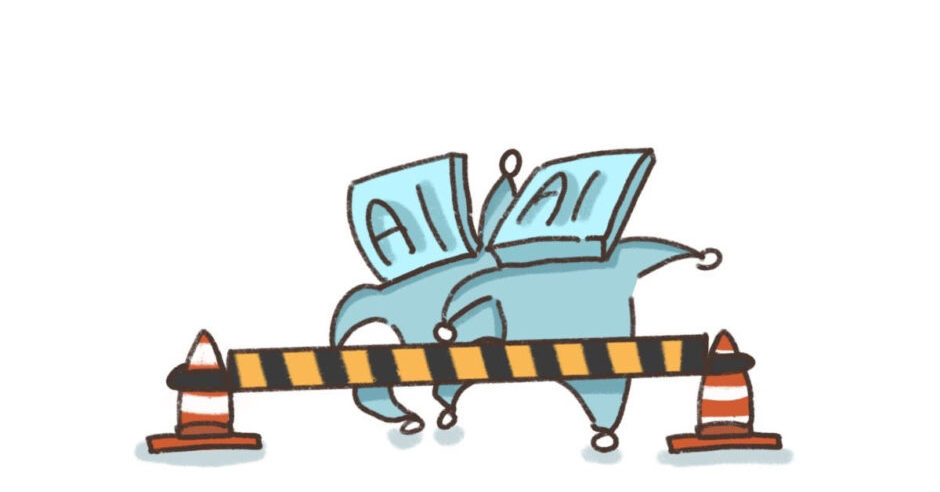
Understand the hidden risks of AI-driven workflows and how to prevent professional skill atrophy in your team.
30-Second TL;DR
What Changed
Professionals fear skill atrophy due to AI automation
Why It Matters
This highlights a critical need for 'human-in-the-loop' workflows that prioritize skill maintenance. Organizations may need to redesign training programs to ensure AI acts as a supplement rather than a replacement for core expertise.
What To Do Next
Implement a 'manual-first' review process for critical tasks to ensure your team maintains foundational domain expertise.
Key Points
- •Professionals fear skill atrophy due to AI automation
- •Nature magazine published concerns regarding AI dependency
- •The debate spans high-stakes fields like medicine and engineering
Deep Insight
AI-generated analysis for this event — not the original article.
Enhanced Key Takeaways
- •Research indicates a phenomenon known as 'cognitive offloading,' where individuals struggle to retain information or perform tasks independently after relying on AI-assisted decision support systems.
- •Studies in medical diagnostics show that while AI improves speed, it can lead to 'automation bias,' where practitioners overlook AI errors due to over-trust in algorithmic outputs.
- •Educational institutions are reporting a decline in 'first-principles' thinking among engineering students, as AI tools often provide solutions without requiring the user to understand the underlying mathematical or physical constraints.
- •The 'skill atrophy' concern is being addressed by some professional bodies through the implementation of 'AI-free' certification periods to ensure practitioners maintain baseline competency.
- •Nature's commentary emphasizes that the loss of 'tacit knowledge'—the intuitive expertise gained through years of manual practice—poses a systemic risk to innovation and crisis management.
Future ImplicationsAI analysis grounded in cited sources
Timeline
- 2023-05Initial academic discourse emerges regarding the impact of LLMs on student critical thinking and foundational skill acquisition.
- 2024-09Major medical journals begin publishing pilot studies on the correlation between AI diagnostic tools and reduced clinical intuition among residents.
- 2025-11Nature publishes a comprehensive review highlighting the long-term risks of professional skill atrophy in high-stakes industries.
- 2026-03Professional engineering associations propose new guidelines for maintaining manual calculation skills alongside AI-assisted design tools.
Weekly AI Recap
Read this week's curated digest of top AI events →
Related Updates
AI-curated news aggregator. All content rights belong to original publishers.
Original source: ITmedia AI+ (日本) ↗
This is a summary, not the original. Read the source, or get the weekly briefing.
The weekly digest
One email a week. Unsubscribe anytime.