NATO formalises cybersecurity partnerships with major tech firms
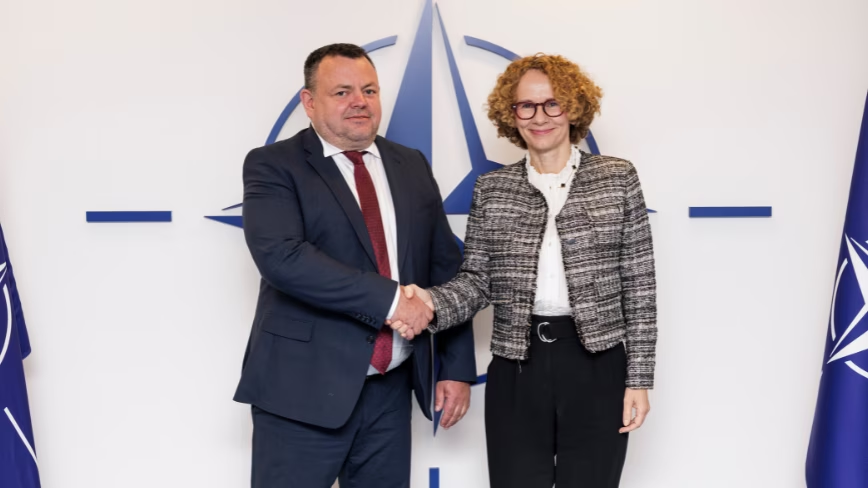
💡Major shift in global cyber defense as NATO integrates private sector threat intel into its core strategy.
⚡ 30-Second TL;DR
What Changed
Strategic partnerships with Microsoft, Palo Alto Networks, and ESET
Why It Matters
This formalization signals a deeper integration of private sector threat intelligence into international defense strategies, crucial for countering state-sponsored cyber threats.
What To Do Next
Monitor the public threat intelligence reports released by these partners, as they will likely contain new indicators of compromise (IoCs) relevant to critical infrastructure.
Key Points
- •Strategic partnerships with Microsoft, Palo Alto Networks, and ESET
- •Focus on strengthening collective resilience in cyberspace
- •Agreements are non-commercial in nature
- •Announced at the CyCon conference in Tallinn
🧠 Deep Insight
Background and context from public sources — not the original article. 9 sources cited.
🔑 Enhanced Key Takeaways
- •The newly formalized non-commercial partnerships with Microsoft, Palo Alto Networks, and ESET are designed to facilitate dialogue, information sharing, exchange of best practices, and coordinated activities to address shared cyber threats, without involving commercial contracts or procurement.
- •The selection of these three companies is strategic, aiming to integrate expertise from key areas of the Western cybersecurity ecosystem: Microsoft for its extensive cloud infrastructure serving NATO governments, Palo Alto Networks for its leadership in network security and AI-driven threat detection, and ESET for its European perspective and deep research into advanced persistent threats (APTs) targeting critical infrastructure.
- •These partnerships directly stem from an agreement made at the 2023 NATO Summit in Vilnius, where Allied leaders committed to expanding cooperation with the private sector to leverage industry's crucial expertise in preventing, defending against, and responding to increasingly sophisticated cyber activities.
- •The formalization of these agreements comes amid a significant escalation in state-linked sabotage attacks on European infrastructure, which reportedly tripled between 2023 and 2024, targeting vital transport, energy, and communications systems.
🔮 Future ImplicationsAI analysis grounded in cited sources
⏳ Timeline
📎 Sources (9)
Factual claims are grounded in the sources below. Forward-looking analysis is AI-generated interpretation.
Weekly AI Recap
Read this week's curated digest of top AI events →
👉Related Updates


AI-curated news aggregator. All content rights belong to original publishers.
Original source: The Next Web (TNW) ↗
This is a summary, not the original. Read the source, or get the weekly briefing.
The weekly digest
One email a week. Unsubscribe anytime.