NASA's MAVEN spacecraft mission concludes after 11 years
💡Access a decade of unique Martian atmospheric telemetry data for training planetary science and climate AI models.
⚡ 30-Second TL;DR
What Changed
MAVEN completed an 11-year operational lifespan at Mars.
Why It Matters
The conclusion of the MAVEN mission marks the end of a significant era in Martian atmospheric data collection. Researchers will now shift focus to analyzing the vast archive of telemetry and sensor data gathered over the last decade.
What To Do Next
Review the MAVEN mission data archives on the NASA Planetary Data System (PDS) to identify potential datasets for training atmospheric modeling AI.
Key Points
- •MAVEN completed an 11-year operational lifespan at Mars.
- •The mission focused on studying the Martian upper atmosphere and ionosphere.
- •The mission team officially retired the spacecraft following its extended service.
🧠 Deep Insight
Background and context from public sources — not the original article. 22 sources cited.
🔑 Enhanced Key Takeaways
- •MAVEN's original mission was planned for one Earth year, but it significantly exceeded this, operating for over a decade beyond its initial design lifespan.
- •The mission concluded after MAVEN lost contact with Earth on December 6, 2025, due to the spacecraft entering safe mode and rotating at an unusually high rate, which drained its batteries and rendered it unrecoverable.
- •MAVEN provided crucial evidence that solar wind and solar storms are actively stripping gas from the Martian atmosphere, a process believed to have transformed Mars from a potentially habitable world to its current cold, arid state.
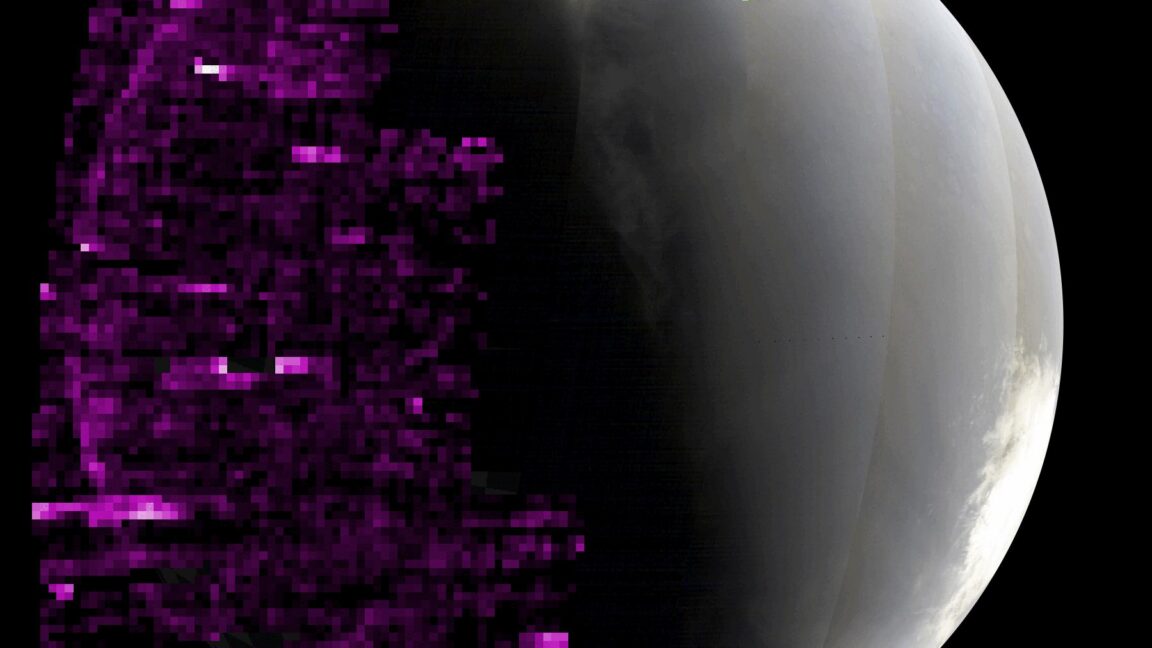
- •The spacecraft discovered new types of auroras on Mars, including proton auroras, which had previously only been observed on Earth.
- •Beyond its scientific observations, MAVEN served as a vital communications relay for surface missions, including the Curiosity and Perseverance rovers, and held the record for the most data relayed from another planet in a single day.
🛠️ Technical Deep Dive
- Launch Vehicle: Atlas V 401 rocket.
- Manufacturer: Lockheed Martin Space Systems.
- Design Heritage: Based on the Mars Reconnaissance Orbiter and 2001 Mars Odyssey spacecraft designs.
- Dimensions: Approximately 2.3 meters x 2.3 meters x 2 meters (7 ft 7 in x 7 ft 7 in x 6 ft 7 in) high, with a total length of 11.4 meters (37 ft) including its deployed solar arrays.
- Power: 1,135 watts.
- Orbital Parameters: Highly elliptical orbit with a periareon (closest point) altitude of 180 km (110 mi) and an apoareon (farthest point) altitude of 4,500 km (2,800 mi), an inclination of 75°, and a period of 3.6 hours.
- Scientific Instruments: MAVEN carried eight science instruments organized into three packages:
- Particles and Fields Package: Includes the Solar Wind Electron Analyzer (SWEA), Solar Wind Ion Analyzer (SWIA), SupraThermal And Thermal Ion Composition (STATIC), Solar Energetic Particle (SEP), Langmuir Probe and Waves (LPW), and Magnetometer (MAG).
- Remote Sensing Package: Features the Imaging Ultraviolet Spectrometer (IUVS), which is the most powerful ultraviolet spectrograph sent to another planet.
- Neutral Gas and Ion Mass Spectrometer (NGIMS): Measures the composition and isotopes of neutral gases and ions.
- Relay Capability: Equipped with an Electra UHF radio to provide backup data relay services for Mars surface missions.
🔮 Future ImplicationsAI analysis grounded in cited sources
⏳ Timeline
📎 Sources (22)
Factual claims are grounded in the sources below. Forward-looking analysis is AI-generated interpretation.
Weekly AI Recap
Read this week's curated digest of top AI events →
👉Related Updates
AI-curated news aggregator. All content rights belong to original publishers.
Original source: Ars Technica ↗
This is a summary, not the original. Read the source, or get the weekly briefing.
The weekly digest
One email a week. Unsubscribe anytime.