NASA schedules three lunar missions through 2026
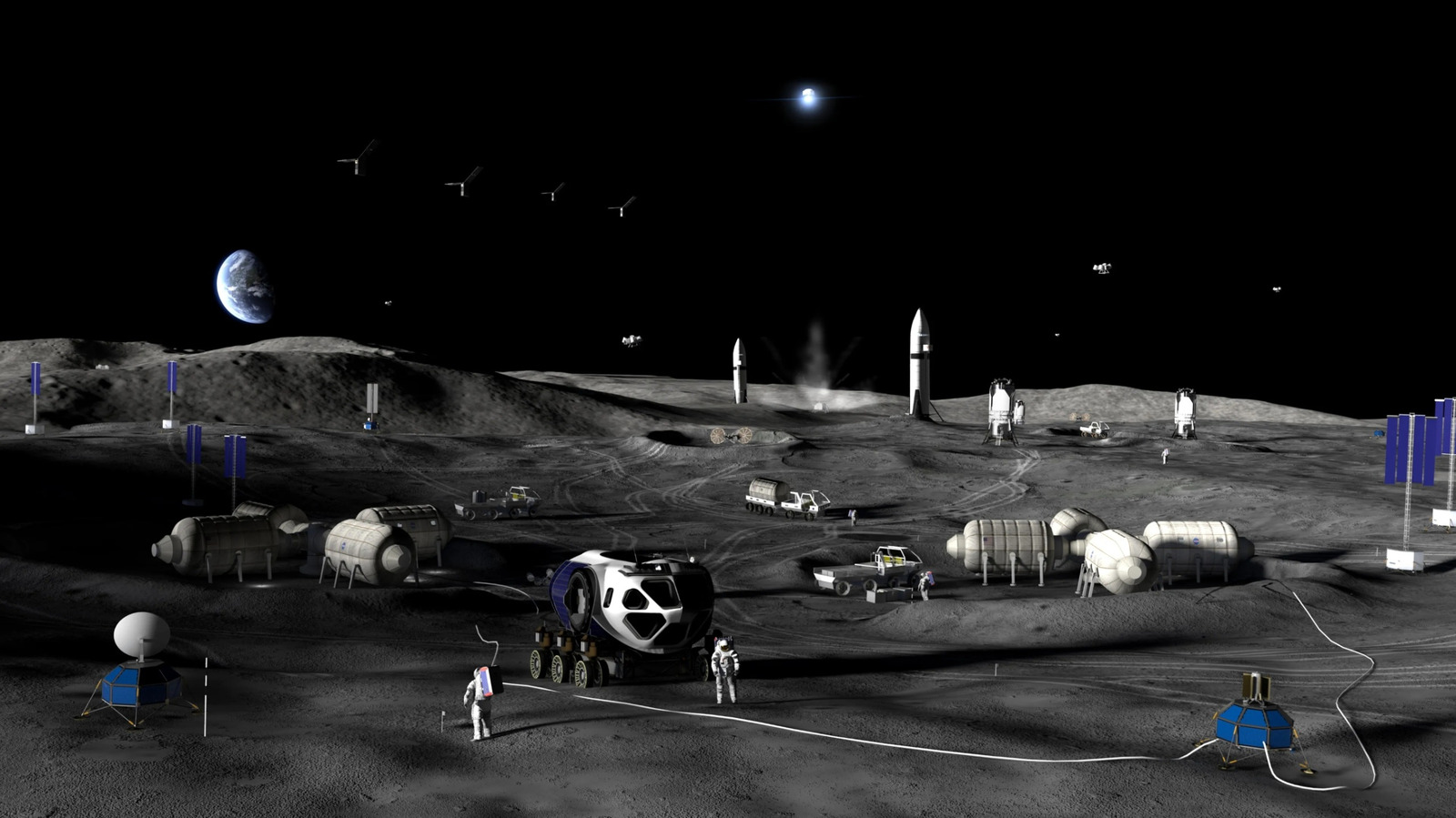
💡Learn how autonomous hardware from Blue Origin and Astrolab is shaping the future of AI-driven space exploration.
⚡ 30-Second TL;DR
What Changed
Three lunar missions planned before the end of 2026
Why It Matters
These missions represent a critical step in testing autonomous robotics and logistics systems in extreme environments. The data gathered will likely influence future AI-driven navigation and surface operations for space exploration.
What To Do Next
Monitor the technical specifications released by Blue Origin and Astrolab to understand the requirements for edge AI in space-hardened robotics.
Key Points
- •Three lunar missions planned before the end of 2026
- •Focus on lunar surface payload delivery
- •Testing of advanced hardware from Blue Origin and Astrolab
🧠 Deep Insight
Background and context from public sources — not the original article. 24 sources cited.
🔑 Enhanced Key Takeaways
- •The three lunar missions scheduled through 2026 are part of NASA's broader Commercial Lunar Payload Services (CLPS) initiative, which leverages private companies to deliver science and technology payloads to the Moon, and the overarching Artemis program, aiming for a sustained human presence on the lunar surface.
- •The missions include 'Moon Base I' utilizing Blue Origin's Blue Moon Mark 1 Endurance lander, and 'Moon Base II' which will deploy Astrolab's FLIP rover via Astrobotic's Griffin lander.
- •Blue Origin's Blue Moon Mark 1 (MK1) is an uncrewed cargo lander capable of delivering up to three metric tons (3,000 kg) of payload, designed to demonstrate critical technologies such as precision landing and cryogenic propulsion systems.
- •Astrolab's FLIP (FLEX Lunar Innovation Platform) rover, a technology demonstration platform, is specifically engineered to operate without a deployment ramp, allowing direct egress from the lander and maturing mobility systems for its larger Flexible Logistics and Exploration (FLEX) rover.
- •These missions will carry diverse scientific payloads, including instruments to study lunar plume-surface interactions (SCALPSS), assess helium-3 concentrations in regolith, and quantify dust-induced degradation on lunar subsystems.
📊 Competitor Analysis▸ Show
| Company | Hardware Type | Key Features / Payload Capacity |
|---|---|---|
| Blue Origin | Blue Moon Mark 1 Lander | Cargo lander, 3,000 kg payload, precision landing, cryogenic propulsion. |
| Astrolab | FLEX Rover | Crewed/cargo rover, 1600 kg payload, wheel-on-limb mobility, robotic arm, semi-autonomous. |
| Astrobotic | Peregrine Lander | Smaller lunar lander, ~100 kg payload. |
| Astrobotic | Griffin Lander | Larger lunar lander, carries Astrolab's FLIP rover. |
| Intuitive Machines | Nova-C Lander | Lunar lander, ~130 kg payload. |
| Firefly Aerospace | Blue Ghost Lander | Lunar lander, delivers multiple payloads. |
| Lunar Outpost | Pegasus Rover | Lighter, mission-ready rover, meets LTV requirements. |
🛠️ Technical Deep Dive
- Blue Origin Blue Moon Mark 1 (MK1) Lander:
- Single-launch, expendable cargo lander.
- Designed to deliver up to three metric tons (3,000 kg) of cargo anywhere on the lunar surface.
- Leverages the 7-meter fairing of the New Glenn launch vehicle.
- Features a BE-7 engine, cryogenic fluid power and propulsion systems, avionics, and continuous downlink communications.
- Capable of precision landing within 100 meters site accuracy.
- Provides standard payload interfaces with structural mounts, regulated DC power, RS-485/RS-422 data handling, and direct-to-Earth communications.
- Astrolab FLEX (Flexible Logistics and Exploration) Rover:
- Highly adaptable vehicle for cargo transport, construction, and exploration on the Moon and Mars.
- Maximum payload capacity of 1600 kg (3,527 lbs) and over 3m³ volume.
- Features a unique wheel-on-limb mobility system that adjusts chassis height for stability and ground clearance.
- Equipped with flexible and robust airless tires for excellent mobility in soft soil.
- Can carry two suited astronauts and supports remote operation from Earth.
- Includes a six-degree-of-freedom (6DOF) robotic arm with payload capability exceeding 25kg within a 2m radius workspace.
- Integrated with navigation and hazard detection sensors for semi-autonomous operations.
- Features a deployable 3m² solar array and internal batteries.
- Capable of climbing 30° inclines and navigating obstacles of 35-40 cm in height, with a top speed of up to 20 km/h (12 mph).
- Astrolab FLIP (FLEX Lunar Innovation Platform) Rover:
- A technology demonstration rover designed to mature mobility systems for the larger FLEX.
- Specifically designed to operate without a deployment ramp, enabling direct egress from the top of the lander.
🔮 Future ImplicationsAI analysis grounded in cited sources
⏳ Timeline
📎 Sources (24)
Factual claims are grounded in the sources below. Forward-looking analysis is AI-generated interpretation.
Weekly AI Recap
Read this week's curated digest of top AI events →
👉Related Updates
AI-curated news aggregator. All content rights belong to original publishers.
Original source: Engadget ↗
This is a summary, not the original. Read the source, or get the weekly briefing.
Weekly AI briefing
One email a week. Unsubscribe anytime.