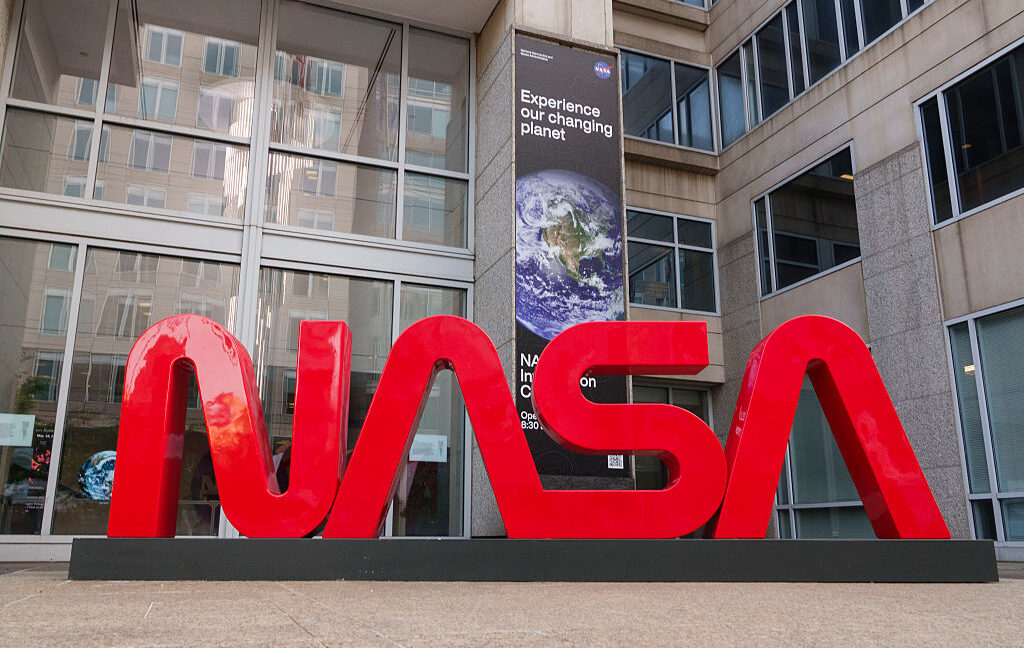
NASA reorganizes to reduce bureaucracy and increase speed
💡Organizational changes in major government agencies often signal shifts in future AI and robotics research funding.
⚡ 30-Second TL;DR
What Changed
Reorganization aims to accelerate project delivery timelines
Why It Matters
Organizational shifts in large agencies often lead to changes in procurement and research funding priorities for AI and robotics contractors.
What To Do Next
Monitor NASA's updated procurement guidelines to see if AI research funding priorities shift following this reorganization.
Key Points
- •Reorganization aims to accelerate project delivery timelines
- •Focusing resources on high-priority strategic objectives
- •Reducing internal bureaucracy to improve operational agility
🧠 Deep Insight
Web-grounded analysis with 10 cited sources.
🔑 Enhanced Key Takeaways
- •The reorganization unifies the Exploration Systems Development Mission Directorate and Space Operations Mission Directorate into a new Human Spaceflight Mission Directorate (HSMD) to streamline human spaceflight operations.
- •NASA is integrating the Aeronautics Research Mission Directorate and Space Technology Mission Directorate into a new Research and Technology Mission Directorate (RTMD), which will focus on aeronautics, space technology, and nuclear power and propulsion development.
- •A new workforce rotation program will allow NASA civil servants to undertake one- to two-year assignments in the private sector, with the option to transition to full-time commercial roles, aiming to bridge the gap between government and industry.
- •The agency is shifting its Artemis strategy, pausing the Lunar Gateway in favor of prioritizing a permanent outpost at the lunar South Pole, and plans to increasingly rely on commercial partners for future launch and landing contracts.
- •The reorganization is partly a response to the National Space Policy, which directs NASA to focus resources on accelerating the Artemis program, establishing a Moon Base, developing nuclear space reactors, and expanding science and discovery missions, amidst proposed budget cuts for FY2026 that could impact science and other areas.
🛠️ Technical Deep Dive
- The reorganization involves the consolidation of existing mission directorates into new structures: the Human Spaceflight Mission Directorate (HSMD) and the Research and Technology Mission Directorate (RTMD).
- The RTMD will specifically house a Space Reactor Office, indicating a dedicated focus on nuclear power and propulsion development.
- The revised Artemis strategy emphasizes the use of the Commercial Lunar Payload Services (CLPS) program for robotic missions to the Moon's South Pole, with a goal of achieving nearly monthly lunar landings by 2027.
- This accelerated lunar landing schedule is contingent on advancements in orbital propellant refueling, a capability currently being developed by commercial entities like SpaceX.
- The NASA Reauthorization Act of 2026 supports procuring commercial services for deep space crew and cargo and mandates the establishment of initial lunar outpost elements by December 31, 2030.
- The agency also plans to rebuild core competencies and insource contractor roles to civil servants where appropriate.
- A study on the development and application of AI in space science is also directed by the 2026 Reauthorization Act.
🔮 Future ImplicationsAI analysis grounded in cited sources
⏳ Timeline
📎 Sources (10)
Factual claims are grounded in the sources below. Forward-looking analysis is AI-generated interpretation.
Weekly AI Recap
Read this week's curated digest of top AI events →
👉Related Updates

AI-curated news aggregator. All content rights belong to original publishers.
Original source: Ars Technica ↗