NASA launches mission to rescue Swift observatory
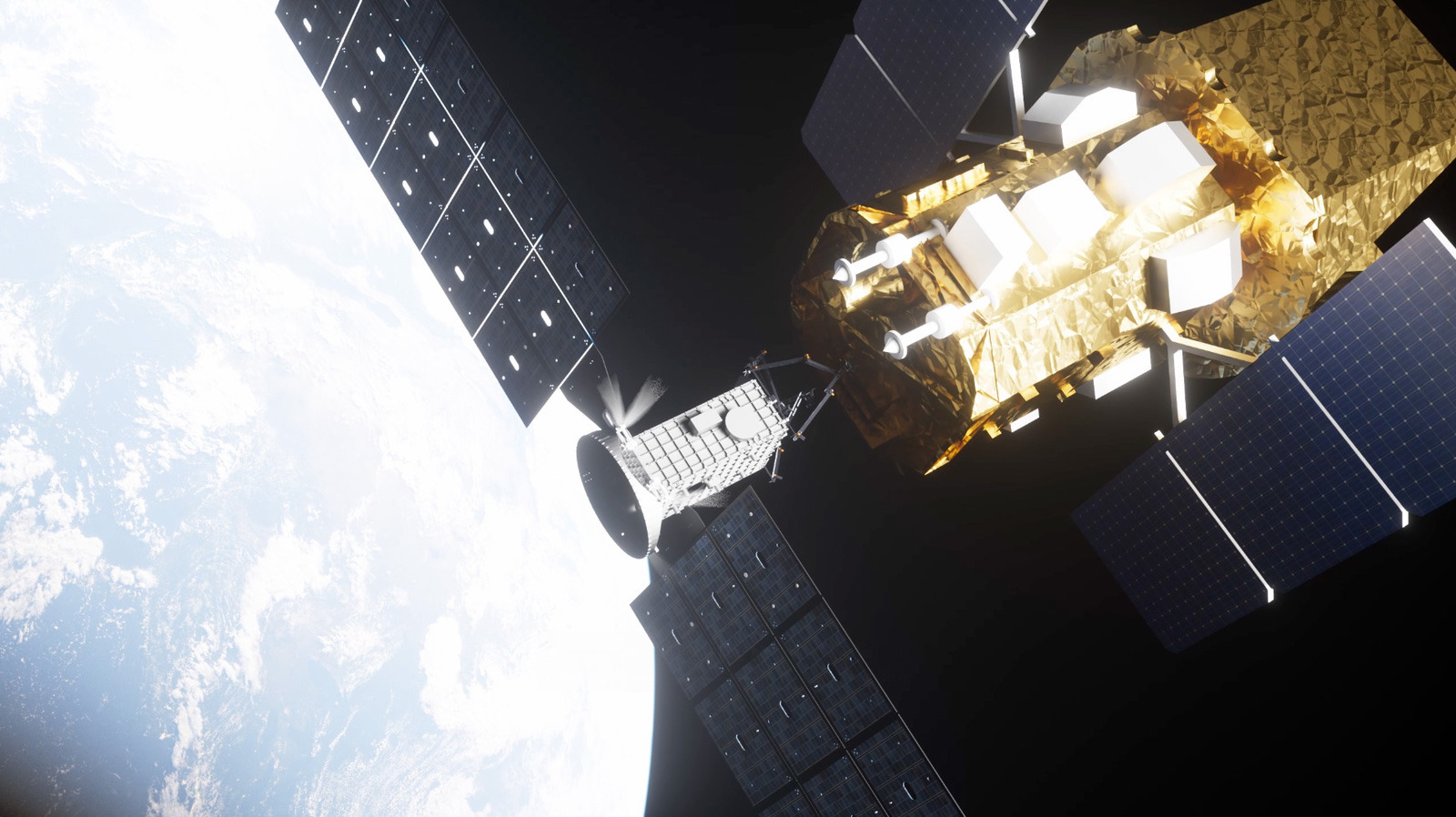
💡Learn how autonomous robotic systems are being used to perform complex, real-time repairs on orbital hardware.
⚡ 30-Second TL;DR
What Changed
NASA successfully established contact with the Swift robotic spacecraft.
Why It Matters
This mission demonstrates advancements in autonomous robotic maintenance for space assets. It highlights the growing importance of robotic intervention in extending the lifespan of orbital infrastructure.
What To Do Next
Review NASA's open-source robotics documentation for insights into autonomous satellite recovery algorithms.
Key Points
- •NASA successfully established contact with the Swift robotic spacecraft.
- •The Swift Boost mission is designed to stabilize the falling observatory.
- •The mission utilizes autonomous robotic systems to perform orbital corrections.
🧠 Deep Insight
AI-generated analysis for this event — not the original article.
🔑 Enhanced Key Takeaways
- •The Swift observatory, officially known as the Neil Gehrels Swift Observatory, was launched in 2004 to study gamma-ray bursts.
- •The 'Swift Boost' mission utilizes a novel robotic servicing approach, marking one of the first times a legacy space telescope has been actively rescued from orbital decay.
- •The observatory had been operating in a degraded state due to the failure of one of its reaction wheels, which limited its ability to point accurately at targets.
- •NASA's mission team is employing advanced autonomous navigation algorithms to safely approach the aging spacecraft without risking a collision.
- •The mission is part of a broader NASA initiative to demonstrate in-orbit servicing capabilities, potentially extending the lifespan of other aging assets in low Earth orbit.
🛠️ Technical Deep Dive
- The Swift observatory utilizes a three-axis stabilized spacecraft bus designed for rapid slewing to capture transient gamma-ray events.
- The rescue mission involves the use of proximity operations software that calculates relative navigation vectors between the servicer and the Swift target.
- Orbital correction maneuvers are being executed using the observatory's remaining hydrazine propellant reserves, managed by updated flight software patches uploaded during the mission.
- The autonomous system relies on computer vision sensors to identify docking or stabilization points on the exterior of the Swift chassis.
🔮 Future ImplicationsAI analysis grounded in cited sources
⏳ Timeline
📰 Event Coverage
Weekly AI Recap
Read this week's curated digest of top AI events →
👉Related Updates
AI-curated news aggregator. All content rights belong to original publishers.
Original source: Engadget ↗
This is a summary, not the original. Read the source, or get the weekly briefing.
Weekly AI briefing
One email a week. Unsubscribe anytime.