NASA Launches New Radiation-Hardened AI Processor
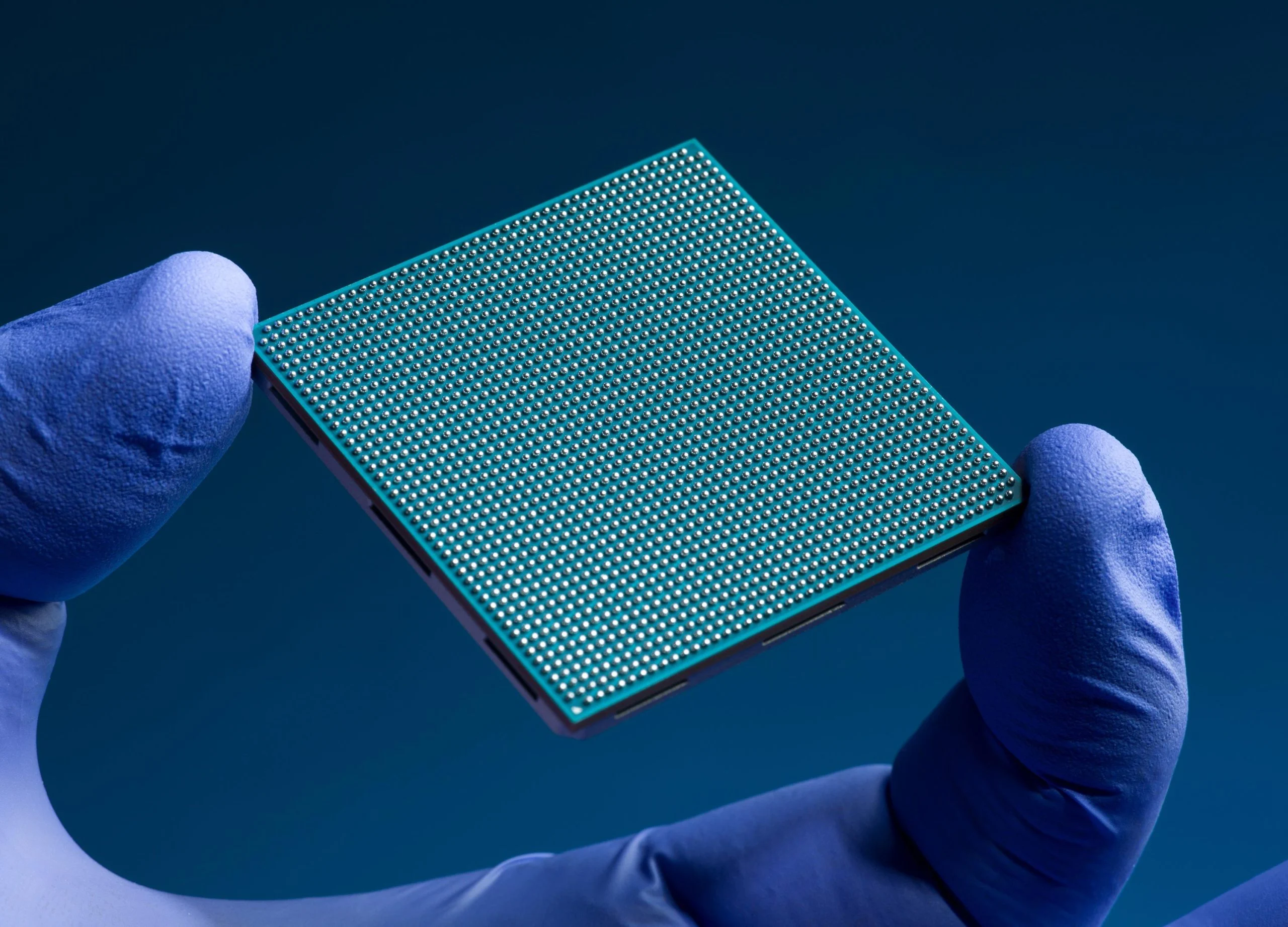
💡A 500x boost in space-grade AI compute could redefine edge AI capabilities in extreme environments.
⚡ 30-Second TL;DR
What Changed
New chip offers a 500x increase in space-based computing power.
Why It Matters
This development marks a leap for edge AI in extreme environments, potentially influencing future satellite and drone hardware designs.
What To Do Next
Monitor NASA's public technical disclosures for potential spin-off applications in terrestrial edge-computing hardware.
Key Points
- •New chip offers a 500x increase in space-based computing power.
- •Designed specifically to withstand high-radiation environments in deep space.
- •Enables autonomous navigation and real-time data processing for future spacecraft.
🧠 Deep Insight
Web-grounded analysis with 14 cited sources.
🔑 Enhanced Key Takeaways
- •The new processor is officially designated as the High-Performance Spaceflight Computing (HPSC) project.
- •NASA developed the HPSC processor through a public-private partnership with industry leader Microchip Technology Inc.
- •The HPSC is designed as a system-on-a-chip (SoC), integrating central processing units, computational offloads, advanced networking systems, memory, and input/output interfaces into a single compact unit.
- •It features a scalable architecture that enables unused functions to power down, thereby optimizing energy efficiency crucial for critical operations in space.
- •Beyond deep space missions, the HPSC processor is intended for integration into Earth orbiters, planetary rovers, and crewed habitats, with Microchip Technology Inc. also planning to adapt the technology for terrestrial industries such as aviation and automotive manufacturing.
📊 Competitor Analysis▸ Show
| Company/Project | Key Features / Products | Benchmarks / Performance | Notes |
|---|---|---|---|
| NASA HPSC (with Microchip Technology Inc.) | System-on-a-chip (SoC) with CPUs, computational offloads, networking, memory, I/O; scalable, fault-tolerant, rad-hard-by-design (RHBD), multicore 64-bit microprocessor; built-in 240Gbps TSN Ethernet switch; AI dataflow processing with scalable vector computing. | Up to 100x computing capability of current space processors (design target); early test results show approximately 500x performance of current rad-hard processors. | Designed for deep space, Moon, Mars, Earth orbiters, rovers, crewed habitats; commercial adaptation planned for aviation, automotive. |
| BAE Systems | RAD750® Single Board Computer (SBC); RH12™ Storefront (rad-hard libraries in 12nm node, ASIC design services). | RAD750® powered Mars Curiosity rover (landed 2012); RH12™ offers more transistors, reduced power consumption. | Long history in rad-hard electronics for defense and space; collaborates with NASA. |
| AMD | Versal SoCs; radiation-tolerant FPGAs. | Used in Mars Perseverance rover and NASA's NISAR mission; designed for edge processing in space. | Focus on flexible open-architecture designs; rigorous testing for up to 15 years in space. |
| Nvidia | Space-1 Vera Rubin module (combines Vera CPU and Rubin GPU). | Doubles efficiency and delivers 50% faster performance than traditional data center CPUs for LLMs in space. | Focus on orbital AI and edge computing; aims to process massive data streams in real-time in space. |
| Vorago Technologies | VA5 family (dual-core microcontrollers with Arm® Cortex®-M55 cores); VA4 family (radiation-tolerant by design microcontrollers). | VA5 offers 2x speed and 5x advanced capabilities including AI/machine learning. | Patented HARDSIL® technology for radiation and heat resistance; offers both rad-tolerant and rad-hardened varieties; targets satellite constellations and deep-space. |
| Teledyne Technologies | Radiation-hardened ARM processors. | Caters to demand for high-performance computing in spacecraft. | Key player in space semiconductor market. |
🛠️ Technical Deep Dive
- The HPSC is a fault-tolerant, rad-hard-by-design (RHBD), modern cache-coherent multicore System-On-Chip (SoC) 64-bit microprocessor.
- It integrates central processing units (CPUs), computational offloads, advanced networking systems, memory, and input/output (I/O) interfaces into a single compact device.
- The processor includes a built-in 240Gbps enterprise-grade Time-Sensitive Networking (TSN) Ethernet switch.
- It is designed with High-Performance Computing (HPC) features and provides high-performance AI dataflow processing with scalable vector computing capabilities.
- The scalable architecture allows for dynamic power management, enabling unused functions to power down to optimize energy efficiency.
- Prototypes are undergoing rigorous testing at NASA's Jet Propulsion Laboratory (JPL), including radiation, thermal, and shock tests, as well as evaluation against high-fidelity landing scenarios from real NASA missions.
🔮 Future ImplicationsAI analysis grounded in cited sources
⏳ Timeline
📎 Sources (14)
Factual claims are grounded in the sources below. Forward-looking analysis is AI-generated interpretation.
Weekly AI Recap
Read this week's curated digest of top AI events →
👉Related Updates



AI-curated news aggregator. All content rights belong to original publishers.
Original source: cnBeta (Full RSS) ↗