NASA invests $590M in private Moon outpost contractors
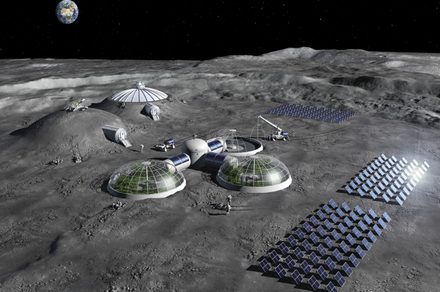
💡Major infrastructure investment in space robotics and autonomous logistics for lunar exploration.
⚡ 30-Second TL;DR
What Changed
NASA allocated $590 million to private space firms
Why It Matters
This investment accelerates the infrastructure development for lunar operations, creating new opportunities for robotics and autonomous navigation systems in space.
What To Do Next
Explore NASA's open-source robotics software frameworks if you are building autonomous navigation systems for extreme environments.
Key Points
- •NASA allocated $590 million to private space firms
- •Partners include Astrobotic, Firefly, and Intuitive Machines
- •Focus is on delivering cargo and landers for the Moon Base program
🧠 Deep Insight
AI-generated analysis for this event — not the original article.
🔑 Enhanced Key Takeaways
- •The $590 million investment is part of the Commercial Lunar Payload Services (CLPS) initiative, which leverages private sector innovation to reduce the cost of lunar exploration.
- •Astrobotic, Firefly, and Intuitive Machines were selected specifically for their ability to provide end-to-end delivery services, including integration, launch, and surface operations.
- •This funding round is explicitly tied to the development of infrastructure required for the Artemis base camp, including power generation and communication relays.
- •The contracts utilize a fixed-price milestone-based payment structure, shifting the financial risk of mission failure from NASA to the private contractors.
- •These missions are intended to support the deployment of the Lunar Terrain Vehicle (LTV) and other pressurized rover systems necessary for long-term human habitation.
📊 Competitor Analysis▸ Show
| Company | Primary Lunar Lander | Payload Capacity | Key Advantage |
|---|---|---|---|
| Intuitive Machines | Nova-C / Nova-D | 100kg - 500kg+ | Proven flight heritage with successful lunar landings |
| Astrobotic | Peregrine / Griffin | 90kg - 500kg | Specialized in diverse payload integration and water-ice detection |
| Firefly Aerospace | Blue Ghost | 150kg - 1,000kg | High-mass delivery capability for heavy infrastructure |
🛠️ Technical Deep Dive
- Intuitive Machines Nova-D lander utilizes a methane-LOX propulsion system designed for high-precision landing in challenging lunar terrain.
- Astrobotic's Griffin lander features a heavy-lift architecture capable of delivering the VIPER rover and other large-scale scientific instruments.
- Firefly's Blue Ghost lander incorporates advanced autonomous hazard detection and avoidance (HDA) systems to ensure landing accuracy within 100 meters of target sites.
- All three contractors are required to implement standardized lunar power interfaces to allow for modular energy sharing between landers and base camp assets.
🔮 Future ImplicationsAI analysis grounded in cited sources
⏳ Timeline
Weekly AI Recap
Read this week's curated digest of top AI events →
👉Related Updates
AI-curated news aggregator. All content rights belong to original publishers.
Original source: Digital Trends ↗
This is a summary, not the original. Read the source, or get the weekly briefing.
Weekly AI briefing
One email a week. Unsubscribe anytime.