NanoClaw-Docker Partnership Boosts AI Agent Security
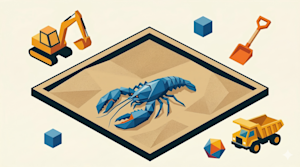
💡Enterprise AI agents now safer in Docker Sandboxes via NanoClaw-Docker tie-up
⚡ 30-Second TL;DR
What Changed
NanoClaw integrates with Docker Sandboxes for enterprise-ready AI agent isolation
Why It Matters
This partnership lowers barriers for enterprises adopting AI agents by ensuring robust containment, potentially accelerating production deployments. It highlights the need for specialized infrastructure as agents become more capable.
What To Do Next
Test NanoClaw agents in Docker Sandboxes to evaluate isolation for your enterprise workflows.
Key Points
- •NanoClaw integrates with Docker Sandboxes for enterprise-ready AI agent isolation
- •Agents gain autonomy to install packages and modify files without host risks
- •Security-first approach in growing 'claw' ecosystem by founder Gavriel Cohen
- •Docker rethinks isolation for mutable AI agent behaviors
🧠 Deep Insight
Background and context from public sources — not the original article. 7 sources cited.
🔑 Enhanced Key Takeaways
- •NanoClaw implements OS-level isolation using Linux containers and Apple Container (on macOS Tahoe), ensuring that compromised agents cannot access host system resources or data outside their assigned sandbox[2][3]
- •The framework supports agent swarms—teams of specialized agents collaborating on complex tasks—built on the Claude Agent SDK, enabling coordinated multi-agent workflows within isolated environments[2]
- •NanoClaw's architecture prioritizes minimalism with a codebase consisting of a few files in a single Node.js process, designed to be understood in eight minutes, reducing attack surface compared to larger frameworks[2]
- •The Docker integration adds a second isolation layer beyond NanoClaw's native container model, enabling credential injection via Docker's proxy to prevent API keys from existing inside the sandbox[5]
- •NanoClaw runs on resource-constrained hardware including Raspberry Pi 4 with 4GB RAM, making enterprise-grade agent security accessible for edge deployments[4]
📊 Competitor Analysis▸ Show
| Feature | NanoClaw | IronClaw | OpenClaw |
|---|---|---|---|
| Trust Boundary | OS container | 5-layer defense | Application code |
| Attack Surface | ~500 lines + OS | Rust binary + WASM + Docker | ~400,000 lines |
| Credential Protection | Container isolation | AES-256-GCM + leak scanning | Config-based |
| Prompt Injection Defense | Contained blast radius | Network-layer blocking | Application-layer checks |
| Ease of Setup | Simple | Complex | Moderate |
| Agent Swarms Support | Yes | No | No |
| Primary Use Case | WhatsApp + maximum security | Enterprise with complex threat models | General-purpose agents |
🛠️ Technical Deep Dive
- Container Runtime: Linux containers on Linux systems; Apple Container (lightweight VMs) on macOS Tahoe; Docker support for additional sandboxing layers[2][3]
- Isolation Model: Each WhatsApp group receives its own isolated container with separate filesystem and memory space; bash commands execute within containers, not on host[2]
- Data Flow Architecture: WhatsApp messages → SQLite database → polling loop → container execution → response routing; inter-process communication via filesystem[2]
- Agent Swarms Implementation: Built on Claude Agent SDK; enables specialized agents to collaborate on complex tasks (e.g., weekly git history analysis, daily message summarization) within isolated environments[2]
- Credential Management: Secrets encrypted with AES-256-GCM at host boundaries; tools receive opaque tokens rather than raw credentials; 22 regex patterns with Aho-Corasick optimization scan requests/responses for credential leaks in real-time[3]
- System Requirements: macOS or Linux; Node.js 20+; Claude Code for installation and dependency management; Docker or Apple Container as runtime[2]
- Codebase Minimalism: Core components include orchestrator, WhatsApp integration (Baileys library), SQLite database, container runner, and task scheduler[2]
🔮 Future ImplicationsAI analysis grounded in cited sources
⏳ Timeline
📎 Sources (7)
Factual claims are grounded in the sources below. Forward-looking analysis is AI-generated interpretation.
- devopschat.co — Nanoclaw Can Stuff Each AI Agent Into Its Own Docker Container to Deal with Openclaws Security Mess
- trendingtopics.eu — Nanoclaw Challenges Openclaw with Container Isolated AI Agents for Enhanced Security
- ibl.ai — Securing Autonomous Agents What Openclaw Ironclaw and Nanoclaw Teach US About Agent Security
- till-freitag.com — Openclaw Alternatives En
- docker.com — Run Nanoclaw in Docker Shell Sandboxes
- docker.com — Whats Holding Back AI Agents Its Still Security
- en.tigosolutions.com — Next Generation AI Agents Explained Openclaw Nanoclaw Ironclaw and the Rise of Agent Architectures
📰 Event Coverage
Weekly AI Recap
Read this week's curated digest of top AI events →
👉Related Updates


AI-curated news aggregator. All content rights belong to original publishers.
Original source: VentureBeat ↗
This is a summary, not the original. Read the source, or get the weekly briefing.
Weekly AI briefing
One email a week. Unsubscribe anytime.