Cisco Launches Defense Claw for AI Agent Trust
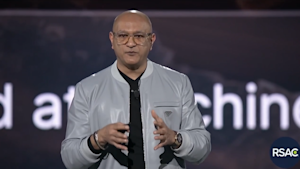
💡Cisco's Defense Claw tackles 80% AI agent trust gap with open-source security tools
⚡ 30-Second TL;DR
What Changed
85% enterprises pilot AI agents, only 5% reach production due to trust gap
Why It Matters
This closes the pilot-to-production gap, enabling enterprises to deploy trusted AI agents and avoid risks like irreversible actions. Cisco's open-source push accelerates industry-wide adoption of secure AI infrastructure.
What To Do Next
Download Cisco Defense Claw from open-source repos and integrate with OpenShell for your AI agent pilots.
Key Points
- •85% enterprises pilot AI agents, only 5% reach production due to trust gap
- •Cisco releases Defense Claw open-source framework with Skills Scanner, MCP Scanner, AI BOM, CodeGuard
- •Integrates with Nvidia OpenShell for secure agent containers
- •New tools: free AI Defense Explorer red teaming, Agent Runtime SDK, LLM Security Leaderboard
🧠 Deep Insight
AI-generated analysis for this event — not the original article.
🔑 Enhanced Key Takeaways
- •Defense Claw leverages the Model Context Protocol (MCP) to standardize how AI agents interact with enterprise data sources, addressing the fragmentation in agent-to-tool connectivity.
- •The AI BOM (Bill of Materials) component within Defense Claw is designed to map the entire supply chain of an agent, including the specific LLM weights, fine-tuning datasets, and third-party plugins, to ensure compliance with emerging AI transparency regulations.
- •Cisco's collaboration with Nvidia on OpenShell focuses on hardware-level isolation, utilizing Confidential Computing (TEE) to ensure that agent memory and execution environments remain encrypted even from the host operating system.
📊 Competitor Analysis▸ Show
| Feature | Cisco Defense Claw | Palo Alto Networks (Prisma AI) | CrowdStrike (Falcon AI) |
|---|---|---|---|
| Primary Focus | Agent Runtime Security | Network/Cloud AI Security | Endpoint/Threat Hunting AI |
| Open Source | Yes (Framework) | No | No |
| Integration | Nvidia OpenShell | Native Cloud/SASE | Falcon Platform |
| Pricing | Freemium/Open Source | Enterprise Subscription | Enterprise Subscription |
🛠️ Technical Deep Dive
- •Defense Claw Architecture: Operates as a middleware layer between the Agent Orchestrator and the LLM provider, intercepting API calls to enforce policy-based guardrails.
- •MCP Scanner: Performs static analysis on Model Context Protocol servers to identify insecure file system access or unauthorized database query patterns before an agent is granted permission to connect.
- •CodeGuard: Implements runtime sandboxing for agent-generated code execution, utilizing WebAssembly (Wasm) to restrict system calls and network access within the agent's execution environment.
- •AI BOM Schema: Adopts the CycloneDX standard for AI, providing a machine-readable format for tracking model provenance and security posture.
🔮 Future ImplicationsAI analysis grounded in cited sources
⏳ Timeline
Weekly AI Recap
Read this week's curated digest of top AI events →
👉Related Updates
AI-curated news aggregator. All content rights belong to original publishers.
Original source: VentureBeat ↗
This is a summary, not the original. Read the source, or get the weekly briefing.
The weekly digest
One email a week. Unsubscribe anytime.