NAB modernises Ada platform with Spark Declarative Pipelines
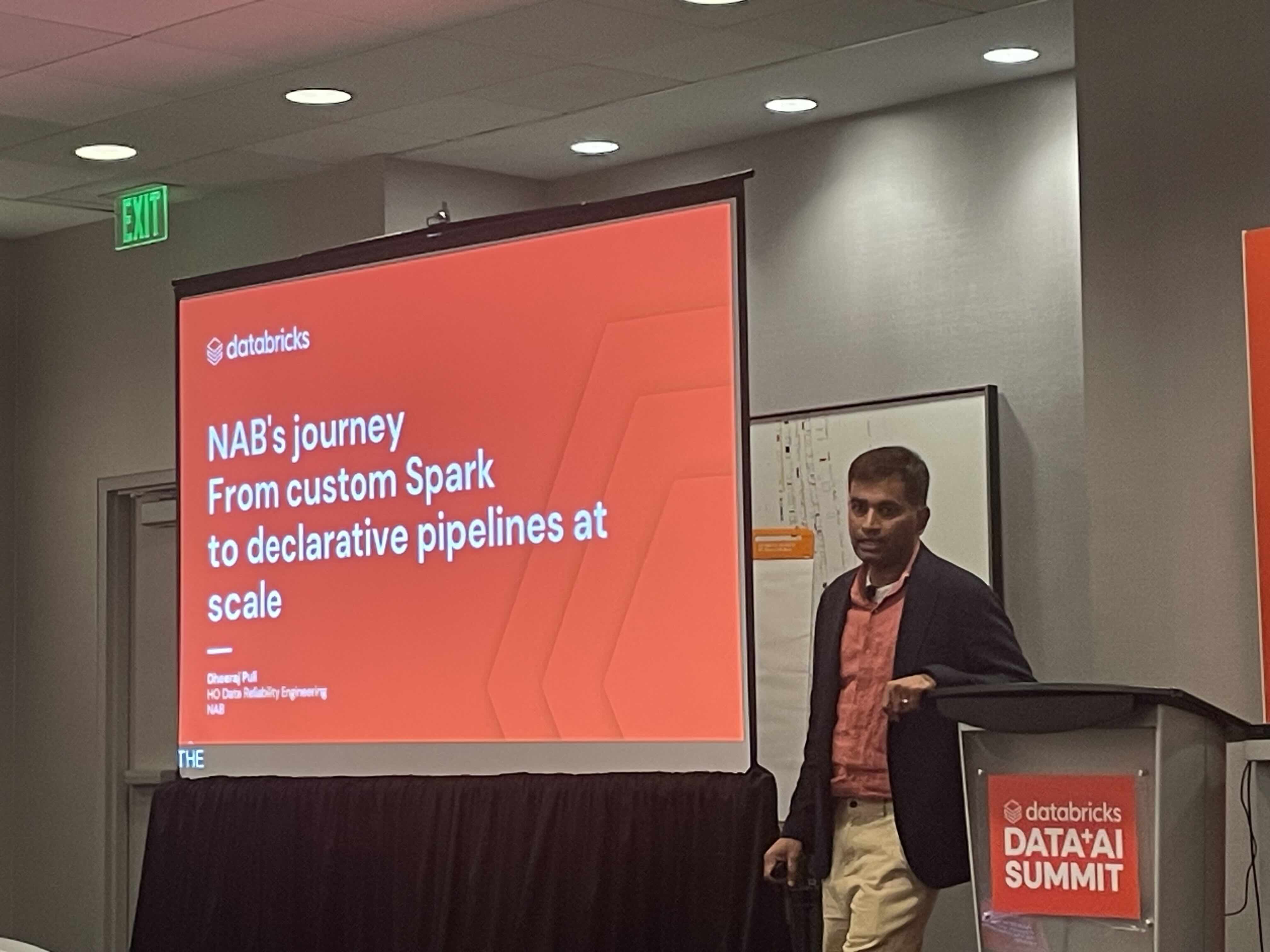
💡Learn how a major bank is refactoring its data infrastructure to improve pipeline scalability and efficiency.
⚡ 30-Second TL;DR
What Changed
NAB is actively modernizing the data infrastructure for its Ada platform.
Why It Matters
This transition suggests a shift toward more declarative, code-as-configuration data engineering practices in large-scale banking environments. It highlights the industry trend of reducing boilerplate code in complex data pipelines.
What To Do Next
Evaluate whether your current data pipelines can benefit from a declarative approach to reduce maintenance overhead and improve schema consistency.
Key Points
- •NAB is actively modernizing the data infrastructure for its Ada platform.
- •The initiative adopts Spark Declarative Pipelines to streamline data workflows.
- •This move aims to enhance the scalability and maintainability of enterprise data operations.
🧠 Deep Insight
AI-generated analysis for this event — not the original article.
🔑 Enhanced Key Takeaways
- •The Ada platform serves as NAB's centralized data and analytics ecosystem, designed to democratize data access across the bank's various business units.
- •Spark Declarative Pipelines allow NAB engineers to define data transformations using configuration-based approaches rather than writing extensive boilerplate code.
- •This modernization effort is part of a broader strategy to reduce the 'time-to-insight' for data scientists and analysts working within the bank's cloud environment.
- •The transition to declarative pipelines is expected to significantly reduce technical debt by standardizing data quality checks and lineage tracking across the platform.
- •NAB has been leveraging this shift to better integrate with its existing multi-cloud data architecture, specifically optimizing costs associated with large-scale Spark compute clusters.
🛠️ Technical Deep Dive
- Implementation utilizes a metadata-driven framework that abstracts Spark SQL and DataFrame API calls into declarative YAML or JSON schemas.
- The architecture decouples pipeline orchestration from execution logic, allowing for seamless migration between different Spark runtime versions.
- Incorporates automated schema validation and data quality gates directly into the pipeline definition layer to prevent 'bad data' from entering downstream tables.
- Leverages Spark's Catalyst optimizer more effectively by enforcing standardized transformation patterns across all declarative pipelines.
🔮 Future ImplicationsAI analysis grounded in cited sources
⏳ Timeline
Weekly AI Recap
Read this week's curated digest of top AI events →
👉Related Updates
AI-curated news aggregator. All content rights belong to original publishers.
Original source: iTNews Australia ↗
This is a summary, not the original. Read the source, or get the weekly briefing.
Weekly AI briefing
One email a week. Unsubscribe anytime.