Musk: Tesla Terafab Adopts Intel 14A Tech
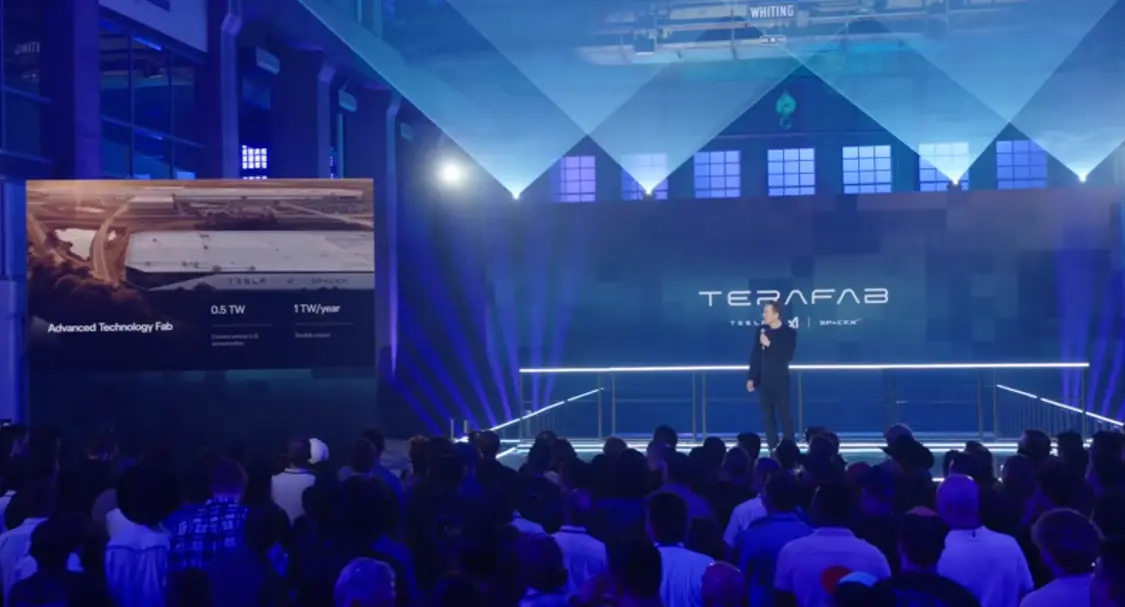
💡Tesla picks Intel 14A for AI fab—huge shift in chip supply for autonomy
⚡ 30-Second TL;DR
What Changed
Tesla CEO Musk confirms Terafab use of Intel 14A process
Why It Matters
Accelerates Tesla's custom AI chip production, potentially cutting TSMC dependency. Validates Intel's foundry ambitions, signaling shifts in AI hardware supply chains.
What To Do Next
Contact Intel Foundry for 14A process quotes on AI chip designs.
Key Points
- •Tesla CEO Musk confirms Terafab use of Intel 14A process
- •Intel gains first major external foundry customer
- •14A node targets competition with TSMC advanced tech
- •Part of Intel's business pivot to foundry services
🧠 Deep Insight
AI-generated analysis for this event — not the original article.
🔑 Enhanced Key Takeaways
- •The 14A process node represents Intel's transition to High-NA EUV lithography, which is critical for achieving the transistor density required for Tesla's next-generation autonomous driving and AI inference hardware.
- •Tesla's adoption of Intel Foundry services marks a strategic shift in its supply chain, moving away from a heavy reliance on TSMC to mitigate geopolitical risks and secure dedicated capacity for custom silicon.
- •Intel 14A utilizes RibbonFET gate-all-around (GAA) transistor architecture and PowerVia backside power delivery, technologies essential for the power efficiency demands of Tesla's Terafab-produced chips.
📊 Competitor Analysis▸ Show
| Feature | Intel 14A (Tesla) | TSMC N2/A16 | Samsung 2nm (SF2) |
|---|---|---|---|
| Lithography | High-NA EUV | High-NA EUV (A16) | High-NA EUV |
| Architecture | RibbonFET (GAA) | NanoFlex (GAA) | MBCFET (GAA) |
| Power Delivery | PowerVia (Backside) | Super Power Rail | Backside Power Delivery |
| Primary Focus | High-performance AI/Auto | Mobile/HPC/AI | Mobile/HPC |
🛠️ Technical Deep Dive
- Intel 14A (1.4nm class) utilizes High-NA EUV (0.55 numerical aperture) to enable higher resolution patterning compared to standard 0.33 NA EUV.
- PowerVia technology decouples power and signal routing, significantly reducing IR drop and improving signal integrity for high-speed logic.
- RibbonFET architecture provides superior electrostatic control over the channel compared to FinFET, allowing for lower operating voltages and higher switching speeds.
🔮 Future ImplicationsAI analysis grounded in cited sources
⏳ Timeline
Weekly AI Recap
Read this week's curated digest of top AI events →
👉Related Updates
AI-curated news aggregator. All content rights belong to original publishers.
Original source: cnBeta (Full RSS) ↗
This is a summary, not the original. Read the source, or get the weekly briefing.
The weekly digest
One email a week. Unsubscribe anytime.