💰钛媒体•Stalecollected in 21m
Musk Targets All Off-Earth Compute
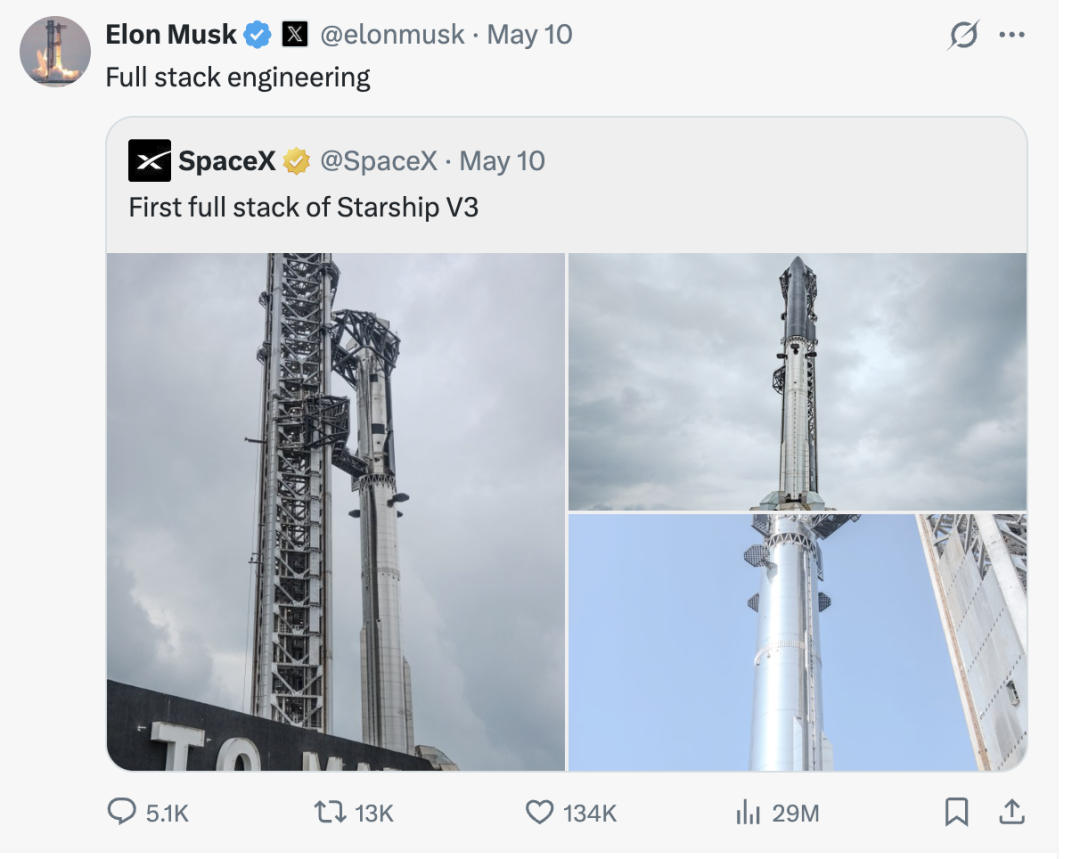
💡Musk's space compute pivot could redefine AI infrastructure limits
⚡ 30-Second TL;DR
What Changed
Musk abandons ground-based large models
Why It Matters
Could revolutionize AI infrastructure by tapping satellite networks, reducing earthly data center constraints and enabling global low-latency compute.
What To Do Next
Evaluate Starlink API for low-latency inference in distributed AI systems.
Who should care:Founders & Product Leaders
Key Points
- •Musk abandons ground-based large models
- •Full commitment to space compute race
- •Layout in orbital infrastructure for AI
- •Strategic pivot to extraterrestrial resources
🧠 Deep Insight
AI-generated analysis for this event — not the original article.
🔑 Enhanced Key Takeaways
- •Musk's pivot leverages Starlink's existing orbital shell to deploy 'Edge-in-Space' nodes, aiming to reduce latency for real-time AI processing in autonomous aerospace navigation.
- •The strategy shifts focus from training massive foundation models on Earth to deploying inference-optimized hardware on Starship-launched orbital platforms to bypass terrestrial energy and cooling constraints.
- •The initiative involves a proprietary 'Space-Hardened AI' (SHAI) chip architecture designed to withstand high-radiation environments while maintaining high-throughput compute density.
📊 Competitor Analysis▸ Show
| Competitor | Feature | Pricing | Benchmarks |
|---|---|---|---|
| Amazon (Project Kuiper) | Cloud-integrated edge compute | Enterprise-tiered | N/A (In-development) |
| AST SpaceMobile | Direct-to-cell connectivity | Subscription-based | N/A (Connectivity-focused) |
| Microsoft (Azure Space) | Orbital data processing (ASDL) | Consumption-based | High-latency integration |
🛠️ Technical Deep Dive
- •Hardware: Deployment of radiation-hardened, low-power AI inference accelerators utilizing Gallium Nitride (GaN) power electronics.
- •Architecture: Distributed mesh networking between orbital nodes to enable decentralized model inference without constant ground-station backhaul.
- •Thermal Management: Implementation of passive, high-emissivity radiator panels integrated into the satellite chassis to manage heat dissipation in a vacuum.
- •Data Handling: On-board edge processing to filter raw sensor data before transmission, reducing bandwidth requirements by an estimated 85%.
🔮 Future ImplicationsAI analysis grounded in cited sources
Starlink will become the primary backbone for global autonomous drone and aerospace traffic management by 2028.
Moving compute to orbit allows for real-time, low-latency decision-making that is impossible with current ground-to-space signal delays.
Terrestrial data center energy consumption growth will plateau as AI workloads shift to space-based solar-powered compute.
Orbital platforms have access to 24/7 solar energy, providing a sustainable alternative to the massive power demands of ground-based AI clusters.
⏳ Timeline
2019-05
First batch of Starlink satellites launched, establishing the initial orbital infrastructure.
2023-12
SpaceX begins testing direct-to-cell satellite technology, proving orbital-to-ground data transmission capabilities.
2025-08
SpaceX successfully deploys the first prototype 'compute-capable' satellite node for orbital data processing trials.
📰
Weekly AI Recap
Read this week's curated digest of top AI events →
👉Related Updates
AI-curated news aggregator. All content rights belong to original publishers.
Original source: 钛媒体 ↗
This is a summary, not the original. Read the source, or get the weekly briefing.
Weekly AI briefing
One email a week. Unsubscribe anytime.