Musk Names SpaceX and Tesla Hardware Leaders
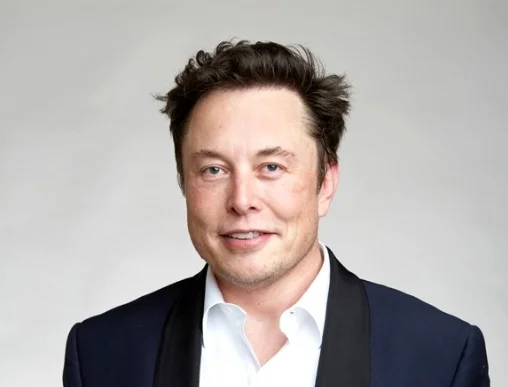
Musk's hardware ranking offers a lens for evaluating AI companies built around manufacturing scale and integration.
30-Second TL;DR
What Changed
Musk identified SpaceX and Tesla as the world's strongest hardware companies.
Why It Matters
The comment is more strategic positioning than a measurable product update, but it highlights the importance Musk places on manufacturing scale and hardware integration. For AI practitioners, that emphasis may matter when evaluating companies building AI-enabled vehicles, spacecraft, robotics, or edge hardware.
What To Do Next
When assessing an AI hardware partner, compare its manufacturing integration, supply-chain control, and deployment scale rather than relying only on model benchmarks.
Key Points
- •Musk identified SpaceX and Tesla as the world's strongest hardware companies.
- •He made the comment during SpaceX's 2026 Q2 earnings call on August 5.
- •Musk explicitly qualified the claim by mentioning China's hardware capabilities.
- •The statement reflects Musk's emphasis on vertically integrated, large-scale hardware manufacturing.
Deep Insight
AI-generated analysis for this event — not the original article.
Enhanced Key Takeaways
- •SpaceX's Q2 2026 earnings call marked a rare instance of the private company disclosing specific financial performance metrics to the public, signaling a shift toward greater transparency as it scales Starship operations.
- •Musk's qualification regarding China specifically referenced the rapid iteration cycles and supply chain dominance of companies like BYD and CATL in the EV and battery sectors.
- •The comparison hinges on 'vertical integration density,' a metric Musk uses to define the percentage of a product's bill of materials manufactured in-house versus sourced from third-party suppliers.
- •Tesla's hardware leadership claim is increasingly tied to the deployment of the Dojo supercomputer and its custom silicon, which Musk argues creates a hardware-software moat traditional automakers cannot replicate.
- •Industry analysts note that SpaceX's hardware dominance is uniquely characterized by its high-cadence reuse capability, which has reduced the cost-per-kilogram to orbit by over 90% compared to legacy aerospace competitors.
Competitor Analysis
- Tesla/SpaceX
- Extremely High
- Traditional Auto/Aerospace
- Low to Moderate
- China (BYD/CATL/Space)
- Very High
- Tesla/SpaceX
- Daily/Weekly
- Traditional Auto/Aerospace
- Multi-Year
- China (BYD/CATL/Space)
- Rapid/Aggressive
- Tesla/SpaceX
- Proprietary Hardware/AI
- Traditional Auto/Aerospace
- Brand/Legacy Supply Chain
- China (BYD/CATL/Space)
- Cost/Scale/Subsidies
| Feature | Tesla/SpaceX | Traditional Auto/Aerospace | China (BYD/CATL/Space) |
|---|---|---|---|
| Vertical Integration | Extremely High | Low to Moderate | Very High |
| Iteration Speed | Daily/Weekly | Multi-Year | Rapid/Aggressive |
| Primary Moat | Proprietary Hardware/AI | Brand/Legacy Supply Chain | Cost/Scale/Subsidies |
Technical Deep Dive
- Tesla's hardware architecture relies on the FSD Computer (HW4/HW5) utilizing custom-designed neural network accelerators optimized for low-latency inference.
- SpaceX's Starship hardware utilizes stainless steel alloy 304L, chosen for its cryogenic strength and high-temperature resistance, enabling rapid manufacturing via automated welding.
- Both companies employ 'first-principles' manufacturing, where components are redesigned to eliminate fasteners and consolidate parts into single-cast or single-weld structures (e.g., Tesla's Giga Press).
Future ImplicationsAI analysis grounded in cited sources
Timeline
- 2020-09Tesla introduces the Giga Press, revolutionizing vehicle chassis manufacturing through large-scale die casting.
- 2022-02SpaceX achieves a record-breaking launch cadence with the Falcon 9, demonstrating the viability of rapid booster reuse.
- 2023-07Tesla begins production of the Dojo supercomputer to accelerate training for autonomous driving hardware.
- 2024-10SpaceX successfully catches the Super Heavy booster, validating advanced hardware precision and control systems.
- 2026-05Tesla announces the expansion of its next-generation manufacturing facilities to support high-volume humanoid robot production.
Weekly AI Recap
Read this week's curated digest of top AI events →
Related Updates
AI-curated news aggregator. All content rights belong to original publishers.
Original source: cnBeta (Full RSS) ↗
This is a summary, not the original. Read the source, or get the weekly briefing.
The weekly digest
One email a week. Unsubscribe anytime.