💰钛媒体•Freshcollected in 20m
Moving Beyond Manual Prompts: The Era of Loop Engineering
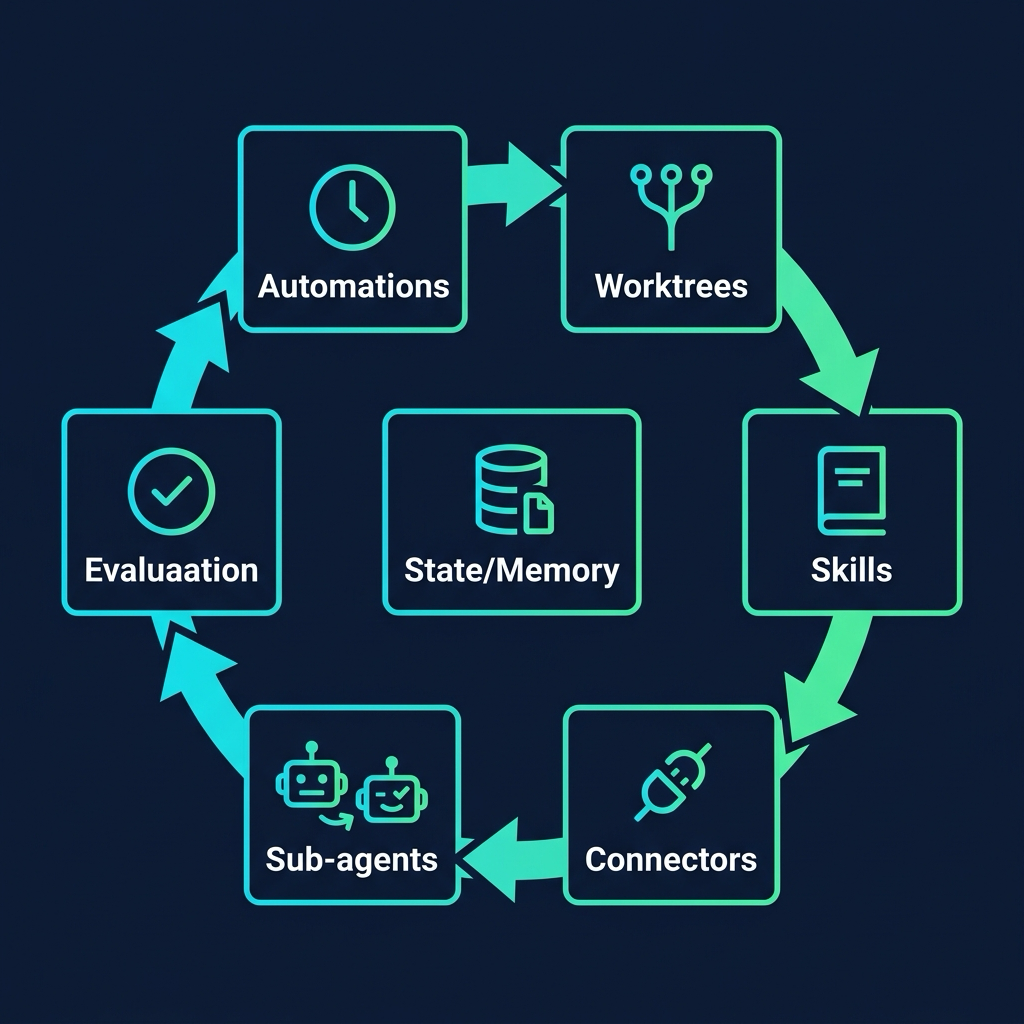
💡Learn how to automate prompt optimization and move away from manual trial-and-error.
⚡ 30-Second TL;DR
What Changed
Manual prompt writing is becoming a bottleneck for complex AI applications.
Why It Matters
Adopting loop engineering can significantly reduce developer time spent on prompt tuning. It enables more robust, production-grade AI agents.
What To Do Next
Implement an automated evaluation loop in your LLM pipeline using frameworks like DSPy or LangGraph.
Who should care:Developers & AI Engineers
Key Points
- •Manual prompt writing is becoming a bottleneck for complex AI applications.
- •Loop engineering automates the refinement and execution of prompts.
- •This methodology increases reliability and performance in AI-driven workflows.
🧠 Deep Insight
AI-generated analysis for this event.
🔑 Enhanced Key Takeaways
- •Loop engineering integrates 'self-correction' mechanisms where the AI evaluates its own output against predefined constraints before finalizing the result.
- •The methodology leverages 'Chain-of-Verification' (CoVe) and 'Reflexion' architectures to reduce hallucination rates in multi-step reasoning tasks.
- •Loop engineering shifts the developer role from 'prompt engineer' to 'system architect' who designs the feedback loops and evaluation metrics rather than individual strings.
- •Industry adoption is currently focused on Agentic Workflows, where the loop includes external tool usage (API calls, web search) to validate information in real-time.
- •Performance benchmarks indicate that loop-based systems consistently outperform static prompt chains in complex coding and data analysis tasks by 20-40%.
🛠️ Technical Deep Dive
- Architecture: Utilizes a recursive feedback loop where the LLM acts as both the generator and the critic (Generator-Critic model).
- State Management: Employs persistent memory buffers to track the history of iterations, preventing the model from repeating previous errors.
- Evaluation Metrics: Integrates automated unit testing or semantic similarity scores (e.g., cosine similarity) to determine if the loop should terminate or continue.
- Control Flow: Implements conditional branching logic that allows the system to pivot strategies if the initial loop iterations fail to meet confidence thresholds.
🔮 Future ImplicationsAI analysis grounded in cited sources
Prompt engineering as a standalone job role will decline by 2027.
The automation of prompt refinement through loop engineering reduces the need for manual, static prompt optimization.
Standardized evaluation frameworks will become the primary competitive moat for AI platforms.
As prompt generation becomes automated, the ability to accurately measure and reward 'correct' loop iterations will define system performance.
⏳ Timeline
2023-03
Introduction of Reflexion framework for language agents to perform self-reflection.
2023-09
Publication of Chain-of-Verification (CoVe) research reducing hallucinations.
2024-05
Rise of Agentic Workflow patterns in enterprise AI development.
2025-02
Emergence of 'Loop Engineering' as a distinct terminology in Chinese AI developer communities.
2026-01
Integration of automated loop optimization into mainstream LLM development platforms.
📰
Weekly AI Recap
Read this week's curated digest of top AI events →
👉Related Updates




AI-curated news aggregator. All content rights belong to original publishers.
Original source: 钛媒体 ↗