Moonshot AI Quietly Earns 200M Consumer Revenue
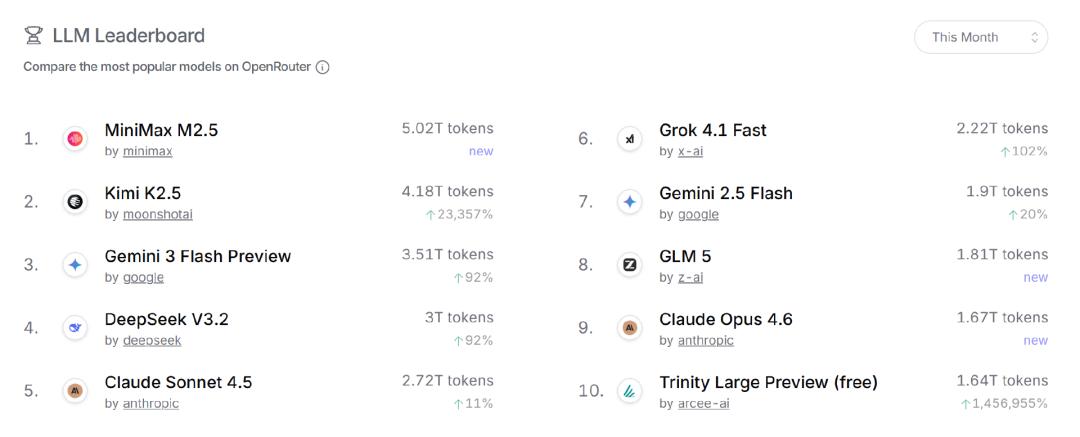
💡Moonshot's 200M C-end revenue shows AI consumer path amid 2026 agent rush
⚡ 30-Second TL;DR
What Changed
Moonshot AI holds billions in cash
Why It Matters
Highlights consumer monetization potential for Chinese AI firms, signaling scalable C-end strategies amid agent boom.
What To Do Next
Test Moonshot Kimi API endpoints for consumer AI agent prototypes.
Key Points
- •Moonshot AI holds billions in cash
- •Quietly earned 200M yuan from C-end
- •AI Agent acceleration into 2026
- •Company faces upcoming major tests
🧠 Deep Insight
Background and context from public sources — not the original article. 6 sources cited.
🔑 Enhanced Key Takeaways
- •Moonshot AI released Kimi K2, a trillion-parameter open-source mixture-of-experts model in July 2025, which surpassed DeepSeek-R1 in popularity among domestic open-source models within 48 hours, generating 3.6 billion website visits and 100,000+ Hugging Face downloads[1][3]
- •The company shifted from closed-source to open-source model distribution following DeepSeek's January 2025 prominence with cost-effective models, strategically repositioning Kimi K2 as an accessible alternative for agentic AI applications[2]
- •Moonshot AI achieved a $3.3 billion valuation by late 2024 with backing from major investors including Alibaba, Tencent, and Sequoia China, expanding to approximately 200 employees by that period[1][3]
📊 Competitor Analysis▸ Show
| Aspect | Moonshot AI (Kimi K2) | DeepSeek-R1 | Baidu Ernie Bot | Baichuan |
|---|---|---|---|---|
| Model Type | Trillion-parameter MoE (open-source) | Cost-optimized open-source | Proprietary LLM | Open-source LLM |
| Key Strength | Long-context processing, agentic capabilities | Training cost efficiency | Market presence | Context window expansion |
| Release Date | July 2025 | January 2025 | Earlier (2023) | Competitive response (2024) |
| Distribution | Open-source (architecture freely available) | Open-source | Closed/proprietary | Open-source |
| Market Position | Surpassed DeepSeek-R1 in open-source popularity (48h post-launch) | Disrupted market with cost efficiency | Established competitor | Direct context-window competitor |
🛠️ Technical Deep Dive
- Kimi K2 Architecture: Trillion-parameter mixture-of-experts (MoE) model enabling efficient scaling and parameter distribution across specialized sub-networks[1]
- Long-Context Processing: Kimi evolved from 200,000 Chinese character input capacity (October 2023) to 2 million characters by March 2024, representing a 10x expansion in context window[2][6]
- Multimodal Capabilities: Kimi-VL iteration incorporated vision-language understanding, strengthening cross-modal reasoning and generation[1]
- Training Efficiency: K2 breakthrough focused on extracting greater intelligence per unit of training data; increased parameters enable faster and more effective learning from the same dataset[2]
- Open Architecture: Unlike earlier closed-source Kimi iterations, K2 made model architecture freely available on open platforms (Hugging Face, GitHub), facilitating community-driven development[2]
🔮 Future ImplicationsAI analysis grounded in cited sources
⏳ Timeline
📎 Sources (6)
Factual claims are grounded in the sources below. Forward-looking analysis is AI-generated interpretation.
Weekly AI Recap
Read this week's curated digest of top AI events →
👉Related Updates


AI-curated news aggregator. All content rights belong to original publishers.
Original source: 钛媒体 ↗
This is a summary, not the original. Read the source, or get the weekly briefing.
Weekly AI briefing
One email a week. Unsubscribe anytime.