Moonshot AI: The evolution from Prompt to Harness Engineering
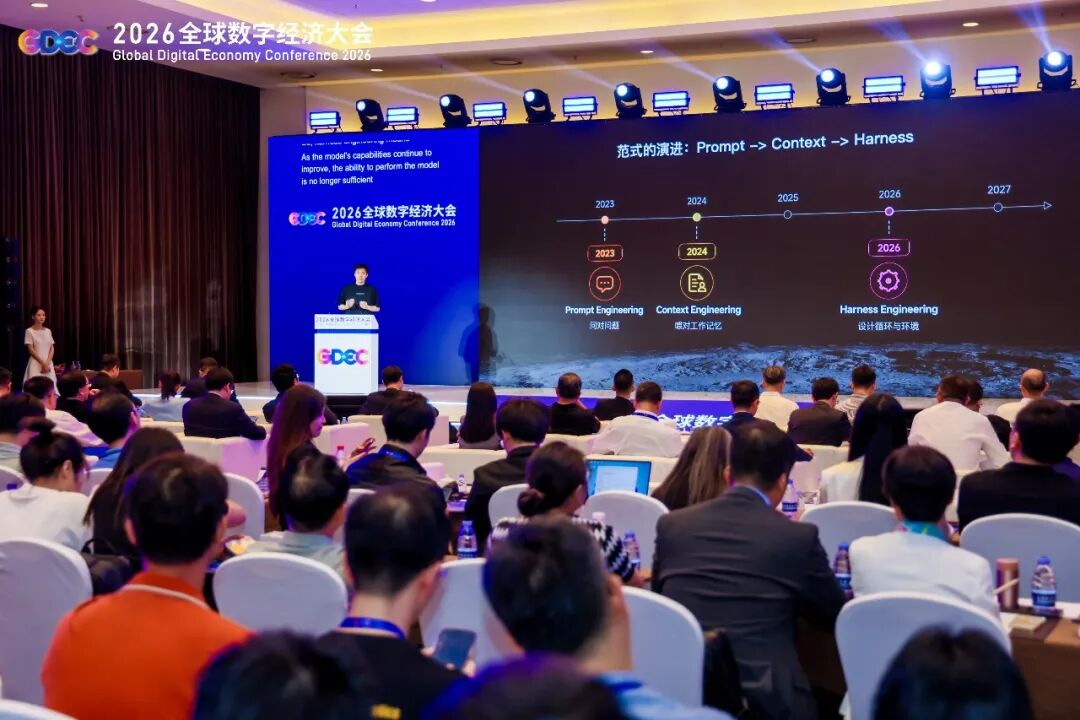
💡Understand the next phase of agentic AI: moving from prompt engineering to building autonomous execution environments.
⚡ 30-Second TL;DR
What Changed
AI engineering has evolved through three stages: Prompt, Context, and Harness Engineering.
Why It Matters
This framework provides a roadmap for developers building complex, multi-step autonomous agents that go beyond simple chat interactions.
What To Do Next
Implement a 'while' loop agent structure that allows the model to self-correct and explore, rather than relying on static prompt chains.
Key Points
- •AI engineering has evolved through three stages: Prompt, Context, and Harness Engineering.
- •Harness Engineering focuses on creating environments for autonomous, hour-long agent loops.
- •The 'Bitter Lesson' principle suggests building frameworks that allow models to explore boundaries rather than rigid manual definitions.
🧠 Deep Insight
AI-generated analysis for this event — not the original article.
🔑 Enhanced Key Takeaways
- •Moonshot AI's 'Harness Engineering' framework emphasizes the transition from static input-output models to stateful, persistent agentic workflows that manage long-term memory and error recovery.
- •The concept of 'Harness Engineering' draws heavily from reinforcement learning principles, specifically treating the AI agent as an entity that must navigate a complex, multi-step environment rather than just processing a single prompt.
- •Zhang Yutao highlights that current LLM architectures often struggle with 'context drift' in long-running loops, necessitating the development of specialized middleware to maintain agent coherence over hour-long sessions.
- •The strategy aligns with Moonshot AI's focus on 'Kimi' as a platform, shifting from a consumer chatbot to an infrastructure layer that supports developers in building autonomous agents.
- •Moonshot AI is actively integrating 'Bitter Lesson' philosophy by prioritizing compute-heavy, self-play simulation environments over human-curated instruction tuning for their agentic models.
📊 Competitor Analysis▸ Show
| Feature | Moonshot AI (Harness) | OpenAI (Swarm/Assistants) | Anthropic (Computer Use) |
|---|---|---|---|
| Core Focus | Long-running autonomous loops | Multi-agent orchestration | Direct UI/Computer interaction |
| Architecture | Harness/Environment-centric | API/Tool-calling centric | Vision/Action-centric |
| Primary Use Case | Persistent agentic workflows | Task automation/Chatbots | Desktop/Software automation |
🛠️ Technical Deep Dive
- Harness Engineering utilizes a state-machine architecture to manage agent transitions between planning, execution, and reflection phases.
- Implementation involves a 'Memory Harness' layer that dynamically compresses and retrieves long-context windows to prevent token exhaustion during hour-long loops.
- The framework incorporates automated feedback loops where the model evaluates its own trajectory against a reward function defined by the harness environment.
- It relies on asynchronous execution patterns to allow the agent to pause, wait for external environment updates, and resume without losing task state.
🔮 Future ImplicationsAI analysis grounded in cited sources
⏳ Timeline
Weekly AI Recap
Read this week's curated digest of top AI events →
👉Related Updates




AI-curated news aggregator. All content rights belong to original publishers.
Original source: 虎嗅 ↗
This is a summary, not the original. Read the source, or get the weekly briefing.
The weekly digest
One email a week. Unsubscribe anytime.