Moody’s Warns Banks Face AI Vendor Dependence
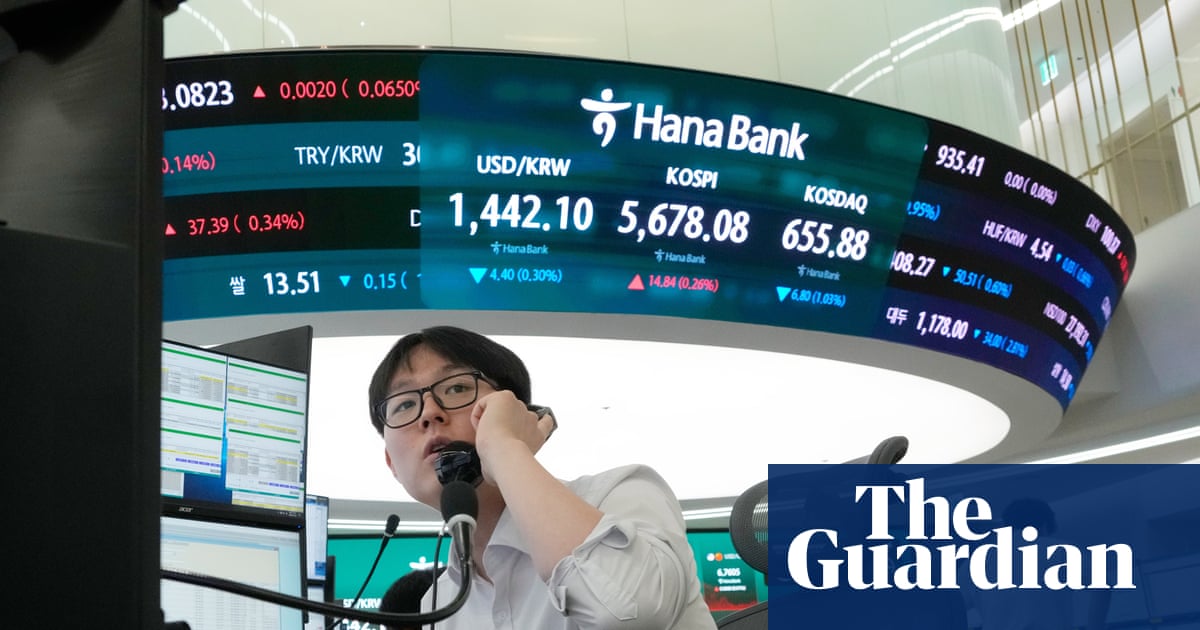
Banks may gain from AI, but vendor outages and pricing power could reshape deployment architecture.
30-Second TL;DR
What Changed
Banks may become dependent on a small group of Silicon Valley AI and technology providers.
Why It Matters
AI practitioners serving banks will need to treat vendor concentration, reliability, and pricing exposure as core architecture concerns. Multi-provider strategies and strong fallback plans may become as important as model quality.
What To Do Next
Audit your AI stack’s provider concentration, uptime SLAs, usage-based pricing, and fallback endpoints before deploying it in a banking workflow.
Key Points
- •Banks may become dependent on a small group of Silicon Valley AI and technology providers.
- •Vendor outages could create widespread operational risk for financial institutions.
- •Banks face potential price gouging and substantial investment costs during AI adoption.
- •Moody’s expects AI to eventually reduce costs and increase revenue across financial markets.
Deep Insight
AI-generated analysis for this event — not the original article.
Enhanced Key Takeaways
- •Regulatory bodies, including the Basel Committee on Banking Supervision, have begun drafting guidelines specifically addressing third-party risk management in the context of generative AI concentration.
- •Moody's analysis highlights that 'model drift' and the lack of explainability in proprietary black-box AI models from major tech vendors complicate compliance with existing financial transparency laws.
- •Financial institutions are increasingly exploring 'multi-cloud' and 'model-agnostic' architectures to mitigate the risk of vendor lock-in, though these strategies significantly increase infrastructure complexity.
- •The concentration risk is exacerbated by the limited availability of high-quality, proprietary financial datasets required to fine-tune foundation models, forcing banks to rely on pre-trained models from a few dominant providers.
- •Insurance premiums for cyber-risk and operational resilience are rising for banks that cannot demonstrate adequate contingency plans for the failure of critical AI infrastructure providers.
Technical Deep Dive
- Banks are shifting toward Retrieval-Augmented Generation (RAG) architectures to reduce reliance on vendor-specific model weights while maintaining data privacy.
- Implementation of 'Model Risk Management' (MRM) frameworks is being adapted to include automated monitoring for adversarial attacks and data poisoning in third-party APIs.
- Adoption of containerization (e.g., Kubernetes) and abstraction layers is being used to facilitate model portability between different cloud service providers.
- Integration of 'Human-in-the-loop' (HITL) verification protocols is becoming a standard technical requirement for high-stakes automated financial decisioning systems.
Future ImplicationsAI analysis grounded in cited sources
Timeline
- 2023-05Moody's begins integrating AI-driven credit risk assessment tools into its core service offerings.
- 2024-02Moody's publishes initial research on the impact of generative AI on financial sector productivity.
- 2025-09Moody's releases a formal framework for evaluating the creditworthiness of banks based on their digital transformation and AI adoption strategies.
- 2026-04Moody's issues a sector-wide warning regarding the concentration of cloud and AI infrastructure among a small group of hyperscalers.
Weekly AI Recap
Read this week's curated digest of top AI events →
AI-curated news aggregator. All content rights belong to original publishers.
Original source: The Guardian Technology ↗
This is a summary, not the original. Read the source, or get the weekly briefing.
The weekly digest
One email a week. Unsubscribe anytime.