Momenta IPO Analysis: Improving Data, Growing Risks
💡Analyze the financial realities of scaling autonomous driving AI through a recent IPO filing.
⚡ 30-Second TL;DR
What Changed
Momenta's financial statements show positive trends in revenue and operational efficiency.
Why It Matters
This analysis serves as a case study for AI startups on the balance between growth and risk management. It underscores the importance of clear financial reporting for AI companies seeking public capital.
What To Do Next
Review the risk factors section of the Momenta prospectus to understand common pitfalls in scaling AI-based automotive solutions.
Key Points
- •Momenta's financial statements show positive trends in revenue and operational efficiency.
- •Regulatory and competitive risks remain significant for autonomous driving firms.
- •The IPO filing provides a transparent look at the capital-intensive nature of AI-driven automotive tech.
🧠 Deep Insight
AI-generated analysis for this event — not the original article.
🔑 Enhanced Key Takeaways
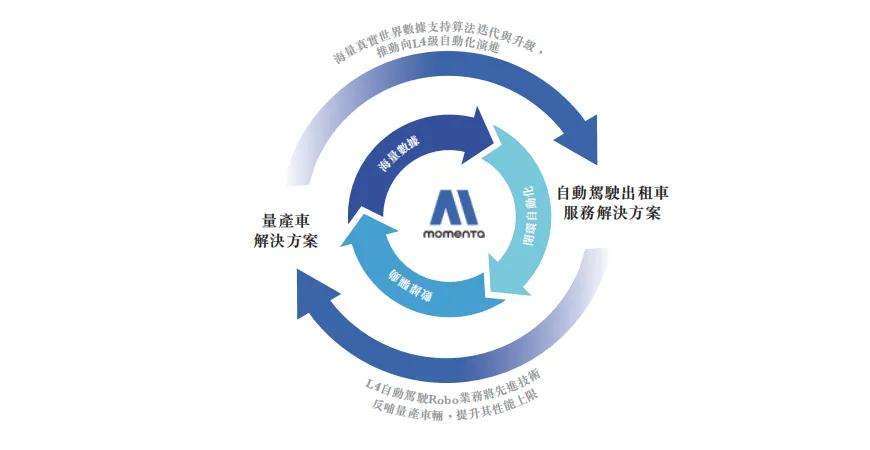
- •Momenta's 'Flywheel' L2/L2+ strategy focuses on data-driven iteration, leveraging mass-produced vehicle data to accelerate the development of high-level autonomous driving (L4) capabilities.
- •The company has secured strategic partnerships and funding from major automotive OEMs, including SAIC Motor, General Motors, and Toyota, which serve as both investors and data-collection partners.
- •Momenta utilizes a 'Data-Driven' approach that emphasizes the automation of data labeling and model training, significantly reducing the cost per mile of autonomous system development.
- •The IPO prospectus highlights a shift in revenue composition, moving from pure R&D service contracts toward scalable software licensing models for mass-market vehicle platforms.
- •Geopolitical and supply chain constraints regarding high-performance AI chips (such as NVIDIA's A100/H100 series) are explicitly cited in the risk factors as potential bottlenecks for their compute-intensive training infrastructure.
📊 Competitor Analysis▸ Show
| Feature | Momenta | Pony.ai | WeRide | Horizon Robotics |
|---|---|---|---|---|
| Primary Strategy | L2+ to L4 Flywheel | Robotaxi-first | Robotaxi & Autonomous Logistics | Computing Platform/Hardware |
| Key OEM Partners | SAIC, GM, Toyota | Toyota | Nissan, Bosch | BYD, Li Auto, VW |
| Revenue Model | Licensing & R&D | Robotaxi Operations | Robotaxi & Hardware | Chip & Software Stack |
🛠️ Technical Deep Dive
- Architecture: Employs a unified perception and planning framework based on Transformer-based models, facilitating end-to-end learning from sensor data.
- Data Engine: Features a proprietary closed-loop data pipeline that automatically identifies 'corner cases' from fleet data to retrain models without manual intervention.
- Sensor Fusion: Supports multi-modal fusion combining LiDAR, high-definition cameras, and millimeter-wave radar to ensure redundancy in urban driving environments.
- Compute Platform: Optimized for heterogeneous computing architectures, allowing deployment on both high-end NVIDIA Orin-X chips and cost-effective domestic AI accelerators.
🔮 Future ImplicationsAI analysis grounded in cited sources
⏳ Timeline
Weekly AI Recap
Read this week's curated digest of top AI events →
👉Related Updates



AI-curated news aggregator. All content rights belong to original publishers.
Original source: 钛媒体 ↗
This is a summary, not the original. Read the source, or get the weekly briefing.
Weekly AI briefing
One email a week. Unsubscribe anytime.