Missiles Expose AI’s Geopolitical Blind Spot
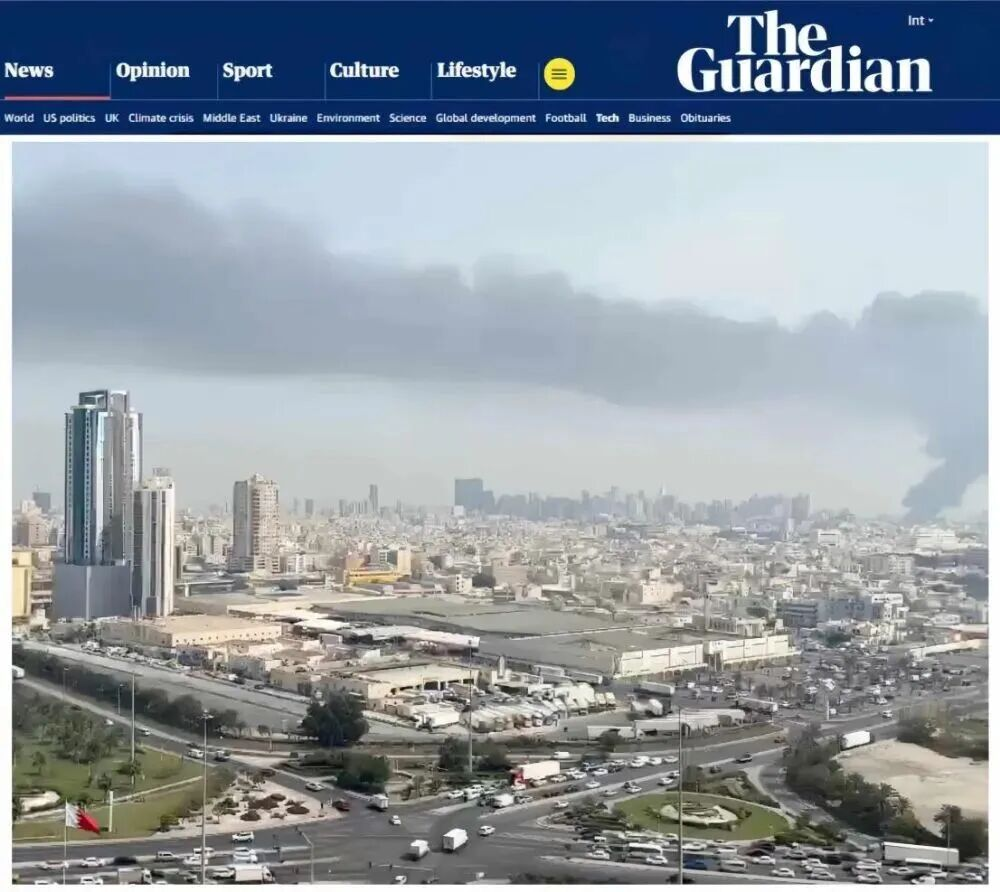
AI compute is becoming a geopolitical target, not just a cloud-cost decision.
30-Second TL;DR
What Changed
The article claims an Amazon data center in Bahrain was targeted because cloud infrastructure supported US military operations.
Why It Matters
AI companies may need to treat physical security, regional redundancy, and geopolitical exposure as core infrastructure concerns rather than procurement details. Data-center concentration in energy-rich but politically unstable regions could increase operational downtime, financing costs, and regulatory scrutiny.
What To Do Next
Map your production inference workload by region and test failover to a second cloud region outside the same missile, power-grid, and political-risk zone.
Key Points
- •The article claims an Amazon data center in Bahrain was targeted because cloud infrastructure supported US military operations.
- •Middle Eastern data centers attract capital because of inexpensive energy, favorable policies, and large-scale regional development plans.
- •Physical attacks on data centers may have limited immediate impact because facilities are large and internally redundant, but repeated attacks could raise insurance, continuity, and valuation risks.
- •AI infrastructure investment often assumes stable global supply chains and geopolitical order, assumptions increasingly challenged by conflicts.
- •The article warns that concentrated AI infrastructure could create strategic leverage comparable to chokepoints such as the Strait of Hormuz or critical semiconductor production hubs.
Deep Insight
AI-generated analysis for this event — not the original article.
Enhanced Key Takeaways
- •The integration of AI-driven predictive maintenance and automated cooling systems in hyperscale data centers creates new cyber-physical attack surfaces where kinetic strikes can trigger cascading software failures.
- •Major cloud providers are increasingly adopting 'sovereign cloud' architectures in the Middle East, which mandate local data residency but complicate disaster recovery by limiting cross-border failover options during regional conflicts.
- •Insurance premiums for critical digital infrastructure in the Gulf Cooperation Council (GCC) region have seen a 15-20% increase since 2025 due to heightened geopolitical risk assessments regarding AI-linked assets.
- •The strategic shift toward 'AI-ready' power grids in the Middle East has inadvertently created centralized points of failure where a single strike on a substation can disable multiple high-density GPU clusters simultaneously.
- •Global hyperscalers are now exploring 'hardened' data center designs, including underground facilities and modular, rapidly deployable edge units, to mitigate the risks of conventional missile threats.
Technical Deep Dive
- Hyperscale data centers in the region utilize liquid cooling systems (Direct-to-Chip) to manage high-density AI workloads, which are highly susceptible to physical vibration and structural integrity loss from nearby kinetic impacts.
- Infrastructure resilience is currently managed through BGP (Border Gateway Protocol) rerouting, but physical fiber-optic cable cuts in the Persian Gulf remain a critical vulnerability for latency-sensitive AI training models.
- AI-specific data centers are increasingly deploying localized microgrids with integrated battery energy storage systems (BESS) to maintain uptime during grid instability, though these systems are themselves high-value targets.
Future ImplicationsAI analysis grounded in cited sources
Timeline
- 2023-06AWS announces the launch of the AWS Middle East (UAE) Region to support regional AI and cloud growth.
- 2024-02Microsoft and G42 announce a $1.5 billion investment to expand AI infrastructure in the UAE.
- 2025-09Increased regional tensions lead to the first reported cyber-physical security audits of major Gulf data centers.
Weekly AI Recap
Read this week's curated digest of top AI events →
AI-curated news aggregator. All content rights belong to original publishers.
Original source: 虎嗅 ↗
This is a summary, not the original. Read the source, or get the weekly briefing.
The weekly digest
One email a week. Unsubscribe anytime.