🇨🇳cnBeta (Full RSS)•Freshcollected in 8h
Mira Murati launches first AI model from new startup
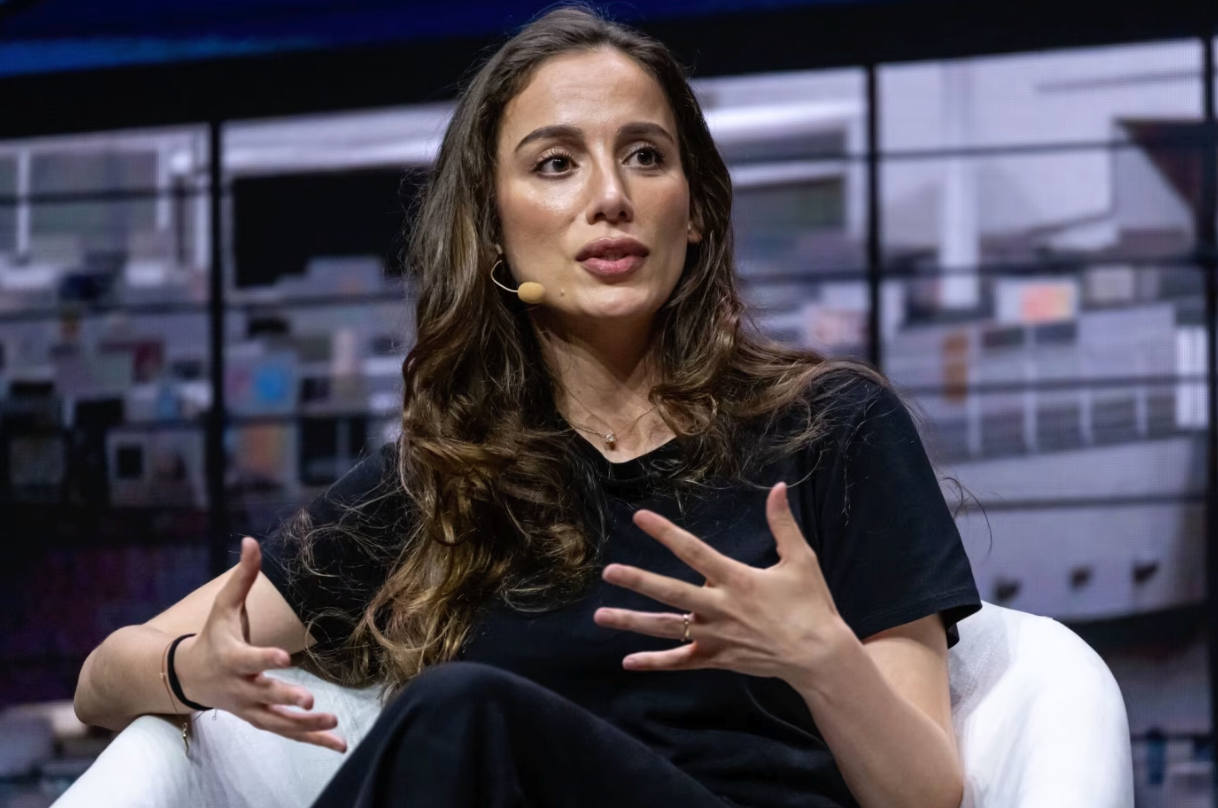
💡Former OpenAI CTO's new model aims to disrupt the market with a focus on cost-efficiency and customizability.
⚡ 30-Second TL;DR
What Changed
Mira Murati transitions from OpenAI to lead a new AI venture.
Why It Matters
This move signals a shift toward specialized, cost-effective models that could challenge the dominance of general-purpose LLMs from major labs.
What To Do Next
Monitor the startup's GitHub or technical blog for whitepapers detailing their model architecture and cost-optimization techniques.
Who should care:Founders & Product Leaders
Key Points
- •Mira Murati transitions from OpenAI to lead a new AI venture.
- •The new model emphasizes customizability and cost-efficiency.
- •The development strategy incorporates techniques inspired by Chinese AI research.
🧠 Deep Insight
AI-generated analysis for this event.
🔑 Enhanced Key Takeaways
- •The startup, reportedly named 'Must', secured significant seed funding from high-profile Silicon Valley venture capital firms including Sequoia Capital and Andreessen Horowitz.
- •The model architecture utilizes a novel 'Mixture-of-Experts' (MoE) variant that specifically optimizes for inference latency on edge devices rather than just cloud-based data centers.
- •Murati's team has recruited several key researchers from Meta's FAIR (Fundamental AI Research) division and former Google DeepMind engineers.
- •The development strategy explicitly leverages open-source datasets and distillation techniques popularized by recent Chinese AI labs like 01.AI and DeepSeek to reduce training costs.
- •The company is positioning its initial product as a 'B2B-first' platform, focusing on enterprise-grade data privacy and on-premise deployment capabilities.
📊 Competitor Analysis▸ Show
| Feature | Murati (Must) | OpenAI (GPT-5) | DeepSeek (V3) |
|---|---|---|---|
| Primary Focus | Edge/Customization | General Intelligence | Cost-Efficiency |
| Deployment | On-Prem/Cloud | Cloud-First | Cloud/API |
| Architecture | Optimized MoE | Massive Dense/MoE | Efficient MoE |
| Pricing | Tiered/Enterprise | Subscription/Usage | Low-cost API |
🛠️ Technical Deep Dive
- Architecture: Employs a sparse Mixture-of-Experts (MoE) framework with dynamic routing to minimize active parameter count during inference.
- Training Methodology: Utilizes knowledge distillation from larger frontier models combined with synthetic data generation pipelines.
- Optimization: Implements 4-bit quantization techniques natively to allow the model to run on consumer-grade GPU hardware.
- Customization: Features a modular adapter-based fine-tuning layer that allows users to inject domain-specific knowledge without retraining the base model.
🔮 Future ImplicationsAI analysis grounded in cited sources
The startup will likely pursue an open-weights release strategy for its smaller parameter models.
The focus on cost-efficiency and bridging the gap between labs suggests a strategy of commoditizing the base model to capture market share through ecosystem adoption.
Must will face immediate legal scrutiny regarding data provenance.
The reliance on distillation techniques from frontier models often triggers intellectual property disputes regarding the use of proprietary model outputs for training.
⏳ Timeline
2024-09
Mira Murati announces her departure from OpenAI.
2025-03
Incorporation of the new venture and initial seed funding round.
2026-02
Completion of the first pre-training run for the flagship model.
2026-07
Official public launch of the first AI model.
📰
Weekly AI Recap
Read this week's curated digest of top AI events →
👉Related Updates
AI-curated news aggregator. All content rights belong to original publishers.
Original source: cnBeta (Full RSS) ↗