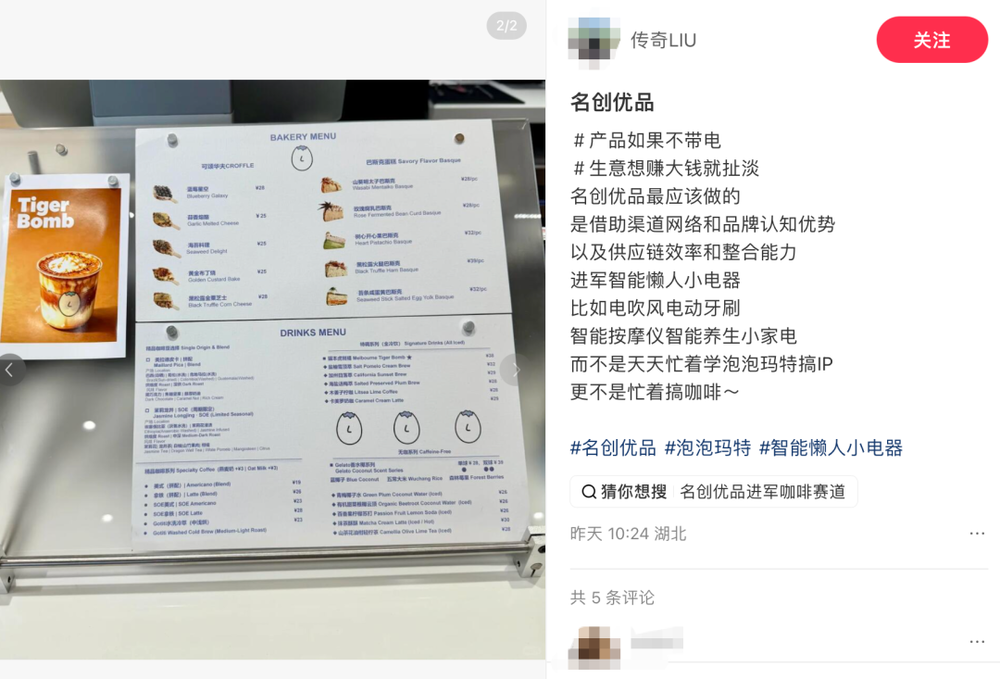
MINISO clarifies no self-operated coffee business
💡Understand the strategic pitfalls of diversifying retail brands into food and beverage services.
⚡ 30-Second TL;DR
What Changed
MINISO's coffee sales are third-party collaborations, not a strategic pivot to self-operated F&B.
Why It Matters
The incident highlights the difficulty of 'retail + F&B' integration for companies built on high-efficiency, low-cost models.
What To Do Next
Evaluate whether your brand's core value proposition can support a premium service layer without diluting your primary market positioning.
Key Points
- •MINISO's coffee sales are third-party collaborations, not a strategic pivot to self-operated F&B.
- •IP-based餐饮 (F&B) models require strong, proprietary IP and complex licensing, which MINISO currently lacks for food categories.
- •The brand's 'value-for-money' positioning conflicts with the high-premium nature of IP-themed dining.
🧠 Deep Insight
AI-generated analysis for this event — not the original article.
🔑 Enhanced Key Takeaways
- •MINISO's 'SUPER MINISO' flagship store strategy focuses on 'IP + Experience' to drive foot traffic, with coffee serving as a peripheral service rather than a core revenue driver.
- •The company has previously experimented with various retail formats, including 'MINISO Life' and 'MINISO Black,' to test premiumization strategies before settling on the current IP-heavy model.
- •Regulatory scrutiny regarding food safety and hygiene standards in retail environments has historically deterred non-F&B specialized retailers from operating their own kitchens.
- •MINISO's supply chain is optimized for high-turnover, non-perishable goods, which creates significant operational friction when attempting to manage the short shelf-life and cold-chain requirements of coffee.
- •Market analysts note that MINISO's pivot toward 'Global IP Collection' stores has shifted their capital expenditure focus away from service-based business models toward high-margin licensed merchandise.
📊 Competitor Analysis▸ Show
| Feature | MINISO (Collaborative) | Luckin Coffee (Self-Operated) | Starbucks (Self-Operated) |
|---|---|---|---|
| Business Model | Third-party licensing | Direct-to-consumer | Direct-to-consumer |
| Pricing | Mid-range (Premiumized) | Low-to-Mid (Value) | High (Premium) |
| Core Competency | IP Merchandise | Digital/App-based efficiency | Third-place experience |
🔮 Future ImplicationsAI analysis grounded in cited sources
⏳ Timeline
Weekly AI Recap
Read this week's curated digest of top AI events →
👉Related Updates



AI-curated news aggregator. All content rights belong to original publishers.
Original source: 虎嗅 ↗
This is a summary, not the original. Read the source, or get the weekly briefing.
The weekly digest
One email a week. Unsubscribe anytime.