MiniMax model access officially opens to the public
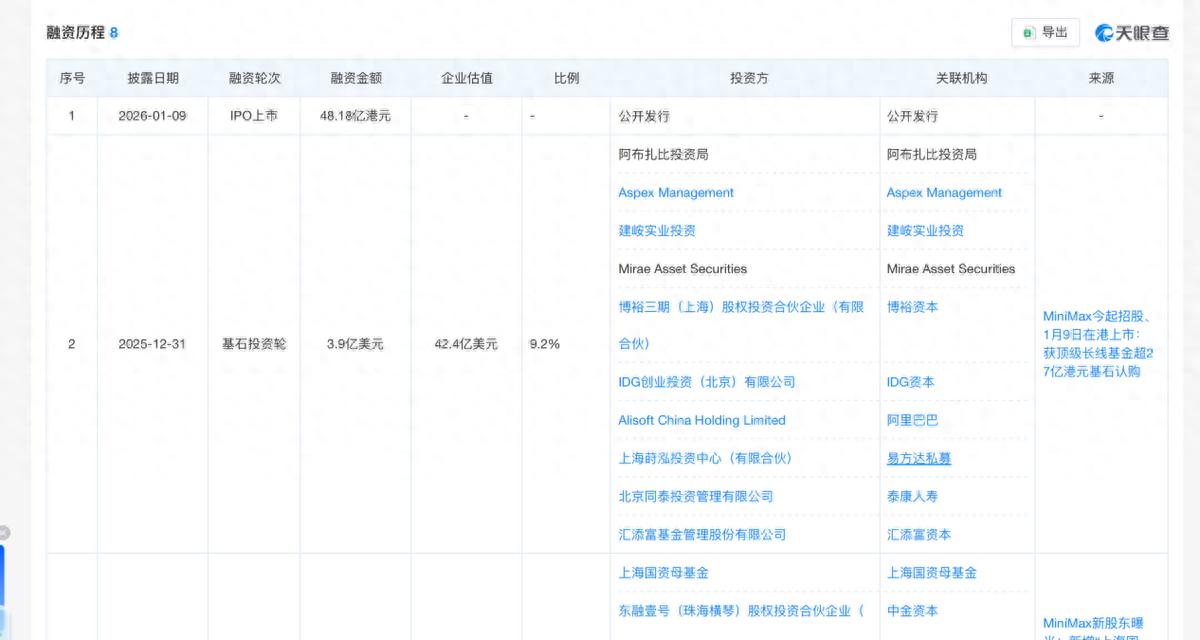
💡MiniMax is a major player; see if their newly released model meets your production requirements.
⚡ 30-Second TL;DR
What Changed
MiniMax AI model access is now unrestricted
Why It Matters
The opening of MiniMax models increases competition in the Chinese LLM market. Developers now have another viable alternative for building AI-native applications.
What To Do Next
Sign up for the MiniMax developer platform and benchmark their latest model against GPT-4o for your specific use case.
Key Points
- •MiniMax AI model access is now unrestricted
- •Market is waiting for performance validation
- •Represents a key milestone for the company's growth
🧠 Deep Insight
AI-generated analysis for this event — not the original article.
🔑 Enhanced Key Takeaways
- •MiniMax has transitioned from a closed-beta/invitation-only model to an open API platform, targeting both domestic Chinese enterprises and global developers.
- •The public release includes support for multimodal capabilities, specifically integrating text-to-video and text-to-audio generation alongside their core Large Language Model (LLM).
- •MiniMax is positioning its 'abab' series models as a direct competitor to top-tier proprietary models by emphasizing low-latency inference and high-context window efficiency.
- •The company has introduced a tiered pricing structure for its API, moving away from free experimental access to a commercialized 'pay-as-you-go' model.
- •This public access launch is accompanied by a new developer ecosystem initiative, providing SDKs and documentation to facilitate integration into third-party applications.
📊 Competitor Analysis▸ Show
| Feature | MiniMax (abab) | DeepSeek | Moonshot AI (Kimi) |
|---|---|---|---|
| Primary Focus | Multimodal/Generalist | Reasoning/Coding | Long-context/RAG |
| Pricing | Competitive/Tiered | Low-cost/Open-weights | Usage-based |
| Key Benchmark | High multimodal performance | Strong math/logic | Superior context recall |
🛠️ Technical Deep Dive
- Architecture: Utilizes a Mixture-of-Experts (MoE) framework to optimize inference speed and reduce computational overhead for large-scale requests.
- Context Window: Supports an extended context window (up to 1M+ tokens) designed for long-document analysis and complex multi-turn dialogue.
- Multimodal Integration: Employs a unified latent space architecture that allows the model to process and generate text, audio, and video streams natively without relying on separate cascaded models.
- Training Infrastructure: Leverages a proprietary distributed training cluster optimized for high-throughput data processing and low-latency parameter synchronization.
🔮 Future ImplicationsAI analysis grounded in cited sources
⏳ Timeline
Weekly AI Recap
Read this week's curated digest of top AI events →
👉Related Updates



AI-curated news aggregator. All content rights belong to original publishers.
Original source: 钛媒体 ↗
This is a summary, not the original. Read the source, or get the weekly briefing.
The weekly digest
One email a week. Unsubscribe anytime.