MiniMax Loses a Key Leader After M3 Release
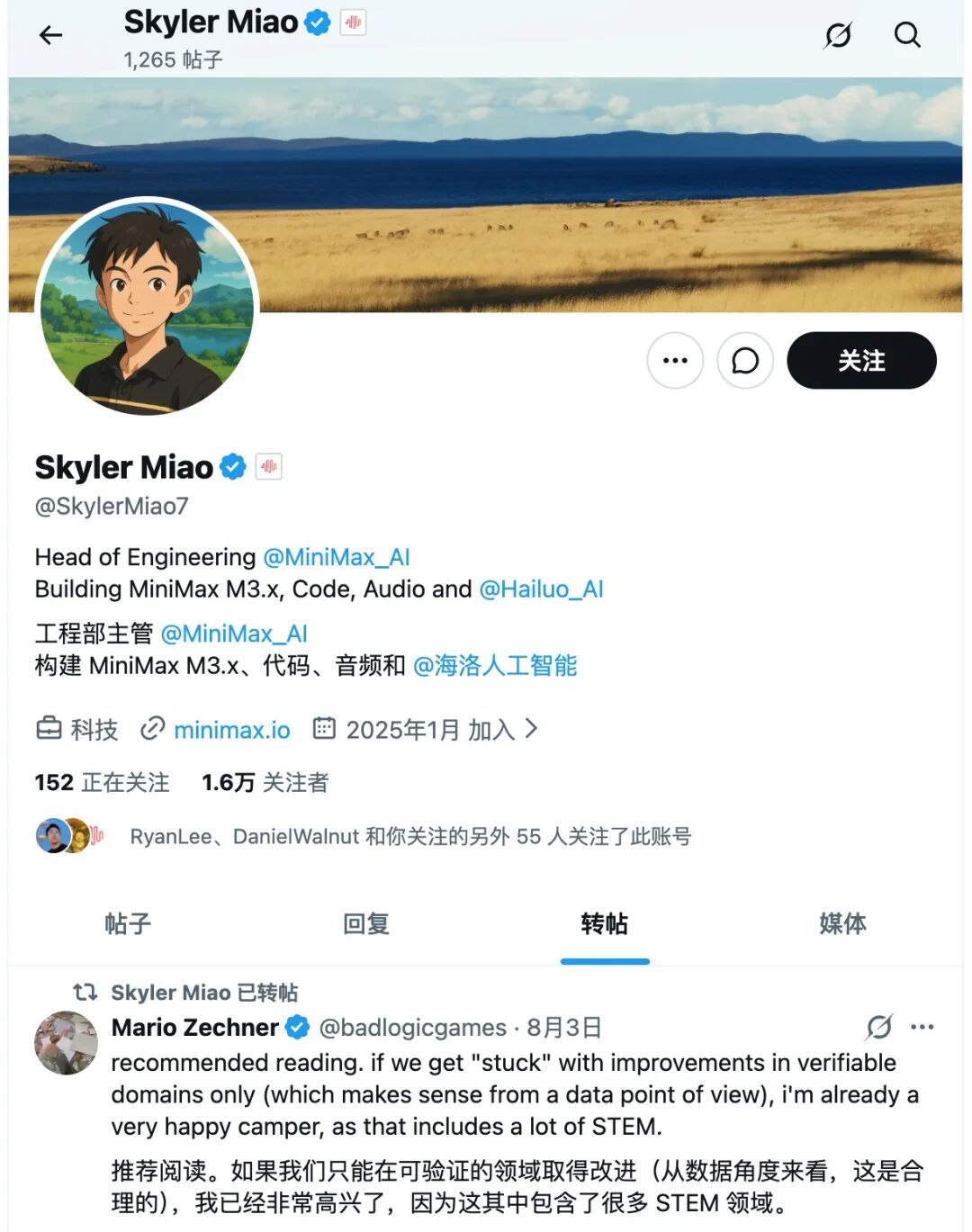
💡MiniMax’s post-M3 executive exit raises a crucial question about the future of agent-building teams.
⚡ 30-Second TL;DR
What Changed
MiniMax experienced the departure of a key executive after the M3 release.
Why It Matters
Leadership turnover at a major AI company can affect model roadmaps, agent strategy, and recruiting confidence. For founders and builders, the story highlights the organizational risk of relying too heavily on a small number of technical leaders.
What To Do Next
Review your agent roadmap and document model-evaluation, prompt, and deployment ownership so it does not depend on one technical leader.
Key Points
- •MiniMax experienced the departure of a key executive after the M3 release.
- •The timing links the personnel change to a major model-related milestone.
- •The article questions whether agent development is shifting from individual leadership to more organizational execution.
🧠 Deep Insight
AI-generated analysis for this event.
🔑 Enhanced Key Takeaways
- •The departing executive is identified as Yan Junjie, a co-founder and key technical lead who played a central role in MiniMax's early model development.
- •The M3 model release marked a strategic pivot for MiniMax, shifting focus from general-purpose LLMs toward specialized, multi-modal agentic workflows.
- •Industry analysts suggest the departure reflects a broader trend in Chinese AI startups where 'star-founder' models are being replaced by institutionalized R&D structures.
- •MiniMax has recently increased its emphasis on 'Model-as-a-Service' (MaaS) integration for enterprise clients, moving away from the consumer-facing chatbot focus that characterized its early growth.
- •Internal reports indicate that MiniMax is restructuring its engineering teams to prioritize inference efficiency and long-context processing capabilities over raw parameter scaling.
📊 Competitor Analysis▸ Show
| Feature | MiniMax (M3) | DeepSeek (V3/R1) | Moonshot AI (Kimi) |
|---|---|---|---|
| Primary Focus | Multi-modal Agentic AI | Reasoning & Efficiency | Long-context Retrieval |
| Architecture | Mixture-of-Experts (MoE) | Mixture-of-Experts (MoE) | Dense/Hybrid |
| Pricing Model | Enterprise-Tier API | Token-based (Low Cost) | Usage-based API |
| Key Benchmark | High Multi-modal Integration | High Reasoning/Math | High Context Window |
| Market Position | Agent-Centric | Open-Weights/Research | Consumer/Productivity |
🛠️ Technical Deep Dive
- M3 utilizes a sophisticated Mixture-of-Experts (MoE) architecture designed to optimize compute resources during inference.
- The model incorporates native multi-modal processing, allowing for simultaneous handling of text, audio, and visual inputs without separate encoder pipelines.
- MiniMax has implemented a proprietary 'Agent-Flow' framework that enables the model to dynamically trigger external tool calls and API integrations based on task complexity.
- The architecture emphasizes long-context retention, utilizing advanced attention mechanisms to maintain coherence across multi-turn, multi-modal interactions.
🔮 Future ImplicationsAI analysis grounded in cited sources
⏳ Timeline
Weekly AI Recap
Read this week's curated digest of top AI events →
👉Related Updates



AI-curated news aggregator. All content rights belong to original publishers.
Original source: 钛媒体 ↗