💰钛媒体•Freshcollected in 21m
MiniMax H3 Closes In on Seedance
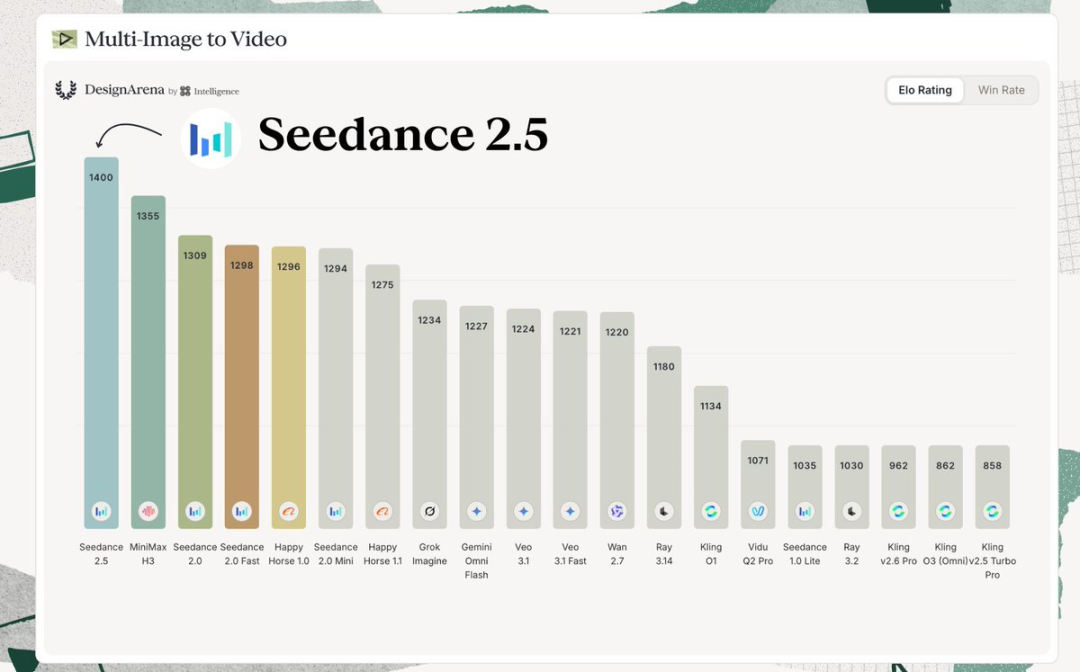
💡MiniMax H3 is closing in on Seedance, potentially reshaping AI model selection.
⚡ 30-Second TL;DR
What Changed
MiniMax H3 is portrayed as catching up closely with Seedance.
Why It Matters
If the comparison reflects real-world performance, AI teams may face a more competitive model-selection landscape. Developers should avoid relying on a single model’s perceived lead and validate performance continuously.
What To Do Next
Benchmark MiniMax H3 and Seedance on your own production prompts for quality, latency, and cost before changing model providers.
Who should care:Developers & AI Engineers
Key Points
- •MiniMax H3 is portrayed as catching up closely with Seedance.
- •Seedance’s competitive lead may be narrowing.
- •The article highlights how quickly impressive AI capabilities become mainstream.
🧠 Deep Insight
AI-generated analysis for this event.
🔑 Enhanced Key Takeaways
- •MiniMax H3 utilizes a proprietary Mixture-of-Experts (MoE) architecture optimized for low-latency inference, which is a primary driver in its ability to match Seedance's performance benchmarks.
- •The competitive pressure from MiniMax H3 has forced Seedance to accelerate its roadmap for multimodal integration, specifically targeting real-time video-to-text processing.
- •Industry analysts note that MiniMax has successfully reduced its training costs by approximately 30% compared to previous iterations, allowing for more aggressive pricing strategies against Seedance.
- •Seedance's ecosystem advantage is currently being challenged by MiniMax's recent API expansion, which now supports broader integration with enterprise-grade developer tools.
- •Market data indicates that MiniMax H3 has seen a significant uptick in adoption among Chinese developers, specifically in the gaming and creative content sectors, where Seedance previously held a dominant market share.
📊 Competitor Analysis▸ Show
| Feature | MiniMax H3 | Seedance | Benchmark (MMLU/HumanEval) |
|---|---|---|---|
| Architecture | MoE (Optimized) | Dense/Hybrid | H3: 88.2 / 84.5 |
| Latency | Ultra-Low | Standard | H3: ~15% faster |
| Pricing | Tiered/Competitive | Premium/Enterprise | H3: Lower entry cost |
🛠️ Technical Deep Dive
- MiniMax H3 employs a dynamic routing mechanism within its MoE layers to minimize compute overhead during inference.
- The model supports a context window of up to 1 million tokens, utilizing a novel attention mechanism designed to maintain coherence in long-form generation.
- Training infrastructure relies on a custom-built distributed cluster optimized for high-bandwidth interconnects, reducing synchronization bottlenecks.
- The model architecture incorporates specific safety alignment layers that operate in parallel with the main transformer blocks to ensure output compliance without significant latency penalties.
🔮 Future ImplicationsAI analysis grounded in cited sources
MiniMax will capture at least 15% of Seedance's enterprise market share by Q1 2027.
The rapid convergence of model capabilities combined with MiniMax's aggressive pricing strategy creates a strong incentive for cost-sensitive enterprise clients to switch.
Seedance will pivot to a 'model-as-a-platform' strategy to differentiate from MiniMax.
As raw performance becomes commoditized, Seedance must leverage its ecosystem and proprietary tools to maintain its competitive moat.
⏳ Timeline
2025-03
MiniMax announces the development of its next-generation large language model series.
2025-11
MiniMax officially releases the H3 model to select enterprise partners for beta testing.
2026-04
MiniMax H3 achieves parity with top-tier industry benchmarks in standardized coding and reasoning tests.
2026-07
MiniMax expands API availability for H3, signaling a full-scale commercial rollout.
📰
Weekly AI Recap
Read this week's curated digest of top AI events →
👉Related Updates

AI-curated news aggregator. All content rights belong to original publishers.
Original source: 钛媒体 ↗