MiniMax faces user backlash over 'disguised' price hikes
💡Learn how pricing model changes in LLM APIs affect developer retention and competitive positioning.
⚡ 30-Second TL;DR
What Changed
Users perceive recent pricing changes as disguised price hikes
Why It Matters
Pricing strategies in the LLM space are becoming increasingly sensitive as commoditization accelerates; companies must balance revenue with user retention.
What To Do Next
Audit your current token usage costs against alternative providers like DeepSeek or Moonshot to ensure cost-efficiency.
Key Points
- •Users perceive recent pricing changes as disguised price hikes
- •Increased competition makes pricing sensitivity a critical risk
- •Potential for significant user churn if value proposition is not maintained
🧠 Deep Insight
Background and context from public sources — not the original article. 19 sources cited.
🔑 Enhanced Key Takeaways
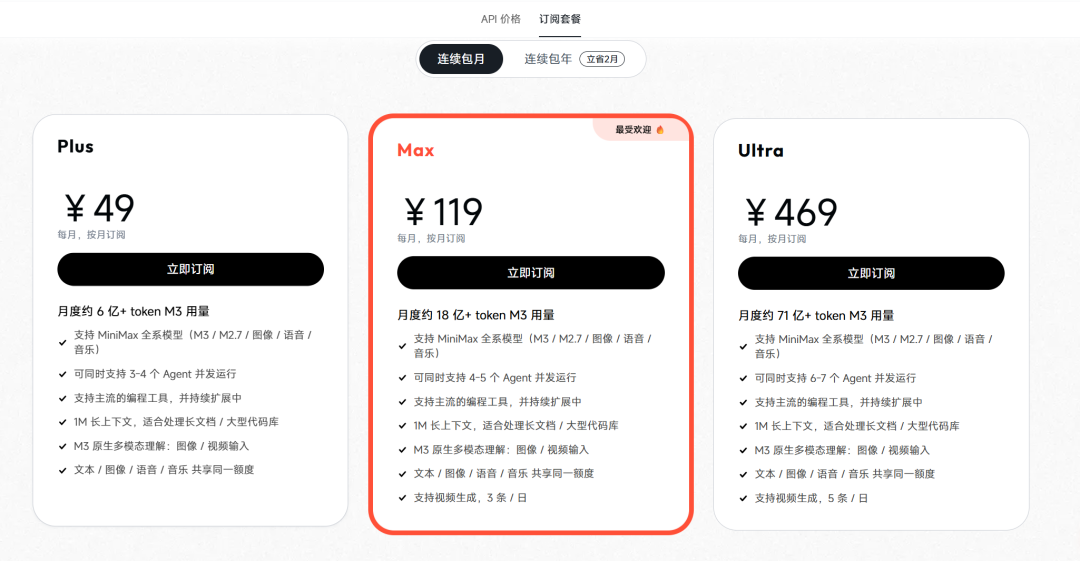
- •The perceived 'disguised' price hikes by MiniMax stemmed from a shift in their API service billing model from 'pay-per-use' (Coding Plan) to a 'pay-per-token' (Token Plan), particularly with the launch of their new flagship MiniMax-M3 model.
- •Users reported significantly higher token consumption for the same tasks under the new token-based billing, leading to rapid exhaustion of monthly quotas and concerns over a lack of transparency in token calculation and segmentation logic.
- •In response to widespread user backlash, MiniMax issued an apology on June 2, 2026, acknowledging insufficient communication and an inadequate transition plan, and offered compensation including retaining original 'no weekly limit' privileges for old users, increasing weekly limits for the M3 model, and extending compensation points validity.
- •The incident underscores the high price sensitivity and low switching costs of users in the competitive AI market, highlighting the fragility of B2C commercialization models for AI companies like MiniMax.
- •MiniMax justified the billing model change by stating that the new M3 model, with its larger size, native multimodal capabilities, and 1 million token context length, demands significantly more computing resources.
📊 Competitor Analysis▸ Show
| Model/Company | Key Features | Pricing (per 1M tokens) | Benchmarks/Notes |
|---|---|---|---|
| MiniMax M3 | Frontier coding, agentic tasks, 1M context, native multimodal (text, image, video input, text output), MiniMax Sparse Attention (MSA) for efficiency. | Blended: $0.22 / Input: $0.30, Output: $1.20 (as of May 31, 2026) | Top coding, 1M context. Competes with GPT-5.5, Claude Opus 4.7/4.8. |
| MiniMax M2.7 | 230B parameters, text-to-text, excels in coding, reasoning, office tasks, advanced agentic capabilities. | Blended: $0.22 / Input: $0.30, Output: $1.20 | 56.2% on SWE-Pro, 57.0% on Terminal Bench 2, 1495 ELO on GDPval-AA. |
| MiniMax M2.5 | SOTA LLM for real-world productivity, coding expertise, Mixture-of-Experts (MoE) architecture (~10B active parameters from 230B total), 205K context. | Blended: $0.20 / Standard: Input $0.15, Output $1.20. Lightning: Input $0.30, Output $2.40. | Benchmarks at 80.2% on SWE-Bench Verified. Completes SWE-Bench tasks 37% faster than M2.1. |
| Claude Opus 4.6 | Advanced reasoning, coding. | Input: $5.00, Output: $25.00 | Similar execution time to MiniMax M2.5 on SWE-Bench tasks, but at 10% of the cost for M2.5. |
| Moonshot AI (Kimi K2 Thinking) | Upgraded reasoning model, MoE architecture (1 trillion parameters), 256K token context, heavy emphasis on step-by-step reasoning and tool use. | Pricing not specified in search results | Outperformed OpenAI's GPT-5 and Anthropic's Claude Sonnet 4.5 on several benchmarks (Nov 2025). |
| 01.AI (Yi-Lightning, Yi-Large) | Open-source LLMs, efficient training costs. | Pricing not specified in search results | Among top-ranked LLMs for language, reasoning, comprehension. |
| Baichuan Intelligence (Baichuan-7B, Baichuan-13B) | Open-source LLMs, commercially available in China, tested on Chinese, English, multi-language datasets. | Pricing not specified in search results | Tested for general knowledge, mathematics, coding, language translation, law, medicine. |
🛠️ Technical Deep Dive
- MiniMax develops proprietary multimodal foundation models capable of understanding, generating, and integrating text, audio, images, video, and music.
- Their flagship models include MiniMax M3, Hailuo 2.3 (video generation), Speech 2.8, and Music 2.6.
- The MiniMax M3 model features a novel attention architecture called MiniMax Sparse Attention (MSA), which supports an ultra-long context window of up to 1 million tokens.
- MSA is designed to reduce per-token compute at long contexts by replacing full attention with KV-block selection, reportedly cutting costs by 1/20 and offering significantly faster prefill and decode times compared to previous generations.
- MiniMax M2 and M2.5 models utilize a Mixture-of-Experts (MoE) architecture, containing 230 billion total parameters but activating only approximately 10 billion parameters per query, which helps reduce computational cost and latency while maintaining high intelligence.
- The M2.5 model is noted for an 'architect mindset,' autonomously decomposing project requirements and planning structure during coding tasks, a pattern that emerged from reinforcement training in over 200,000 real environments.
- Earlier models like MiniMax M1 (released early 2025) also employed a hybrid MoE architecture combined with a custom 'lightning attention' mechanism to process long sequences efficiently, up to 1 million tokens.
🔮 Future ImplicationsAI analysis grounded in cited sources
⏳ Timeline
📎 Sources (19)
Factual claims are grounded in the sources below. Forward-looking analysis is AI-generated interpretation.
Weekly AI Recap
Read this week's curated digest of top AI events →
👉Related Updates



AI-curated news aggregator. All content rights belong to original publishers.
Original source: 钛媒体 ↗
This is a summary, not the original. Read the source, or get the weekly briefing.
The weekly digest
One email a week. Unsubscribe anytime.