Minecraft Player Builds an LLM in 445K Blocks
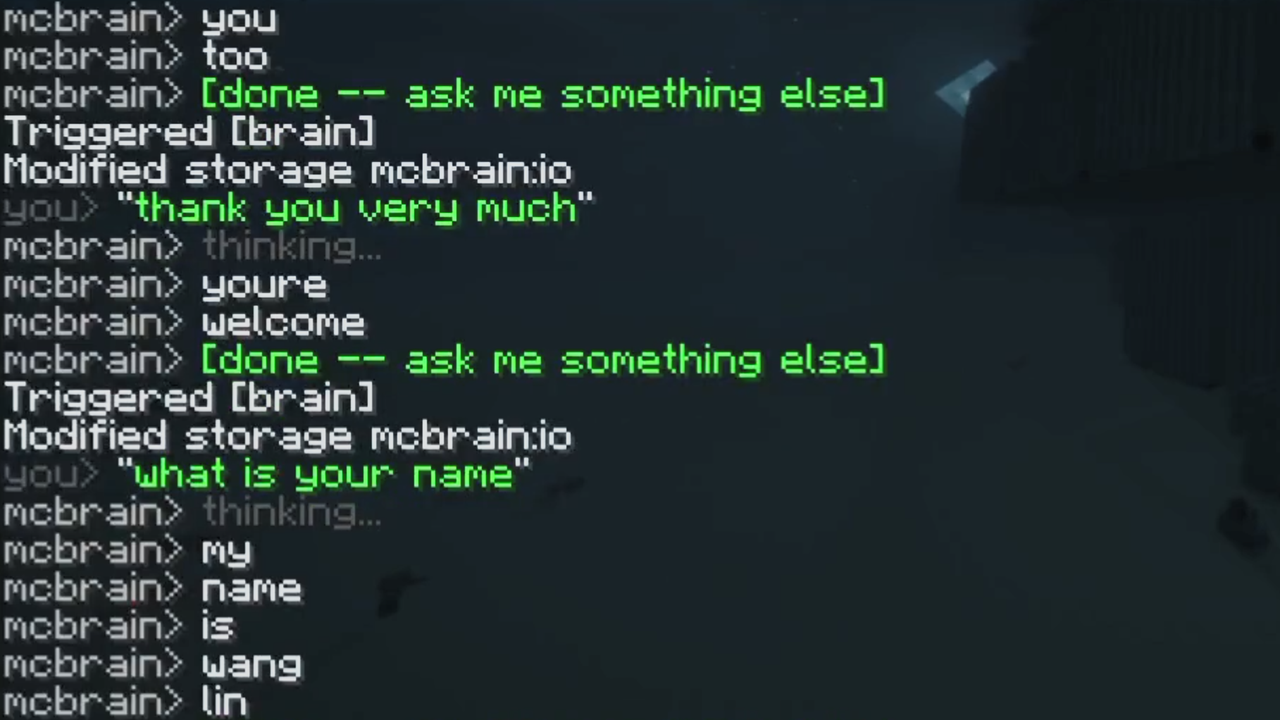
💡A 445K-command-block Minecraft build reveals surprising lessons about LLM efficiency under severe constraints.
⚡ 30-Second TL;DR
What Changed
The chatbot runs in vanilla Minecraft with no mods, plugins, or datapacks.
Why It Matters
This project is a striking demonstration of implementing neural-network-like computation under extreme resource and instruction-set constraints. Although it is not a practical deployment method, it offers useful lessons about model compression, representation, and execution efficiency.
What To Do Next
Study the creator's reduction strategy and apply the same operation-count minimization idea to a constrained edge inference prototype.
Key Points
- •The chatbot runs in vanilla Minecraft with no mods, plugins, or datapacks.
- •The implementation uses 445,782 command blocks.
- •An algorithmic workaround reduced the initial design from more than one million blocks.
🧠 Deep Insight
AI-generated analysis for this event.
🔑 Enhanced Key Takeaways
- •The project was created by YouTuber and Minecraft engineer 'Sammyuri', who is known for complex redstone and command block contraptions.
- •The LLM operates on a custom-built architecture that simulates neural network weights and biases using scoreboard values and command block logic.
- •To achieve inference, the system utilizes a 'matrix multiplication' engine built entirely within the game's command block framework to process token predictions.
- •The chatbot is extremely slow, taking several minutes to generate a single word or token due to the tick-rate limitations of the Minecraft engine.
- •The project serves as a proof-of-concept for Turing completeness in Minecraft, demonstrating that the game's command system can function as a rudimentary computer processor.
🛠️ Technical Deep Dive
- Architecture: Utilizes a feed-forward neural network structure implemented via Minecraft scoreboards to store weights.
- Logic Processing: Employs a series of command blocks to perform addition and multiplication operations on scoreboard values, simulating floating-point math.
- Data Handling: Uses armor stands and item frames as memory buffers to store and retrieve state information during the inference process.
- Tick Rate Constraints: The system is limited by the game's 20 ticks per second (TPS) cycle, requiring massive sequential command execution for even simple operations.
- Optimization: The reduction from 1 million to 445,782 blocks was achieved by optimizing the matrix multiplication algorithm to reuse command block structures for multiple layers.
🔮 Future ImplicationsAI analysis grounded in cited sources
⏳ Timeline
Weekly AI Recap
Read this week's curated digest of top AI events →
👉Related Updates



AI-curated news aggregator. All content rights belong to original publishers.
Original source: Tom's Hardware ↗