MIIT mandates strict safety self-checks for EV makers
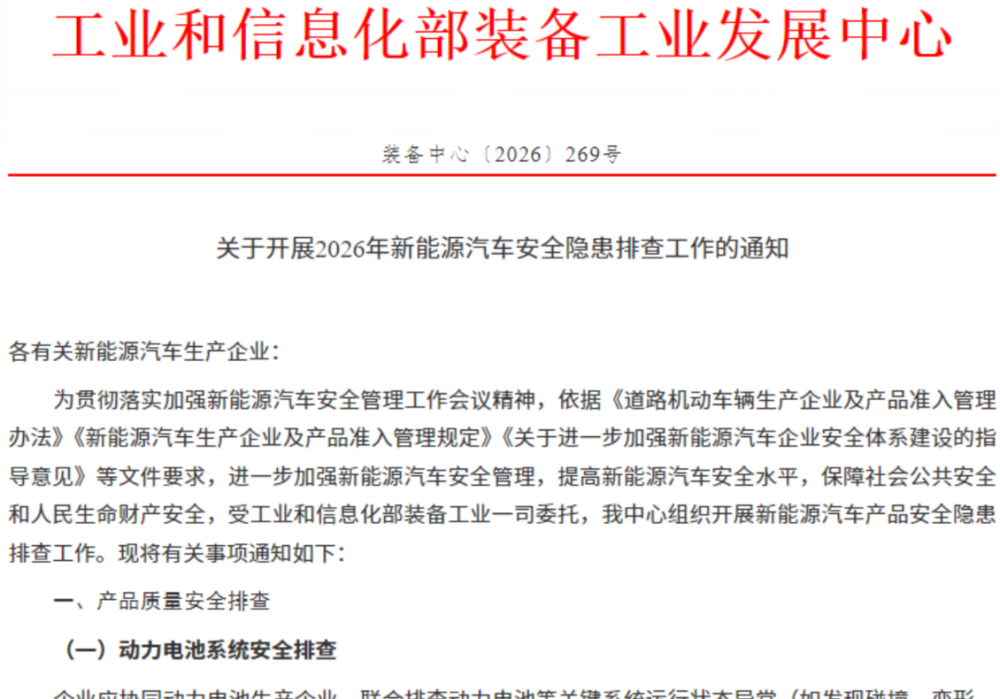
New MIIT regulations demand accountability for autonomous driving failures, impacting how AI systems are deployed in EVs
30-Second TL;DR
What Changed
Mandatory self-inspection for all EV and battery manufacturers.
Why It Matters
This policy will force a consolidation in the EV market, favoring companies with robust safety and AI-testing protocols while squeezing out smaller players with weak quality control.
What To Do Next
If building for automotive AI, implement rigorous 'fail-safe' logging and OTA rollback mechanisms to ensure compliance with new safety accountability standards.
Key Points
- •Mandatory self-inspection for all EV and battery manufacturers.
- •Strict criteria: 3 fire incidents per model trigger deep investigations.
- •Regulatory focus on 'AI-driven' autonomous driving system accountability.
- •Deadline for rectification is August 1, 2026.
Deep Insight
AI-generated analysis for this event — not the original article.
Enhanced Key Takeaways
- •The mandate specifically requires the integration of real-time battery health monitoring data into the National Monitoring and Management Platform for New Energy Vehicles.
- •Manufacturers are now required to submit 'Safety Responsibility Commitment Letters' signed by the legal representative of each company, shifting liability directly to executive leadership.
- •The regulation introduces a new 'Blacklist' mechanism for suppliers of critical components, such as BMS (Battery Management Systems) and LiDAR, that fail to meet updated safety standards.
- •MIIT has partnered with the State Administration for Market Regulation (SAMR) to synchronize recall procedures, ensuring that self-inspection findings automatically trigger public recall notices if safety thresholds are breached.
- •The policy mandates that autonomous driving systems must include a 'Black Box' data recorder capable of storing high-fidelity sensor data for at least 30 seconds prior to any collision or system disengagement.
Technical Deep Dive
- Battery Thermal Runaway Mitigation: Requirement for pack-level fire suppression systems capable of preventing cell-to-cell propagation for a minimum of 10 minutes.
- High-Voltage Isolation: Mandated insulation resistance monitoring thresholds set at >100 ohms/V for DC systems to detect degradation before short-circuit events.
- Autonomous Driving Vulnerability: Implementation of ISO 21434 cybersecurity standards for all OTA (Over-the-Air) update pathways to prevent unauthorized system access.
- Data Logging: Mandatory implementation of EDR (Event Data Recorder) standards compliant with GB 39732-2020, with expanded parameters for AI decision-making logs.
Future ImplicationsAI analysis grounded in cited sources
Timeline
- 2020-12MIIT releases GB 38031-2020, the first mandatory national standard for EV battery safety.
- 2022-08MIIT updates guidelines for the management of OTA updates to improve vehicle cybersecurity.
- 2024-07MIIT and four other ministries issue a joint notice to accelerate the pilot program for L3 autonomous driving on public roads.
- 2025-11MIIT initiates a nationwide survey on EV battery aging and thermal management performance.
- 2026-05MIIT officially announces the mandatory safety self-check mandate for all EV manufacturers.
Weekly AI Recap
Read this week's curated digest of top AI events →
AI-curated news aggregator. All content rights belong to original publishers.
Original source: 虎嗅 ↗
This is a summary, not the original. Read the source, or get the weekly briefing.
The weekly digest
One email a week. Unsubscribe anytime.