Midea's AI transformation faces cooling market reception
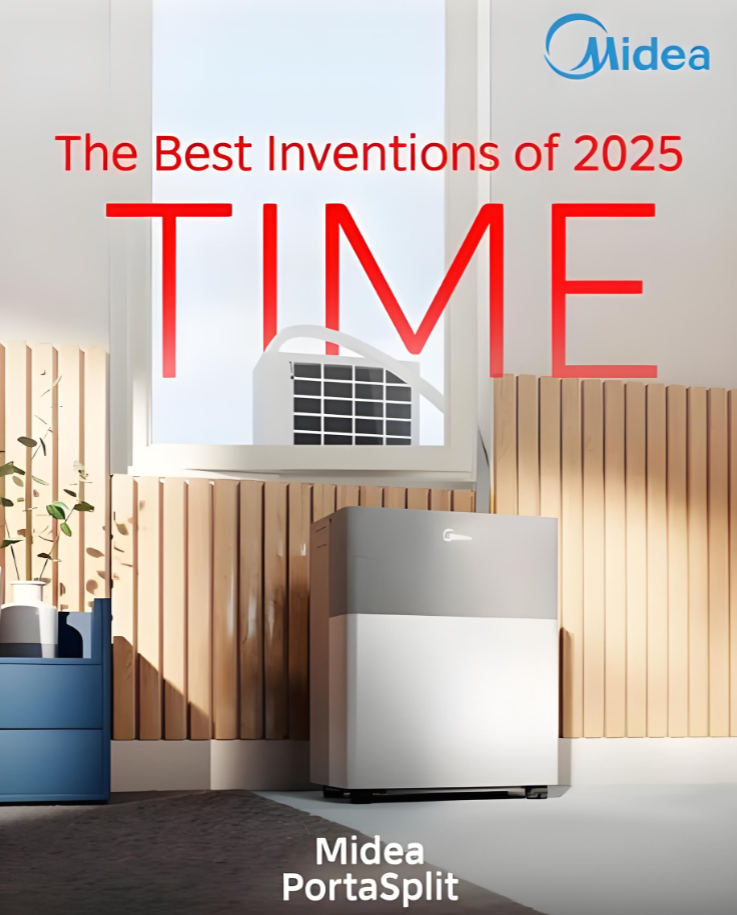
Understand why traditional hardware giants struggle to translate AI hype into tangible business value.
30-Second TL;DR
What Changed
Midea's overseas business growth is currently outpacing its AI innovation results.
Why It Matters
Highlights the challenges traditional hardware manufacturers face when pivoting to AI-centric business models.
What To Do Next
Analyze Midea's public financial reports to identify the specific R&D allocation gap between hardware and AI software.
Key Points
- •Midea's overseas business growth is currently outpacing its AI innovation results.
- •Market sentiment toward Midea's AI transformation is cooling down.
- •Sustainable AI integration requires more than just temporary hype.
Deep Insight
AI-generated analysis for this event — not the original article.
Enhanced Key Takeaways
- •Midea has shifted its strategic focus toward 'AI + Home' integration, leveraging its proprietary 'Midea Intelligent Brain' (M-Brain) to unify smart home ecosystems.
- •Financial reports indicate that while Midea's overseas revenue grew by double digits in 2025, R&D expenditure on AI-specific hardware has seen diminishing returns in stock market valuation.
- •The company is facing regulatory and consumer privacy scrutiny regarding the data collection practices of its AI-enabled appliances in European and North American markets.
- •Midea has been actively acquiring smaller AI robotics and sensor technology firms to bridge the gap between traditional appliance manufacturing and software-defined hardware.
- •Institutional investors have expressed concerns that Midea's AI transformation is currently focused on 'feature-based' AI (voice control, scheduling) rather than 'generative' AI capabilities that could drive new subscription-based revenue models.
Competitor Analysis
- Midea (M-Brain)
- Appliance-centric
- Haier (U-Home)
- Ecosystem-centric
- Xiaomi (HyperOS)
- Smartphone-centric
- Midea (M-Brain)
- Global Hardware
- Haier (U-Home)
- Premium Smart Home
- Xiaomi (HyperOS)
- IoT/Consumer Electronics
- Midea (M-Brain)
- Proprietary/Closed
- Haier (U-Home)
- Open Platform
- Xiaomi (HyperOS)
- Open/Aggressive
- Midea (M-Brain)
- Mid-to-High
- Haier (U-Home)
- Premium
- Xiaomi (HyperOS)
- Budget-to-Mid
| Feature | Midea (M-Brain) | Haier (U-Home) | Xiaomi (HyperOS) |
|---|---|---|---|
| AI Integration | Appliance-centric | Ecosystem-centric | Smartphone-centric |
| Market Focus | Global Hardware | Premium Smart Home | IoT/Consumer Electronics |
| AI Strategy | Proprietary/Closed | Open Platform | Open/Aggressive |
| Pricing | Mid-to-High | Premium | Budget-to-Mid |
Technical Deep Dive
- Midea utilizes a hybrid cloud-edge architecture where latency-sensitive tasks (voice recognition, local automation) are processed on-device via custom NPU-integrated chips.
- The M-Brain platform employs a multi-modal large language model (LLM) fine-tuned on appliance usage telemetry to predict maintenance needs and optimize energy consumption.
- Implementation relies on the Matter protocol for cross-device interoperability, though proprietary extensions are used to maintain ecosystem lock-in for advanced features.
- Data pipelines utilize federated learning techniques to improve model accuracy across global regions while attempting to comply with localized data residency requirements.
Future ImplicationsAI analysis grounded in cited sources
Timeline
- 2023-05Midea officially announces the 'AI + Home' strategy to transition from hardware manufacturer to technology-driven company.
- 2024-03Launch of the Midea Intelligent Brain (M-Brain) platform at the Appliance & Electronics World Expo.
- 2025-09Midea completes the acquisition of a specialized robotics firm to enhance AI-driven automation in its smart kitchen line.
- 2026-02Midea reports record overseas revenue but notes a slowdown in domestic smart home AI adoption rates.
Weekly AI Recap
Read this week's curated digest of top AI events →
AI-curated news aggregator. All content rights belong to original publishers.
Original source: 钛媒体 ↗
This is a summary, not the original. Read the source, or get the weekly briefing.
The weekly digest
One email a week. Unsubscribe anytime.