Middle East Energy Storage Market Analysis
Essential context for AI infrastructure scaling in the Middle East energy market.
30-Second TL;DR
What Changed
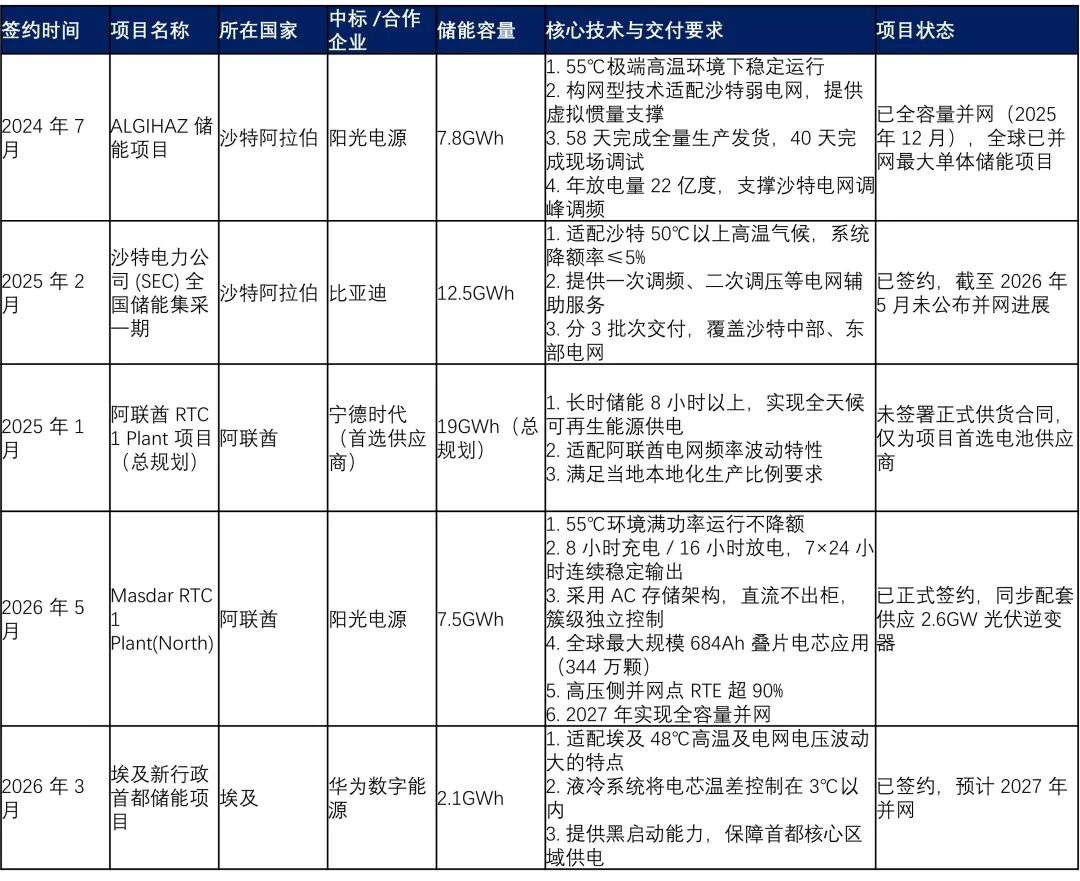
Analysis of market leaders in Middle East energy storage
Why It Matters
Understanding the energy storage landscape is critical for AI infrastructure providers looking to scale data centers in the Middle East.
What To Do Next
Research local energy infrastructure requirements if planning to deploy high-compute data centers in the Middle East.
Key Points
- •Analysis of market leaders in Middle East energy storage
- •Evaluation of core performance metrics for storage systems
- •Strategic importance of infrastructure in the region
Deep Insight
Background and context from public sources — not the original article. 25 sources cited.
Enhanced Key Takeaways
- •The Middle East energy storage market is experiencing exponential growth, projected to reach over 6 GWh in the UAE by 2030 and 48 GWh in Saudi Arabia by 2030, driven by ambitious national renewable energy targets and the necessity to stabilize intermittent solar and wind power.
- •Significant sovereign wealth fund investments, such as Saudi Arabia's Public Investment Fund allocating $50 billion for 30 GWh of domestic storage and Masdar's $30 billion commitment across projects, are acting as a primary catalyst for large-scale energy storage deployment in the region.
- •The region is strategically developing into a vertically integrated solar manufacturing hub, with production capacity anticipated to reach approximately 44 GW by 2028, fostering a robust 'photovoltaic + energy storage' model and potentially reducing reliance on imported solutions.
- •Beyond traditional lithium-ion batteries, the Middle East is actively exploring and deploying diverse energy storage technologies, including flow batteries for high-temperature adaptability, and piloting innovative solutions like 'ammonia energy storage' (Power-to-X) and nickel-hydrogen BESS to meet unique environmental and grid demands.
- •Energy storage is increasingly viewed as a critical pillar for economic diversification, enabling local industries to cultivate expertise in advanced technologies, enhance energy security, and unlock new business models beyond traditional hydrocarbon revenues.
Competitor Analysis
- Key Contributions/Technologies in ME
- Dominates UAE national energy storage strategy; launched 1.2 GWh tender (2024); partnered with EWEC for 5.2 GW solar park with 19 GWh BESS (Abu Dhabi); piloting 'ammonia energy storage' (Power-to-X); partnered with Sungrow for PowerTitan 3.0 ESS.
- Key Contributions/Technologies in ME
- Operates the first virtual power plant (VPP) in the Middle East (aggregating 200 MW of distributed energy storage); involved in the Mohammed bin Rashid Al Maktoum Solar Park (250 MWh storage).
- Key Contributions/Technologies in ME
- Local renewable energy developer; collaborated with Redflow to deploy 50 MWh zinc-bromine flow batteries for high-temperature scenarios.
- Key Contributions/Technologies in ME
- Supplying MC Cube-T energy storage system with Cell-to-System (CTS) technology for Saudi Electricity Company's 2.5 GW / 12.5 GWh BESS deployment across five strategic sites in Saudi Arabia.
- Key Contributions/Technologies in ME
- Supplying advanced ∞Cell 1175Ah battery technology in 6.25 MWh Desert Eagle containerized systems for Saudi Electricity Company's 4 GWh BESS projects in Tabuk and Hail.
- Key Contributions/Technologies in ME
- Supplying 7.5GWh of PowerTitan 3.0 liquid-cooled ESS and 2.6GW of PV inverter solutions for Masdar/EWEC's 19GWh Abu Dhabi project, designed for operation up to 55°C without derating.
- Key Contributions/Technologies in ME
- Listed as a major company operating in the Middle East and Africa BESS market.
- Key Contributions/Technologies in ME
- Listed as a major company operating in the Middle East and Africa BESS market.
- Key Contributions/Technologies in ME
- Listed as a major company operating in the Middle East and Africa BESS market.
- Key Contributions/Technologies in ME
- Listed as a major company operating in the Middle East and Africa BESS market.
- Key Contributions/Technologies in ME
- Utilizes state-of-the-art lithium-ion, flow battery, and hybrid energy storage technologies with AI-powered energy management systems for optimal energy dispatch and predictive maintenance.
| Company | Key Contributions/Technologies in ME |
|---|---|
| Masdar (Abu Dhabi Future Energy Company) | Dominates UAE national energy storage strategy; launched 1.2 GWh tender (2024); partnered with EWEC for 5.2 GW solar park with 19 GWh BESS (Abu Dhabi); piloting 'ammonia energy storage' (Power-to-X); partnered with Sungrow for PowerTitan 3.0 ESS. |
| DEWA (Dubai Electricity and Water Authority) | Operates the first virtual power plant (VPP) in the Middle East (aggregating 200 MW of distributed energy storage); involved in the Mohammed bin Rashid Al Maktoum Solar Park (250 MWh storage). |
| AMEA Power | Local renewable energy developer; collaborated with Redflow to deploy 50 MWh zinc-bromine flow batteries for high-temperature scenarios. |
| BYD Co. Ltd. | Supplying MC Cube-T energy storage system with Cell-to-System (CTS) technology for Saudi Electricity Company's 2.5 GW / 12.5 GWh BESS deployment across five strategic sites in Saudi Arabia. |
| HiTHIUM | Supplying advanced ∞Cell 1175Ah battery technology in 6.25 MWh Desert Eagle containerized systems for Saudi Electricity Company's 4 GWh BESS projects in Tabuk and Hail. |
| Sungrow Power Supply Co. | Supplying 7.5GWh of PowerTitan 3.0 liquid-cooled ESS and 2.6GW of PV inverter solutions for Masdar/EWEC's 19GWh Abu Dhabi project, designed for operation up to 55°C without derating. |
| Fluence Energy Inc. | Listed as a major company operating in the Middle East and Africa BESS market. |
| Tesla Inc. | Listed as a major company operating in the Middle East and Africa BESS market. |
| Huawei Digital Power | Listed as a major company operating in the Middle East and Africa BESS market. |
| NGK INSULATORS, LTD. | Listed as a major company operating in the Middle East and Africa BESS market. |
| ENGIE | Utilizes state-of-the-art lithium-ion, flow battery, and hybrid energy storage technologies with AI-powered energy management systems for optimal energy dispatch and predictive maintenance. |
Technical Deep Dive
- Dominant Technology: Lithium-ion batteries held approximately 75% of the installed capacity in the UAE in 2023 and 79.82% of the Middle East and Africa BESS market share in 2025, favored for their energy density and scalability.
- Emerging Chemistries: Flow batteries are gaining traction, accounting for 15% of UAE's installed capacity and projected to grow at a 28.25% CAGR in MEA through 2031, primarily due to their high-temperature adaptability and suitability for longer durations.
- Advanced Pilots: Masdar is collaborating with HydrogenPro to develop 'ammonia energy storage' (Power-to-X) with a reported thermal efficiency of 65%, utilizing excess green electricity to produce and store ammonia.
- System Components: A typical Battery Energy Storage System (BESS) comprises a battery system, a power conversion system (PCS) or hybrid inverter, a battery management system (BMS), environmental controls, an energy management system (EMS), and safety equipment like fire suppression and alarms.
- Thermal Management: For hot desert regions, BESS solutions incorporate active liquid cooling, IP-rated enclosures to protect sensitive cells from corrosive, salt-laden air, and advanced AI-driven BMS for real-time cell health monitoring to prevent thermal runaway.
- Specific Technologies in Projects: BYD's MC Cube-T systems integrate Cell-to-System (CTS) technology for higher efficiency and space utilization. HiTHIUM's ∞Cell 1175Ah battery technology is deployed in 6.25 MWh Desert Eagle containerized systems, optimized for extreme climates. Sungrow's PowerTitan 3.0 ESS features a liquid-cooled Silicon Carbide Power Conversion System (SiC PCS) achieving 99.3% efficiency and 90% system Round-Trip Efficiency (RTE), designed to operate at up to 55°C without derating.
- Grid Integration: BESS are designed to provide dispatchable power, manage grid congestion, balance supply and demand, reduce reliance on conventional generation, and support frequency regulation and black start capabilities, with switching times as low as 5 milliseconds for emergency mobile units.
Future ImplicationsAI analysis grounded in cited sources
Timeline
- 2017-06Initial deployment of energy storage projects in the Middle East, notably in Jordan and Saudi Arabia.
- 2021-01Saudi Arabia launches the Middle East Green Initiative (MGI), signaling a regional commitment to climate action and energy diversification.
- 2022-09The U.S.-UAE Partnership for Accelerating Clean Energy (PACE) is established, aiming to catalyze significant clean energy investments.
- 2023-01Dubai achieves one of the world's lowest photovoltaic power generation costs at 1.04 cents/kWh, demonstrating economic viability for solar-plus-storage.
- 2025-02Saudi Arabia's Bisha Project, a 2000 MWh battery energy storage system, becomes operational, marking a significant milestone for grid stability in the region.
- 2025-10Masdar and EWEC break ground on a 5.2 GW solar park with a 19 GWh battery storage system in Abu Dhabi, set to be the world's first gigascale 24/7 renewable energy project.
Sources (25)
Factual claims are grounded in the sources below. Forward-looking analysis is AI-generated interpretation.
Weekly AI Recap
Read this week's curated digest of top AI events →
AI-curated news aggregator. All content rights belong to original publishers.
Original source: 钛媒体 ↗
This is a summary, not the original. Read the source, or get the weekly briefing.
The weekly digest
One email a week. Unsubscribe anytime.