Microsoft's Windows 11 Fix Plan

💡Microsoft fixes AI backlash in Windows 11—vital for Copilot devs
⚡ 30-Second TL;DR
What Changed
Microsoft analyzing user feedback after trust breakdown
Why It Matters
This plan addresses AI-related user dissatisfaction, potentially stabilizing Windows for enterprise AI deployments. Developers may see refined AI integrations like Copilot.
What To Do Next
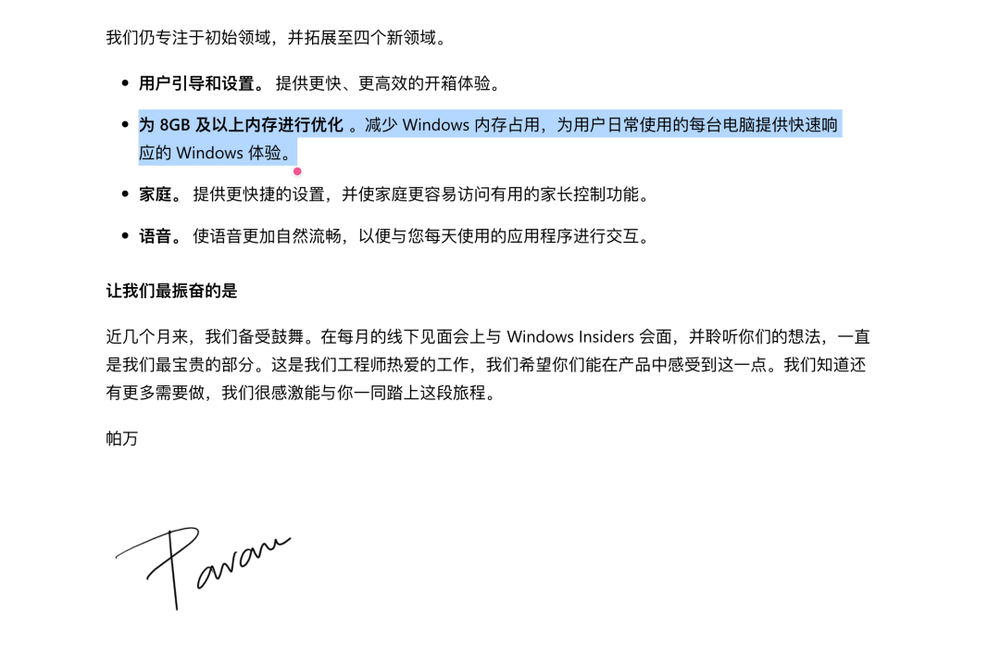
Read Pavan Davuluri's blog post for specifics on Windows 11 AI-related fixes.
Key Points
- •Microsoft analyzing user feedback after trust breakdown
- •Backlash specifically over AI additions to Windows 11
- •Pavan Davuluri commits to Windows quality improvements
- •Multiple changes planned for Windows 11
🧠 Deep Insight
Background and context from public sources — not the original article. 11 sources cited.
🔑 Enhanced Key Takeaways
- •Microsoft has implemented an internal engineering initiative called 'swarming,' which reallocates cross-disciplinary teams (kernel, drivers, and QA) to urgently resolve high-priority regressions like the January 2026 boot failures and shutdown loops.
- •The 'Fix Plan' introduces 'Agent Workspaces,' a new architectural layer that runs AI agents in isolated, lightweight sessions with dedicated accounts to prevent unauthorized access to the primary user's desktop environment.
- •Windows Recall has been re-engineered using Virtualization-based Security (VBS) Enclaves, which ensures that snapshot encryption keys are only accessible during active Windows Hello biometric sessions and are isolated from the rest of the OS.
- •The March 2026 update (KB5079473) specifically targets 'Quick Machine Recovery' and 'Sysmon' integration to allow IT admins to repair systems that fail to boot due to corrupted updates without requiring physical access.
- •Microsoft is reportedly pivoting toward a 'Modular AI' strategy, reviewing existing Copilot integrations in core apps like Notepad and Paint to allow users to de-provision AI components entirely to regain system performance.
📊 Competitor Analysis▸ Show
| Feature | Windows 11 (Copilot+) | macOS (Apple Intelligence) | ChromeOS (Gemini) |
|---|---|---|---|
| Primary AI Model | GPT-4o / Phi-Silica | On-device + Private Cloud Compute | Gemini Nano / Pro |
| Hardware Req. | 40+ TOPS NPU (Snapdragon/Intel/AMD) | M-Series Silicon (M1 or newer) | Chromebook Plus (v2 specs) |
| Key AI Feature | Recall (Semantic Timeline) | Writing Tools / Image Wand | Gemini Live / Welcome Recap |
| Privacy Model | VBS Enclave / Opt-in | Local-first / Stateless Cloud | Cloud-centric with local sync |
| Pricing | Included (Pro/Home) | Included (macOS Sequoia+) | Included (Plus) / $20/mo (Ultra) |
🛠️ Technical Deep Dive
The 2026 Windows 11 AI architecture is built on three technical pillars:
- Agentic Workspace Isolation: Uses a 'lightweight session' model where AI agents operate in parallel to the user. These sessions have restricted GDI/User32 access, preventing agents from 'seeing' the screen unless explicitly authorized via the 'Experiential Agentic Features' toggle.
- Model Context Protocol (MCP): Native support for this open-source protocol allows generative AI to access external tools and local data through a standardized, auditable interface rather than direct file system access.
- VBS Enclave Snapshotting: Recall snapshots are processed via OCR on the NPU and stored in an SQLite database within a Virtualization-based Security (VBS) Enclave. This prevents 'TotalRecall' style exploits by ensuring the database is never decrypted on the disk or in standard system memory.
🔮 Future ImplicationsAI analysis grounded in cited sources
⏳ Timeline
📎 Sources (11)
Factual claims are grounded in the sources below. Forward-looking analysis is AI-generated interpretation.
Weekly AI Recap
Read this week's curated digest of top AI events →
👉Related Updates
AI-curated news aggregator. All content rights belong to original publishers.
Original source: The Verge ↗
This is a summary, not the original. Read the source, or get the weekly briefing.
Weekly AI briefing
One email a week. Unsubscribe anytime.