Microsoft's leaked 'Project Aion' explores AI-native OS design
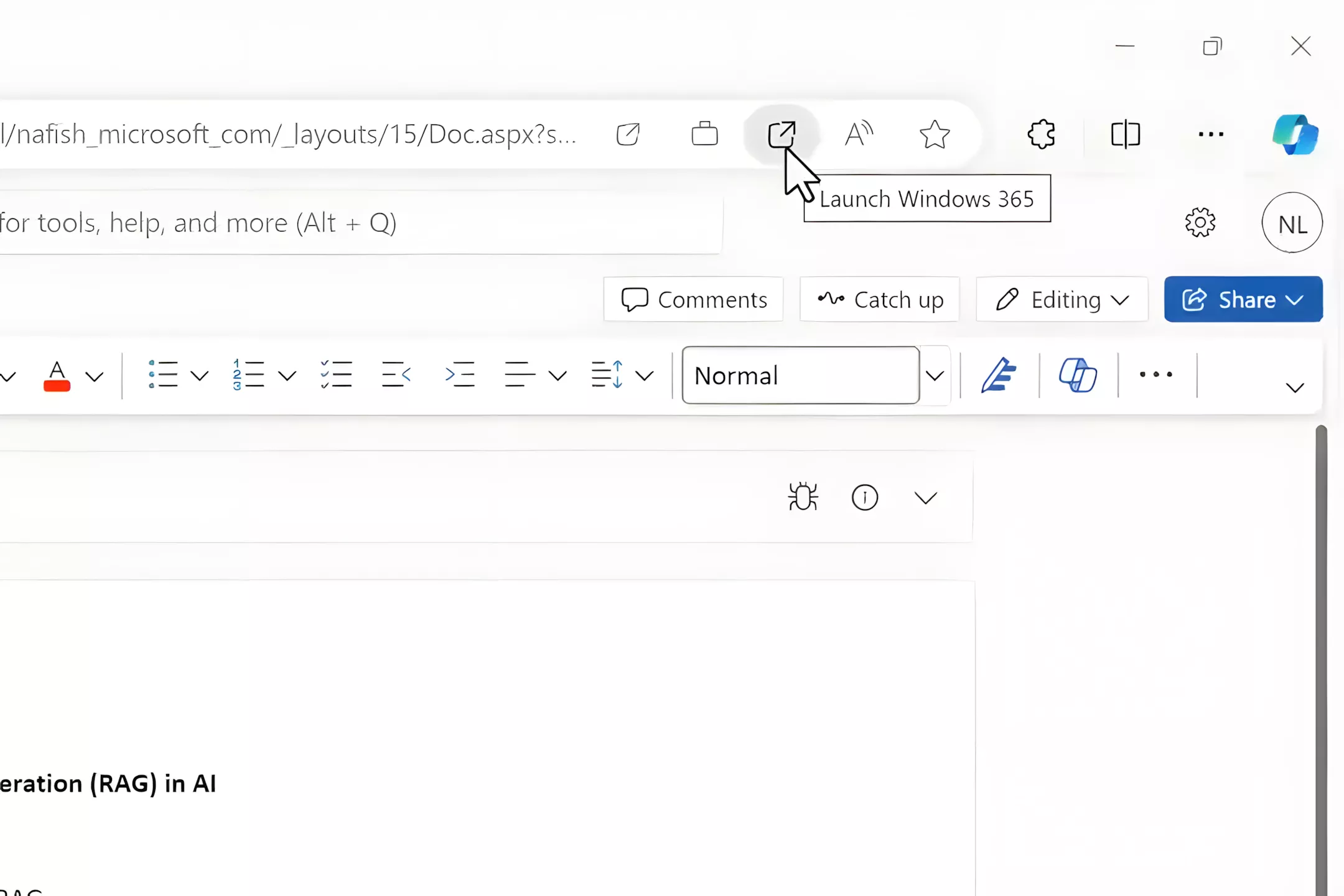
💡A glimpse into the future of OS design: Microsoft's shift toward agent-native computing.
⚡ 30-Second TL;DR
What Changed
Project Aion moves beyond a simple Copilot overlay to an AI-agent-first OS architecture.
Why It Matters
If implemented, this would represent a fundamental shift in OS architecture, moving from application-centric to agent-centric computing. It signals a future where the OS itself acts as an autonomous assistant.
What To Do Next
Monitor Microsoft's Windows AI agent documentation and research papers to understand how to build applications compatible with agent-first OS environments.
Key Points
- •Project Aion moves beyond a simple Copilot overlay to an AI-agent-first OS architecture.
- •The concept leverages cloud and browser-native technologies for a seamless desktop experience.
- •Microsoft is experimenting with deep OS-level integration of AI agents to automate user workflows.
🧠 Deep Insight
AI-generated analysis for this event — not the original article.
🔑 Enhanced Key Takeaways
- •Project Aion utilizes a 'Semantic File System' architecture that indexes user intent and context alongside traditional file metadata to enable natural language OS navigation.
- •The project is reportedly built on a lightweight, modular kernel derivative of Windows Core OS, specifically optimized for low-latency inference of local and cloud-based Small Language Models (SLMs).
- •Internal documentation suggests Aion incorporates a 'Predictive UI' layer that dynamically generates interface elements and controls based on the active task, rather than relying on static application windows.
- •Microsoft is testing a 'Privacy-First Compute' sandbox within Aion that allows AI agents to process sensitive user data locally using Trusted Execution Environments (TEEs) to prevent cloud exfiltration.
- •The initiative is closely tied to the 'Windows Silicon Initiative,' aiming to leverage NPU-heavy hardware to offload agent processing and reduce reliance on continuous internet connectivity.
📊 Competitor Analysis▸ Show
| Feature | Project Aion (Microsoft) | Apple Intelligence (macOS/iOS) | Google ChromeOS (Project Astra) |
|---|---|---|---|
| Core Philosophy | Agent-first OS shell | Assistant-integrated OS | Web-centric AI orchestration |
| Inference Model | Hybrid (Local SLM/Cloud) | Hybrid (Local/Private Cloud) | Cloud-first (Gemini) |
| UI Paradigm | Dynamic/Generative UI | Static UI with AI overlays | Browser-based AI integration |
🛠️ Technical Deep Dive
- Architecture: Utilizes a modular kernel based on Windows Core OS (WCOS) to minimize overhead for AI agent runtime environments.
- Inference Engine: Employs a tiered model approach where lightweight SLMs handle UI interactions locally, while complex reasoning tasks are offloaded to Azure-hosted LLMs.
- Memory Management: Implements a 'Contextual Memory Buffer' that stores user activity logs in a vector database for long-term agent recall.
- Security: Integrates hardware-level isolation via TEEs to ensure that AI agents operate within a secure enclave, preventing unauthorized access to user files or system settings.
🔮 Future ImplicationsAI analysis grounded in cited sources
⏳ Timeline
Weekly AI Recap
Read this week's curated digest of top AI events →
👉Related Updates

AI-curated news aggregator. All content rights belong to original publishers.
Original source: cnBeta (Full RSS) ↗
This is a summary, not the original. Read the source, or get the weekly briefing.
Weekly AI briefing
One email a week. Unsubscribe anytime.