Microsoft to Unveil New AI Models at Build Conference
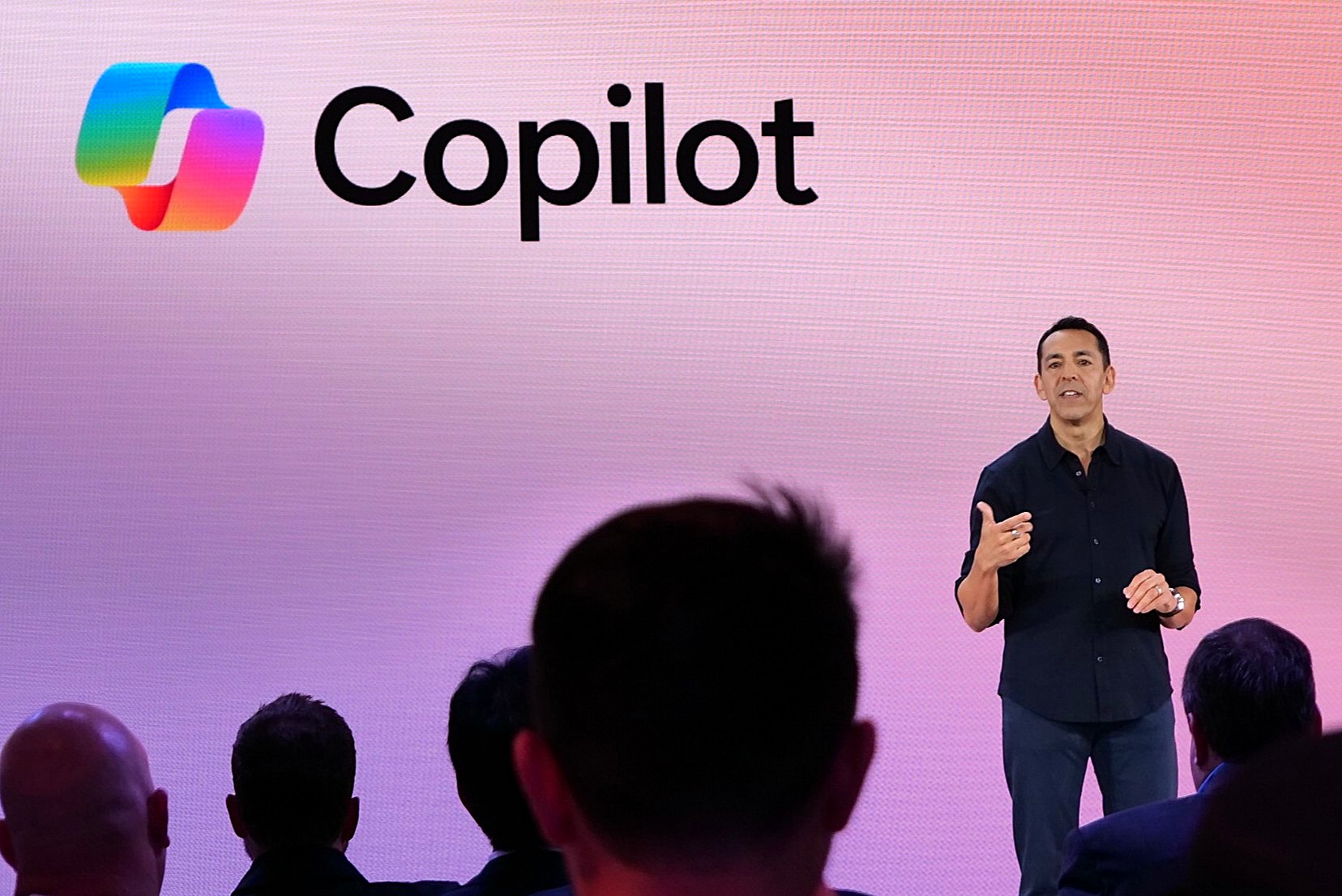
💡Critical updates to Windows and AI models that could redefine your development stack.
⚡ 30-Second TL;DR
What Changed
Microsoft to announce new AI model capabilities at Build
Why It Matters
The announcements could significantly alter the Windows development landscape and AI integration workflows. Developers should prepare for potential shifts in platform tooling and API availability.
What To Do Next
Monitor the Build keynote for new Windows AI APIs to integrate into your local application workflows.
Key Points
- •Microsoft to announce new AI model capabilities at Build
- •Major Windows platform updates expected for developers
- •Strategic focus on rebuilding developer trust in Windows and GitHub ecosystems
🧠 Deep Insight
Background and context from public sources — not the original article. 14 sources cited.
🔑 Enhanced Key Takeaways
- •Microsoft is developing its own series of large language models (LLMs) known as MAI, which are reportedly competitive with models from OpenAI and Anthropic, aiming to reduce reliance on third-party AI providers.
- •The Build 2026 conference is positioning AI as core infrastructure rather than merely an assistant, with Copilot evolving into a continuous layer that integrates across various workflows, including documents, emails, code, and data systems.
- •Microsoft plans to unveil a new developer-optimized experience for Windows 11, emphasizing the ability to run AI models locally on PCs and announcing compatibility with new hardware platforms like Nvidia's RTX Spark and Qualcomm's Arm processors.
- •New AI models expected to be announced at Build include MAI-Thinking-1, an enterprise-focused reasoning model developed without distillation, and MAI-Image-2.5.
- •Microsoft is actively addressing recent challenges with GitHub, such as employee departures, service outages, and security issues, to rebuild and strengthen developer trust in the platform.
📊 Competitor Analysis▸ Show
| Competitor | Key AI Models/Platforms | Focus/Strengths |
|---|---|---|
| OpenAI | GPT-4o, GPT-4 Turbo, DALL-E | Pioneered commercial LLM API market, ChatGPT, text/image/code generation, embeddings, fine-tuning. |
| Anthropic | Claude family | Strong reasoning capabilities, large context windows (up to 200K tokens), emphasis on AI safety, Constitutional AI. |
| Google AI | Gemini family, Gemma | Multimodal capabilities (text, images, audio, video), competitive pricing, long context windows (up to 1M tokens), integrated with Google Cloud's Vertex AI. |
| Meta AI | Llama series (Llama 3, Llama 4) | Open-source LLMs, foundational for open-source AI ecosystem, embedded across Facebook, Instagram, WhatsApp, Messenger. |
| xAI | Grok series | Integrated into X (formerly Twitter), real-time information access, conversational style, competes on reasoning and coding benchmarks. |
| Alibaba Cloud | Qwen (Tongyi Qianwen) family | Excels in multilingual tasks (Chinese, English), specialized variants for coding, math, multimodal understanding. |
| DeepSeek | DeepSeek models | High-performance open-source language models, freely available for commercial use. |
| Stability AI | Stable Diffusion, Flux | Widely used open-source image generation models. |
| Cohere | - | Focus on enterprise security, compliance, deployment flexibility (any cloud/on-premises). |
| Databricks | DBRX, Mosaic AI platform | Open-source mixture-of-experts LLM, enterprise AI platform. |
| Moonshot AI | Kimi series | Ultra-long context windows (up to 2M tokens), multimodal capabilities, advanced reasoning. |
🛠️ Technical Deep Dive
- Microsoft's MAI series includes models like Phi-4-mini, featuring 3.8 billion parameters and designed for reasoning tasks such as solving math problems, and Phi-4-multimodal.
- The development of Phi-4 models utilized new LLM training methods that rely on synthetic data.
- Microsoft is reportedly developing a second MAI LLM series specifically optimized for reasoning tasks.
- The AI Builder architecture ensures enterprise data protection and geo boundary compliance, with data encrypted during transfer, remaining within the environment's geography, and stored at rest in Dataverse under user control.
- AI Builder services integrate with Azure OpenAI and Azure AI Content Safety to ensure responsible AI compliance for prompts.
- Windows AI Foundry serves as the platform layer for local model deployment, with Build 2026 sessions detailing Windows APIs for local model execution and the Foundry Local tool on Windows hardware.
- The Windows Subsystem for Linux (WSL) is receiving performance upgrades, including faster file access between Linux and Windows, improved network throughput, and simplified onboarding to facilitate building AI-powered applications on Windows.
- NVIDIA's RTX Spark platform for Windows on Arm PCs combines an Arm CPU, Blackwell RTX GPU, and large unified memory configurations.
- Microsoft is positioning Copilot as an infrastructure layer that connects various parts of a workflow, including documents, emails, code, and data systems, rather than a standalone feature.
- AI agents are a key focus, with discussions at Build on using them to create native Windows apps with the WinUI 3 framework and to port x86 applications to Arm versions of Windows.
🔮 Future ImplicationsAI analysis grounded in cited sources
⏳ Timeline
📎 Sources (14)
Factual claims are grounded in the sources below. Forward-looking analysis is AI-generated interpretation.
Weekly AI Recap
Read this week's curated digest of top AI events →
👉Related Updates
AI-curated news aggregator. All content rights belong to original publishers.
Original source: cnBeta (Full RSS) ↗
This is a summary, not the original. Read the source, or get the weekly briefing.
The weekly digest
One email a week. Unsubscribe anytime.