Microsoft testing wearable AI gadget for office workers
💡Microsoft is moving AI from the screen to the body; learn how wearable form factors may redefine office productivity.
⚡ 30-Second TL;DR
What Changed
Microsoft is developing a wearable AI-enabled access badge for employees.
Why It Matters
This signals Microsoft's intent to integrate AI directly into the physical office environment, potentially bridging the gap between digital AI assistants and physical workspace management.
What To Do Next
Monitor Microsoft's hardware division updates for potential API releases related to workplace IoT and edge AI integration.
Key Points
- •Microsoft is developing a wearable AI-enabled access badge for employees.
- •A companion desktop device is also being tested alongside the wearable.
- •The project is currently in the internal testing phase with company staff.
🧠 Deep Insight
Background and context from public sources — not the original article. 7 sources cited.
🔑 Enhanced Key Takeaways
- •The wearable AI gadget and desktop device are part of a new platform called "Project Solara," which aims to enable devices that run AI agents instead of traditional apps, based on Android rather than Windows.
- •Microsoft envisions itself as a platform provider for Project Solara, intending for other hardware makers and industry partners to develop their own devices and solutions based on its reference designs, rather than shipping the devices itself.
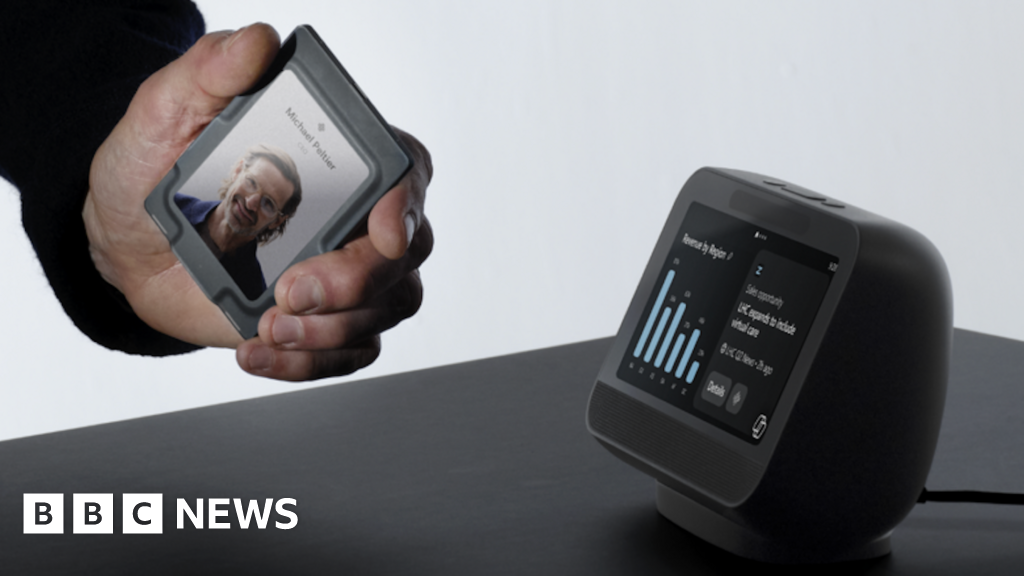
- •The wearable badge features a touchscreen, a fingerprint sensor for secure access, a microphone array for recording and transcribing conversations, and a built-in camera that allows the AI agent to act on what the user sees.
- •The companion desktop hub responds to voice commands, uses facial recognition for sign-ins, surfaces important daily items, and can transform into a full Windows machine running in the cloud when a monitor is attached.
- •Project Solara leverages "just-in-time UI" capabilities, allowing AI models to generate user interfaces from computer code, which enables agents to adapt across various devices and modalities without requiring developers to redesign for each form factor.
🛠️ Technical Deep Dive
- Platform: Project Solara, designed for AI agents instead of traditional apps, is based on Android rather than Windows.
- AI Architecture: The platform is built for AI agents to orchestrate across multiple apps and services, maintaining context across entire workflows, devices, and timescales.
- Chip Partners: The wearable badge runs on a new Qualcomm wearable chip, while the desktop hub utilizes MediaTek IoT silicon, both being off-the-shelf components.
- User Interface: Employs "just-in-time UI," where AI models dynamically generate user interfaces from computer code, allowing agents to adapt across different devices and modalities without extensive redesign.
- Wearable Badge Specifications: Includes a touchscreen display, a Hello for Business fingerprint sensor button for secure access, a privacy switch, volume controls, a far-field high SNR microphone array, and a built-in camera.
- Desktop Hub Specifications: Features a touchscreen, microphones, speakers, and facial recognition for secure sign-in. It can also connect to Windows 365 via USB-C to provide a cloud PC experience when an external display is attached.
- Backend Integration: The devices integrate with Microsoft IQ, which includes Work IQ (workplace context), Web IQ (AI-first web search), Fabric IQ (structured business data), and Foundry IQ (enterprise knowledge retrieval).
🔮 Future ImplicationsAI analysis grounded in cited sources
⏳ Timeline
📎 Sources (7)
Factual claims are grounded in the sources below. Forward-looking analysis is AI-generated interpretation.
Weekly AI Recap
Read this week's curated digest of top AI events →
👉Related Updates


AI-curated news aggregator. All content rights belong to original publishers.
Original source: BBC Technology ↗
This is a summary, not the original. Read the source, or get the weekly briefing.
The weekly digest
One email a week. Unsubscribe anytime.