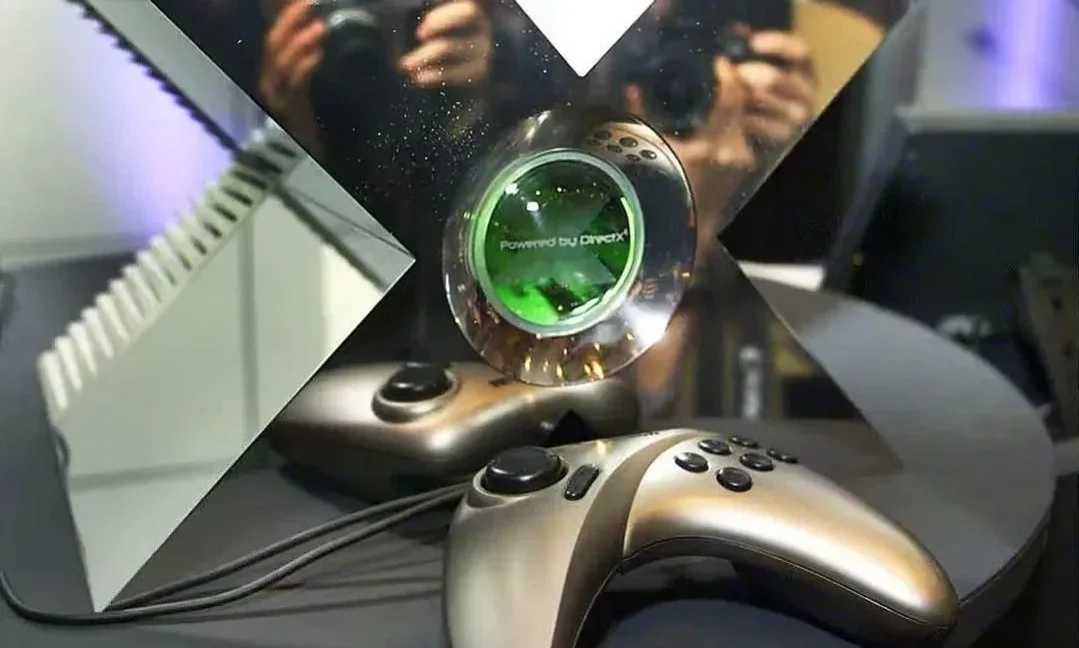
Microsoft brings original Xbox backward compatibility to Windows PCs
💡Learn how Microsoft optimizes legacy software for low-end hardware, a key skill for deploying AI on edge devices.
⚡ 30-Second TL;DR
What Changed
Initial support for four original Xbox titles on Windows
Why It Matters
This move signals a shift in Microsoft's strategy to decouple gaming software from specific hardware constraints. It highlights potential for AI-driven upscaling or performance optimization in legacy emulation.
What To Do Next
Analyze the performance overhead of this emulator to understand how to optimize resource-heavy AI inference on legacy hardware.
Key Points
- •Initial support for four original Xbox titles on Windows
- •Optimized for low-end hardware, including 11-year-old GPUs
- •Expands Microsoft's ecosystem reach beyond console hardware
- •Demonstrates advanced emulation efficiency for legacy software
🧠 Deep Insight
AI-generated analysis for this event — not the original article.
🔑 Enhanced Key Takeaways
- •The emulation layer utilizes a new proprietary 'X-Layer' API that translates original Xbox XDK calls directly into DirectX 12 Ultimate commands.
- •Microsoft has integrated this feature directly into the Xbox app for Windows, requiring no separate emulator installation or configuration.
- •The four launch titles include 'Halo: Combat Evolved', 'Fuzion Frenzy', 'Ninja Gaiden', and 'Dead or Alive 3', all featuring native 4K resolution upscaling.
- •Cloud-based save synchronization allows users to seamlessly transition progress between original Xbox consoles, Xbox Series X/S, and Windows PCs.
- •The system leverages machine learning-based texture upscaling, a feature previously exclusive to the Xbox Series X/S 'FPS Boost' and resolution enhancement programs.
📊 Competitor Analysis▸ Show
| Feature | Microsoft Xbox (Windows) | Valve (Steam/Proton) | Sony (PlayStation PC) |
|---|---|---|---|
| Legacy Support | Native Original Xbox Emulation | Via Community/Wine (Unofficial) | Limited (Cloud Streaming Only) |
| Pricing | Included with Game Pass/Owned Titles | Varies (Requires Purchase) | N/A (No Native Emulation) |
| Hardware Req. | 11-year-old GPU (Minimum) | Varies by Proton version | N/A |
| Integration | Deep OS/Xbox App Integration | Steam Client | PS Plus App |
🛠️ Technical Deep Dive
- Emulation utilizes a Just-In-Time (JIT) recompiler that maps PowerPC-based Xbox architecture to x86-64 instructions in real-time.
- Implementation of a custom 'Virtual Hardware Abstraction Layer' (VHAL) that mimics the original Xbox MCPX chip to ensure compatibility with legacy copy-protection checks.
- Dynamic resolution scaling is handled by a dedicated compute shader pipeline that runs independently of the game's original render loop.
- Support for modern input APIs allows for plug-and-play functionality with Xbox Wireless Controllers, including haptic feedback mapping.
🔮 Future ImplicationsAI analysis grounded in cited sources
⏳ Timeline
Weekly AI Recap
Read this week's curated digest of top AI events →
👉Related Updates
AI-curated news aggregator. All content rights belong to original publishers.
Original source: Ars Technica ↗
This is a summary, not the original. Read the source, or get the weekly briefing.
The weekly digest
One email a week. Unsubscribe anytime.