Micron Launches 256GB DDR5 at 9200MT/s
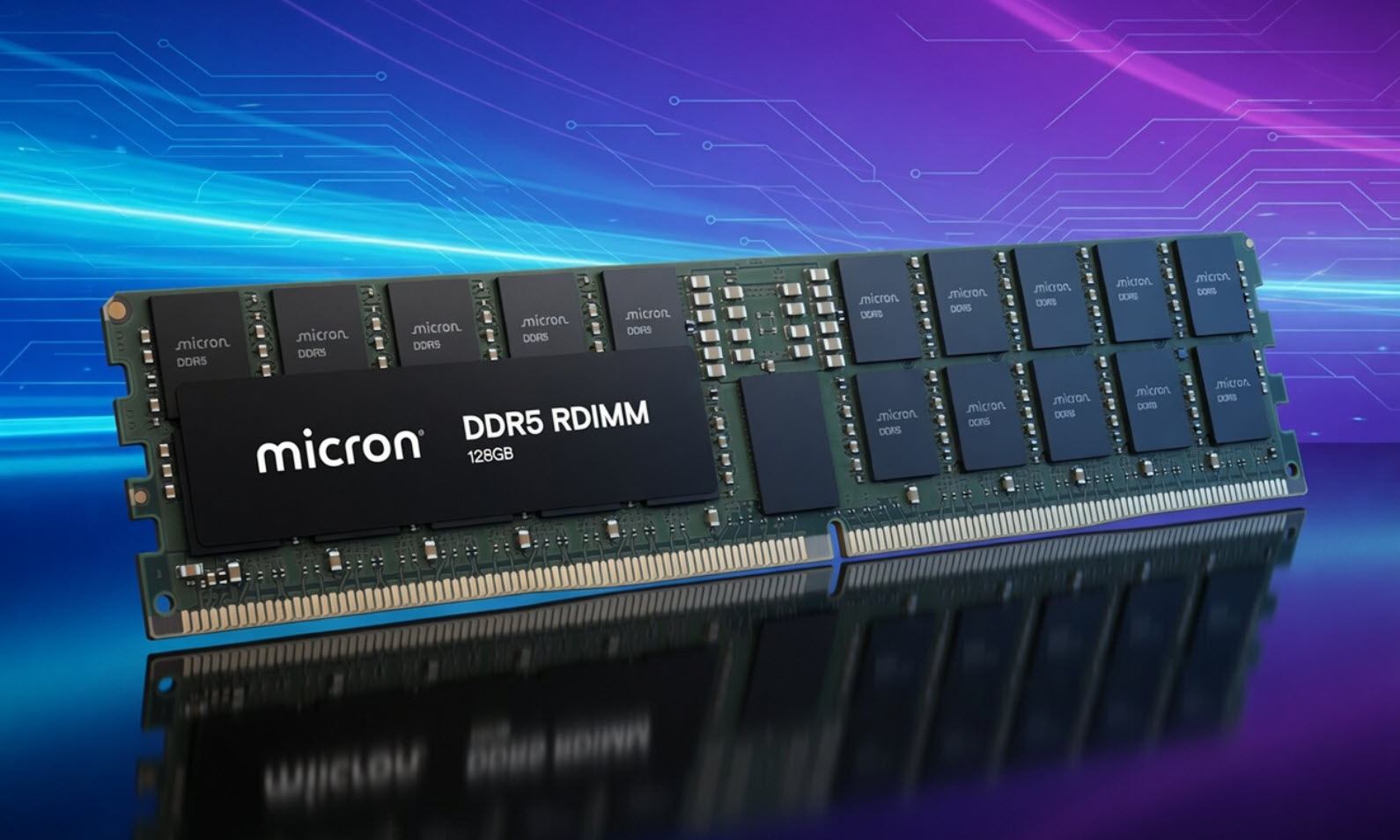
💡9200MT/s DDR5 from Micron cuts AI server bottlenecks by 40%—scale your infra now.
⚡ 30-Second TL;DR
What Changed
256GB DDR5 RDIMM samples now available to server ecosystem partners
Why It Matters
Enables handling of larger AI models with reduced memory bottlenecks, accelerating training and inference in data centers for AI enterprises.
What To Do Next
Request Micron DDR5 RDIMM samples from partners for AI server benchmarking.
Key Points
- •256GB DDR5 RDIMM samples now available to server ecosystem partners
- •Achieves 9200MT/s transfer rates using 1-gamma DRAM process
- •40% faster than current mass-produced DDR5 modules
- •Designed for generative AI-driven server infrastructure expansion
🧠 Deep Insight
AI-generated analysis for this event — not the original article.
🔑 Enhanced Key Takeaways
- •The 1-gamma (1γ) node represents Micron's most advanced DRAM process technology, utilizing extreme ultraviolet (EUV) lithography to achieve higher density and power efficiency compared to the previous 1-beta (1β) generation.
- •These 256GB modules utilize 32Gb monolithic DRAM dies, which are critical for reaching high-capacity RDIMM configurations without requiring complex die-stacking techniques that can increase latency.
- •The 9200MT/s speed grade significantly exceeds the JEDEC standard for DDR5-8800, positioning Micron to capture the high-performance computing (HPC) market segment before competitors reach similar density-speed combinations.
📊 Competitor Analysis▸ Show
| Feature | Micron 256GB DDR5 | Samsung 256GB DDR5 | SK Hynix 256GB DDR5 |
|---|---|---|---|
| Process Node | 1-gamma (1γ) | 12nm-class (1b) | 10nm-class (1b) |
| Max Speed | 9200 MT/s | 8000-8800 MT/s | 8000-8800 MT/s |
| Die Density | 32Gb Monolithic | 32Gb Monolithic | 32Gb Monolithic |
🛠️ Technical Deep Dive
- Process Node: 1-gamma (1γ) node, Micron's latest EUV-based fabrication process.
- Die Density: 32Gb monolithic DRAM chips, enabling 256GB capacity per module without TSV (Through-Silicon Via) stacking complexity.
- Signal Integrity: Utilizes advanced signal integrity enhancements to maintain stability at 9200MT/s, likely involving improved on-die ECC and optimized PCB trace routing.
- Power Efficiency: 1γ node provides a reduction in power-per-bit, essential for maintaining thermal envelopes in high-density server racks.
🔮 Future ImplicationsAI analysis grounded in cited sources
⏳ Timeline
Weekly AI Recap
Read this week's curated digest of top AI events →
👉Related Updates




AI-curated news aggregator. All content rights belong to original publishers.
Original source: cnBeta (Full RSS) ↗
This is a summary, not the original. Read the source, or get the weekly briefing.
Weekly AI briefing
One email a week. Unsubscribe anytime.