Micro-diving suit enables underwater cyber-cockroach rescue missions
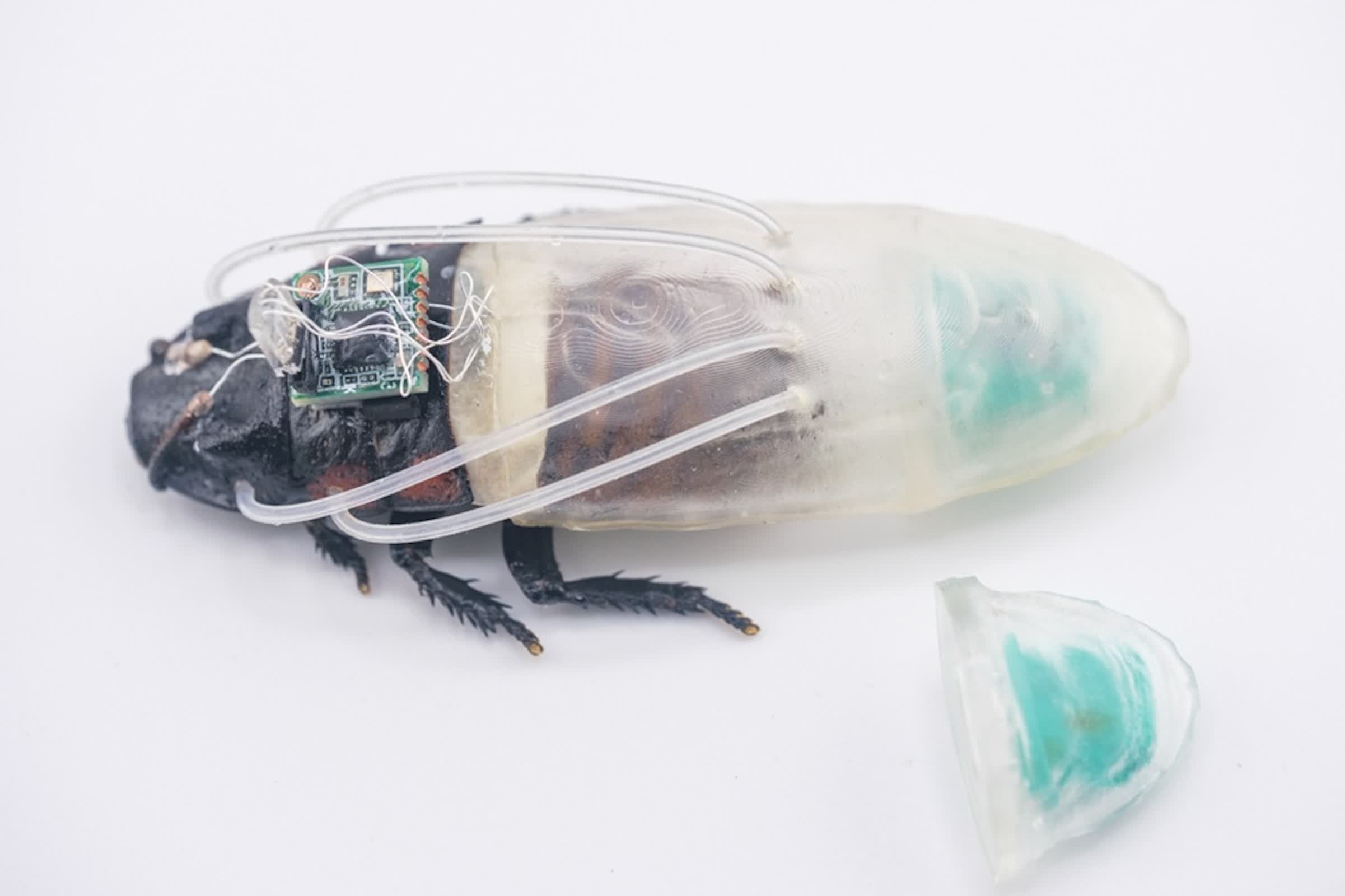
💡See how bio-hybrid robotics are solving navigation challenges in extreme, non-structured environments.
⚡ 30-Second TL;DR
What Changed
3D-printed 10x10mm life-support system for insects
Why It Matters
This research advances embodied AI in extreme environments, providing a low-cost, bio-hybrid alternative to traditional heavy robotics for disaster response.
What To Do Next
Explore bio-hybrid robotics research papers to understand how biological sensors can be integrated into your autonomous navigation stacks.
Key Points
- •3D-printed 10x10mm life-support system for insects
- •Enables navigation in flooded ruins and narrow pipes
- •Extends cyber-insect application to underwater search and rescue
🧠 Deep Insight
AI-generated analysis for this event — not the original article.
🔑 Enhanced Key Takeaways
- •The system utilizes a 'bio-hybrid' approach, integrating electronic backpacks with the cockroach's nervous system to control movement via electrical stimulation of the cerci.
- •The 3D-printed suit incorporates a specialized chamber that houses a carbon dioxide scrubber to prevent the insect from suffocating in enclosed underwater environments.
- •Researchers selected the Madagascar hissing cockroach (Gromphadorhina portentosa) for this project due to its large size, durability, and ability to carry payloads up to 30% of its body weight.
- •The suit's design includes a buoyancy control mechanism that allows the insect to maintain stability while navigating turbulent water currents.
- •This technology is specifically targeted for deployment in disaster zones where traditional robotic sensors fail due to signal attenuation or physical size constraints.
🛠️ Technical Deep Dive
- Backpack Architecture: Microcontroller-based system utilizing Bluetooth Low Energy (BLE) for wireless communication and remote navigation control.
- Power Source: Integrated lithium-polymer micro-battery providing power for both the electronic interface and the life-support suit's active components.
- Material Composition: High-resolution stereolithography (SLA) 3D-printed resin, chosen for its lightweight properties and water-tight sealing capabilities.
- Control Interface: Electrodes are placed on the insect's cerci to induce turning behaviors by mimicking predator-avoidance sensory inputs.
- Environmental Protection: The suit features a hydrophobic coating to prevent water ingress into the electronic circuitry while maintaining gas exchange for the insect's spiracles.
🔮 Future ImplicationsAI analysis grounded in cited sources
⏳ Timeline
Weekly AI Recap
Read this week's curated digest of top AI events →
👉Related Updates


AI-curated news aggregator. All content rights belong to original publishers.
Original source: cnBeta (Full RSS) ↗
This is a summary, not the original. Read the source, or get the weekly briefing.
Weekly AI briefing
One email a week. Unsubscribe anytime.