Mianbi Intelligence's edge models to power Samsung phones
💡Major validation for edge AI: Mianbi's MiniCPM models are now shipping on Samsung flagship devices.
⚡ 30-Second TL;DR
What Changed
MiniCPM series models will be integrated into Samsung flagship smartphones.
Why It Matters
This partnership signals a shift where smartphone OEMs rely on specialized AI startups for edge capabilities rather than purely in-house development. It validates the commercial viability of lightweight, high-density edge models.
What To Do Next
Evaluate the MiniCPM-V series for your own edge AI projects to see if its high-density architecture can replace larger, more resource-intensive models.
Key Points
- •MiniCPM series models will be integrated into Samsung flagship smartphones.
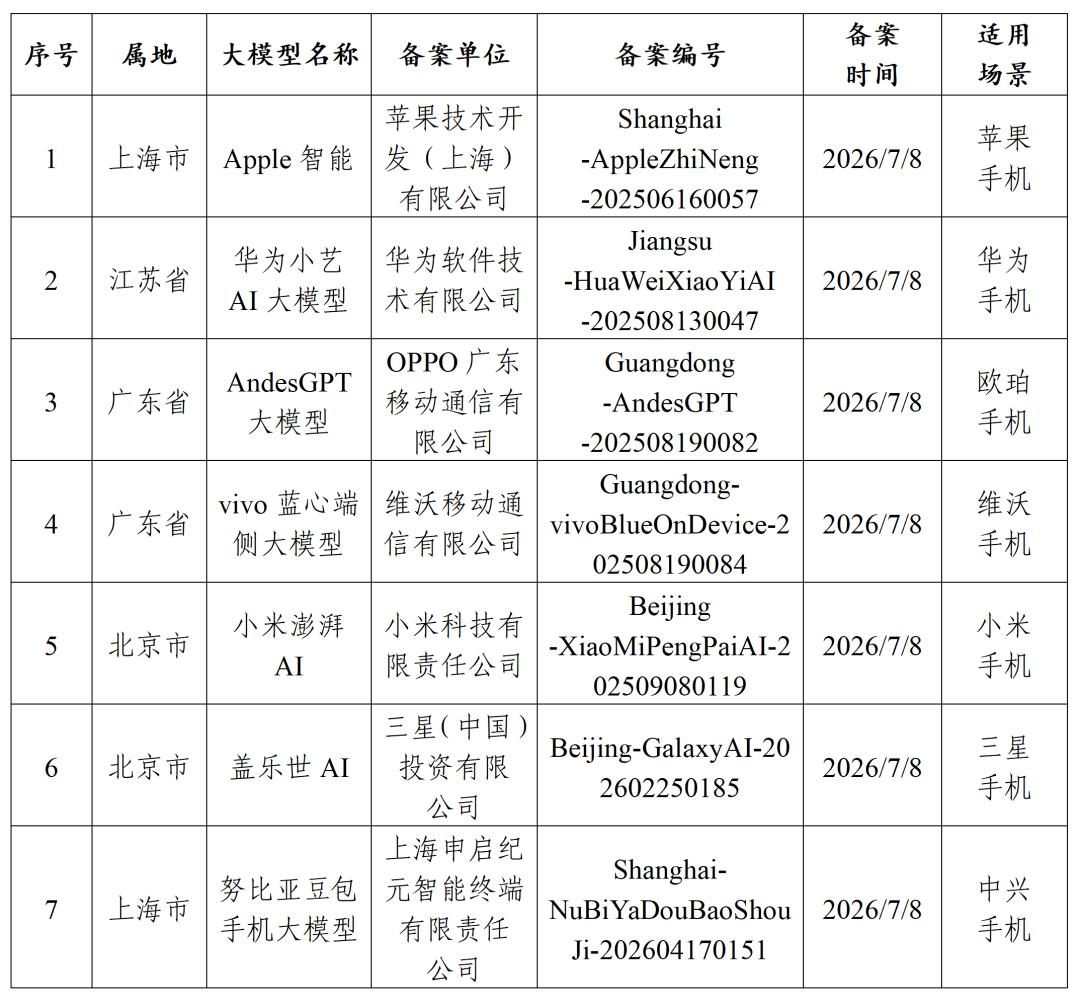
- •Seven mobile edge AI services, including Samsung and Apple Intelligence, have completed regulatory filings in China.
- •Mianbi Intelligence focuses on 'Densing Law' to optimize model efficiency for edge deployment.
- •The industry is shifting toward a market-based division of labor between phone OEMs and AI model providers.
🧠 Deep Insight
AI-generated analysis for this event.
🔑 Enhanced Key Takeaways
- •Mianbi Intelligence was founded by researchers from Tsinghua University, leveraging the university's deep learning research ecosystem to develop the MiniCPM architecture.
- •The 'Densing Law' methodology employed by Mianbi focuses on achieving performance parity with larger models by optimizing parameter density and training data quality rather than just scaling model size.
- •Samsung's integration of MiniCPM is part of a broader strategy to comply with China's strict generative AI service regulations, which require local model providers for AI features in the Chinese market.
- •MiniCPM models are specifically designed to run on NPU (Neural Processing Unit) hardware, enabling low-latency, on-device inference without relying on cloud connectivity.
- •This partnership marks one of the first instances of a Chinese-developed small language model (SLM) being adopted by a major international smartphone OEM for its flagship product line.
📊 Competitor Analysis▸ Show
| Feature | Mianbi (MiniCPM) | Google (Gemini Nano) | Apple (OpenELM) |
|---|---|---|---|
| Architecture | Densing Law Optimized | Distilled Transformer | Sparse/Efficient Transformer |
| Primary Market | China/Global Edge | Global/Android | Global/iOS |
| Hardware Focus | NPU/Mobile SoC | TPU/Tensor | Neural Engine |
| Efficiency | High (High density) | High (Distillation) | High (Parameter pruning) |
🛠️ Technical Deep Dive
- MiniCPM utilizes a proprietary architecture that emphasizes high-density parameter utilization, allowing smaller models (e.g., 1B-4B parameters) to outperform larger models in specific reasoning tasks.
- The models are optimized for 4-bit and 8-bit quantization, ensuring they fit within the limited RAM constraints of mobile devices while maintaining high inference speeds.
- Implementation involves a custom inference engine designed to interface directly with mobile SoC NPUs, minimizing CPU overhead and power consumption.
- The training pipeline incorporates 'warm-up' strategies and curriculum learning to maximize the efficiency of the Densing Law approach during pre-training.
🔮 Future ImplicationsAI analysis grounded in cited sources
⏳ Timeline
Weekly AI Recap
Read this week's curated digest of top AI events →
👉Related Updates


AI-curated news aggregator. All content rights belong to original publishers.
Original source: 36氪 ↗