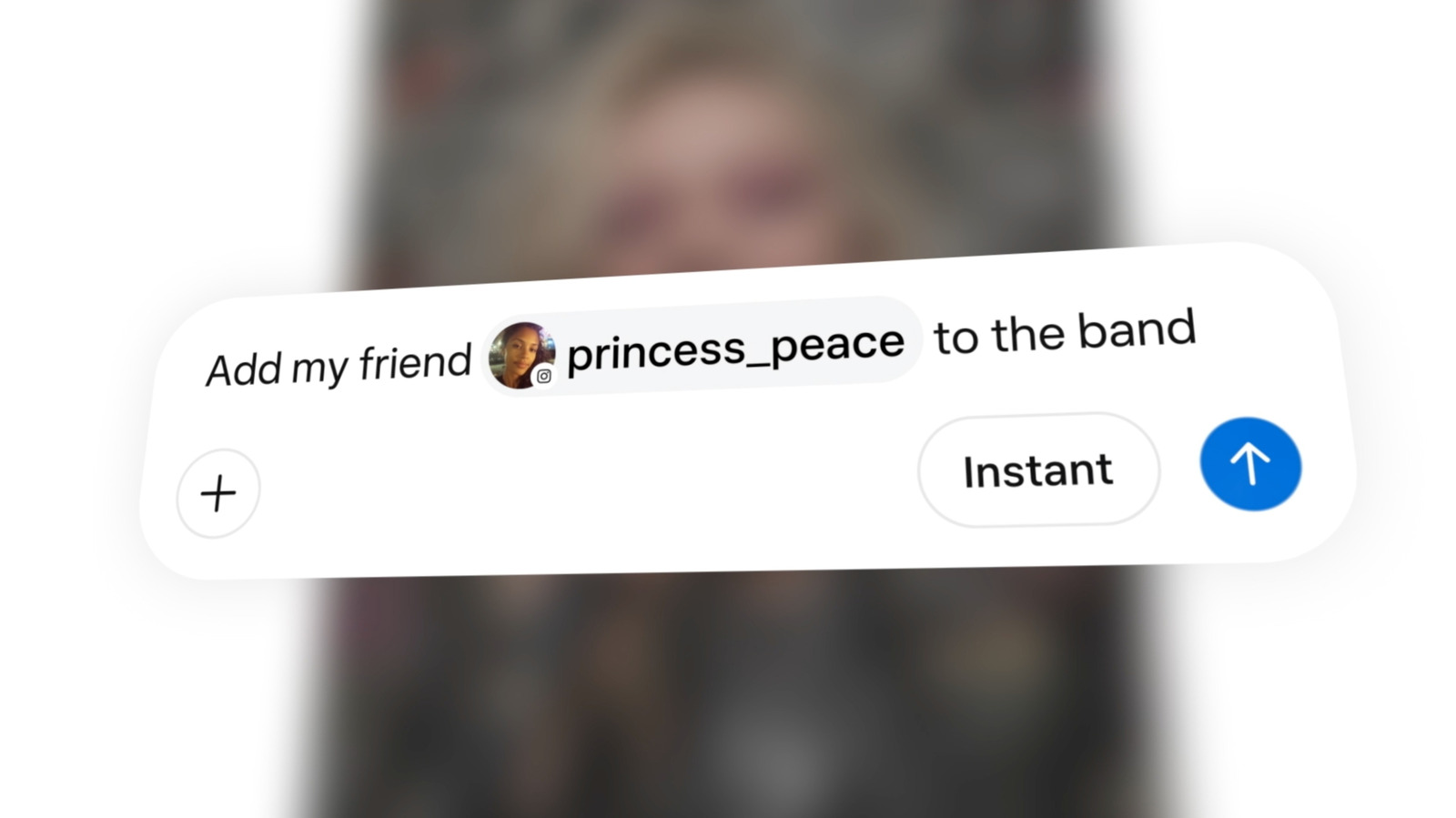
Meta's Muse model now uses Instagram accounts as prompts
💡Learn how Meta is grounding generative AI in real-world social data to create personalized user experiences.
⚡ 30-Second TL;DR
What Changed
Muse model now supports Instagram account data as a generative prompt
Why It Matters
This integration signals Meta's push to leverage its massive social graph data to personalize generative AI experiences. It creates a unique competitive advantage by grounding AI outputs in real-world user identity and social context.
What To Do Next
Explore Meta's developer documentation to see if these generative capabilities will be exposed via the Graph API for third-party integrations.
Key Points
- •Muse model now supports Instagram account data as a generative prompt
- •Integration extends to WhatsApp for native image generation
- •Model powers new creative effects for Instagram Stories
🧠 Deep Insight
AI-generated analysis for this event — not the original article.
🔑 Enhanced Key Takeaways
- •Meta's Muse model utilizes a Masked Generative Transformer architecture, which differentiates it from the diffusion-based models commonly used by competitors like Midjourney or DALL-E.
- •The integration includes privacy-preserving mechanisms that allow users to opt-out of having their public Instagram profile data used for training or generative prompting.
- •Muse's implementation in WhatsApp leverages a lightweight version of the model optimized for on-device inference to reduce latency and server-side compute costs.
- •The model incorporates 'Style Transfer' capabilities specifically trained on Instagram's library of creative filters, allowing for more consistent aesthetic alignment with user-generated content.
- •Meta has introduced a new watermarking system, 'Stable Signature,' to embed invisible identifiers into all images generated via Muse to comply with emerging AI transparency regulations.
📊 Competitor Analysis▸ Show
| Feature | Meta Muse | Adobe Firefly | Midjourney | OpenAI DALL-E 3 |
|---|---|---|---|---|
| Primary Input | Social Profile/Text | Text/Reference Image | Text/Prompt | Text/Conversation |
| Architecture | Masked Transformer | Diffusion | Diffusion | Diffusion |
| Ecosystem | Instagram/WhatsApp | Creative Cloud | Discord/Web | ChatGPT/API |
| Pricing | Free (Ad-supported) | Subscription | Subscription | Subscription/API |
🛠️ Technical Deep Dive
- Architecture: Uses a Masked Generative Transformer (MGT) that predicts masked image tokens in parallel, significantly faster than autoregressive models.
- Tokenization: Employs VQGAN (Vector Quantized Generative Adversarial Network) to convert images into discrete tokens for processing.
- Efficiency: The model achieves high-fidelity generation with fewer sampling steps compared to latent diffusion models, making it suitable for real-time mobile effects.
- Training Data: Trained on a massive dataset of image-text pairs, now augmented with metadata from public Instagram profiles to improve contextual relevance.
🔮 Future ImplicationsAI analysis grounded in cited sources
⏳ Timeline
📰 Event Coverage
Weekly AI Recap
Read this week's curated digest of top AI events →
👉Related Updates

AI-curated news aggregator. All content rights belong to original publishers.
Original source: Engadget ↗
This is a summary, not the original. Read the source, or get the weekly briefing.
Weekly AI briefing
One email a week. Unsubscribe anytime.