Meta VP: 20 months to rebuild infrastructure for AI agents
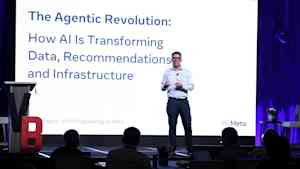
💡Learn why Meta's infrastructure is breaking under AI agent load and how to prepare your systems for the agentic shift.
⚡ 30-Second TL;DR
What Changed
Agentic queries at Meta grew 30x in a single half, signaling a massive shift in traffic patterns.
Why It Matters
Enterprises must transition to 'agent-aware' infrastructure that includes dynamic throttling, hierarchical cost attribution, and automated identity management to survive the shift from human-centric to agent-centric traffic.
What To Do Next
Audit your current API rate-limiting and cost-attribution systems to ensure they can distinguish between individual human users and automated agent hierarchies.
Key Points
- •Agentic queries at Meta grew 30x in a single half, signaling a massive shift in traffic patterns.
- •Infrastructure assumptions regarding capacity, identity, and velocity are failing under agent-driven loads.
- •Engineers now spawn agents that generate load equivalent to 100,000 users, breaking traditional scaling models.
- •CI/CD pipelines are becoming bottlenecks because code generation speed outpaces testing and deployment capabilities.
🧠 Deep Insight
AI-generated analysis for this event.
🔑 Enhanced Key Takeaways
- •Meta is transitioning from a 'human-in-the-loop' request-response architecture to an 'agent-to-agent' communication model, which requires fundamentally different networking protocols to handle non-human latency requirements.
- •The surge in agentic traffic has forced Meta to implement 'agent-specific rate limiting' and 'identity-based throttling' to prevent recursive loops where agents trigger other agents indefinitely.
- •Meta's internal 'AI-driven software engineering' (AISE) initiatives have accelerated code production by 40%, directly contributing to the CI/CD pipeline congestion mentioned by Yagour.
- •To manage the compute load, Meta is deploying specialized 'agent-aware' caching layers that prioritize state persistence for long-running agent sessions over traditional stateless web requests.
- •The infrastructure overhaul includes a shift toward 'decentralized compute scheduling,' where agents are executed closer to the data source to minimize the massive egress costs associated with agentic data processing.
📊 Competitor Analysis▸ Show
| Feature | Meta (Agent Infrastructure) | Google (Gemini/Vertex AI) | Microsoft (Azure AI Agents) |
|---|---|---|---|
| Scaling Model | Decentralized/Agent-to-Agent | Centralized/API-First | Hybrid/Enterprise-Managed |
| CI/CD Integration | High (Internal AISE focus) | Moderate (DevOps focus) | High (GitHub Copilot focus) |
| Traffic Handling | Identity-based throttling | Quota-based management | Resource-based isolation |
🛠️ Technical Deep Dive
- Implementation of 'Agent Identity Tokens' (AIT) to distinguish between human-initiated requests and autonomous agent-to-agent calls.
- Transition to asynchronous message queues (using custom implementations of gRPC and internal protocols) to handle the high-concurrency, low-latency requirements of agentic workflows.
- Deployment of 'Stateful Agent Containers' that maintain context across multiple turns, reducing the need to re-prompt models from scratch.
- Integration of automated 'Guardrail Layers' that intercept agent outputs to validate safety and resource consumption before execution in production environments.
🔮 Future ImplicationsAI analysis grounded in cited sources
⏳ Timeline
Weekly AI Recap
Read this week's curated digest of top AI events →
👉Related Updates


AI-curated news aggregator. All content rights belong to original publishers.
Original source: VentureBeat ↗