Meta Unveils MTIA 300 Training Accelerator
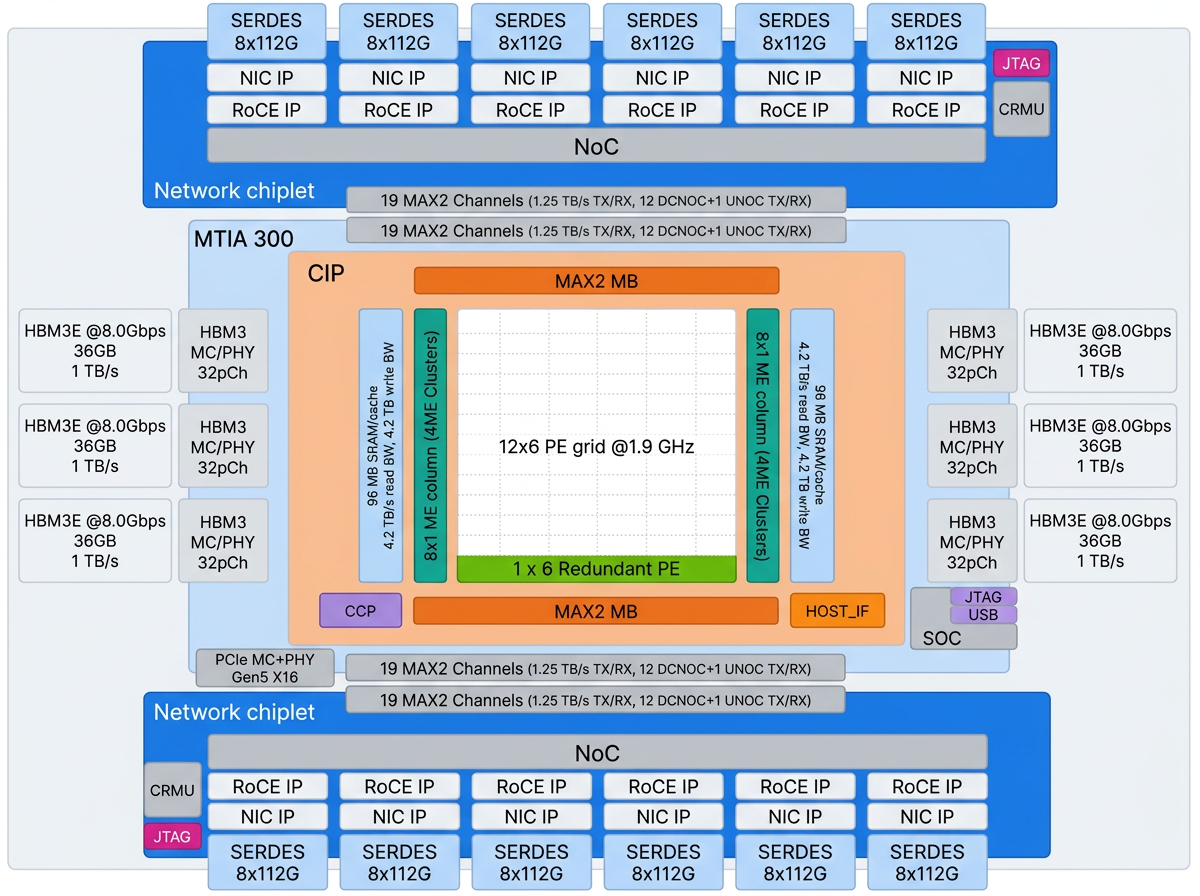
💡See how Meta embeds networking and communication offload directly into a training chip for recommendation models.
⚡ 30-Second TL;DR
What Changed
MTIA 300 is Meta’s first training-focused chip in the MTIA accelerator family.
Why It Matters
MTIA 300 signals Meta’s move toward vertically integrated AI infrastructure tailored to its recommendation workloads. If the communication-focused design delivers its claimed advantages, it could reduce reliance on general-purpose GPUs for large-scale ranking and recommendation training.
What To Do Next
Profile the all-reduce and other communication phases in your recommendation-model training jobs, then assess whether HCCL and MTIA 300 support could address the bottlenecks.
Key Points
- •MTIA 300 is Meta’s first training-focused chip in the MTIA accelerator family.
- •Built-in NIC chiplets target the high communication demands of recommendation-model training.
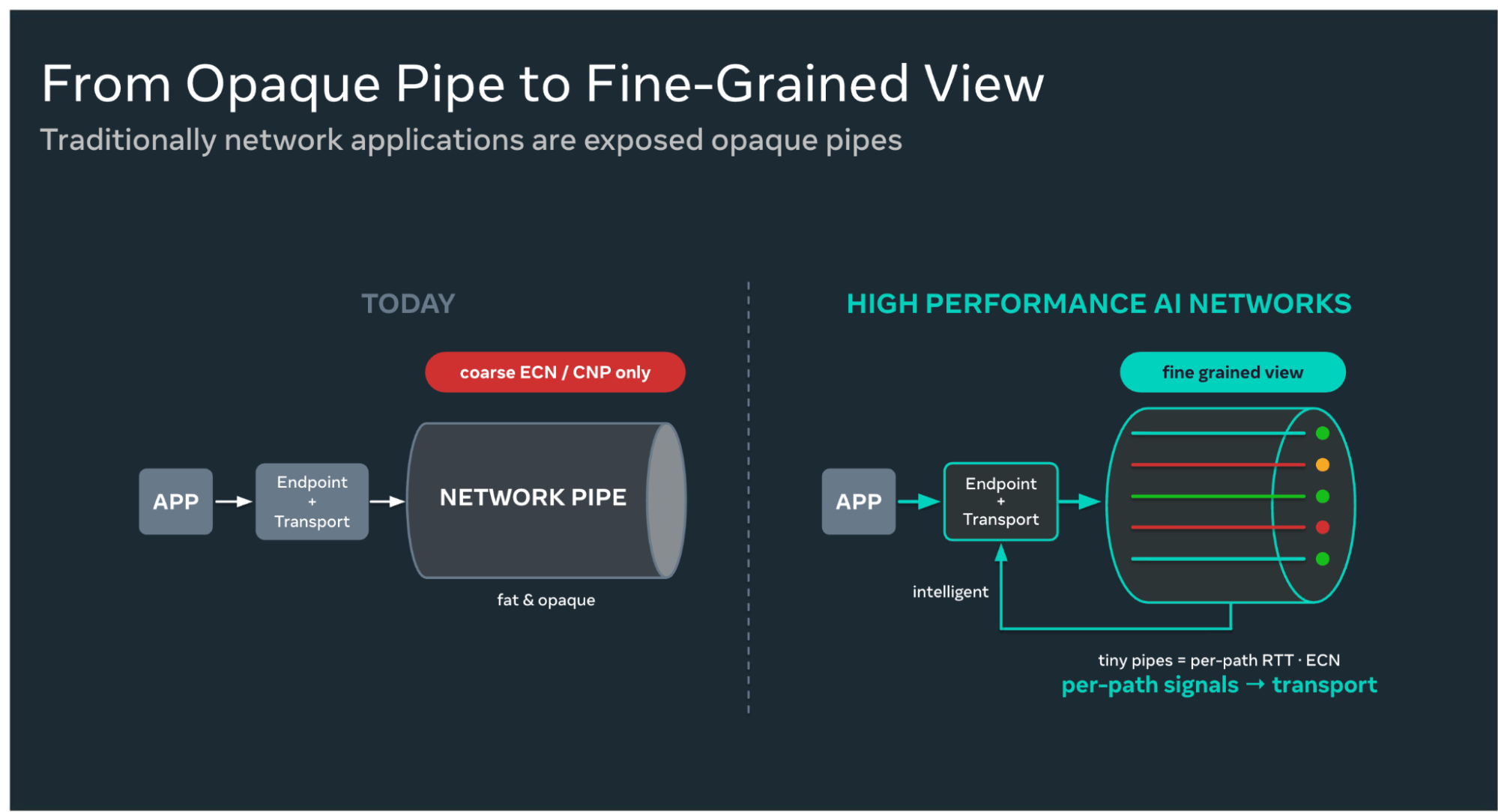
- •Communication-offloading engines and Meta’s co-designed HCCL library aim to improve distributed-training efficiency versus general-purpose GPUs.
🧠 Deep Insight
Background and context from public sources — not the original article. 11 sources cited.
🔑 Enhanced Key Takeaways
- •Meta has established an aggressive six-month release cadence for the MTIA family, significantly outpacing the standard industry semiconductor development cycle.
- •The MTIA program is supported by a long-term strategic partnership with Broadcom, with collaborative development agreements extending through 2029.
- •Meta's infrastructure strategy includes a modular, chiplet-based design that allows multiple generations of MTIA silicon to utilize the same rack and networking chassis.
- •The MTIA software stack is built for native compatibility with PyTorch, vLLM, and Triton, ensuring that existing production models can migrate to custom silicon without extensive refactoring.
- •Meta is scaling its total computing capacity aggressively, with capital expenditure guidance for 2026 reaching between $125 billion and $145 billion to support this hardware expansion.
📊 Competitor Analysis▸ Show
| Feature | Meta MTIA 300 | Nvidia H100/B200 | AMD Instinct MI300X |
|---|---|---|---|
| Primary Focus | Ranking/Recommendation | General Purpose AI | General Purpose AI |
| Networking | Integrated NIC Chiplets | External NIC (ConnectX) | External NIC (Infinity Fabric) |
| Software Stack | HCCL / PyTorch | CUDA / NCCL | ROCm / RCCL |
| Customization | Proprietary/Internal | Commercial Off-the-Shelf | Commercial Off-the-Shelf |
🛠️ Technical Deep Dive
- Architecture: Modular chiplet-based design enabling cross-generational infrastructure reuse.
- Communication: Integration of dedicated NIC chiplets to offload networking tasks from compute cores.
- Software: Utilization of the custom HCCL (Hierarchical Communication Collective Library) to optimize distributed training performance.
- Process Node: Development roadmap includes future iterations transitioning to 2-nanometer process technology via Broadcom partnership.
🔮 Future ImplicationsAI analysis grounded in cited sources
⏳ Timeline
📎 Sources (11)
Factual claims are grounded in the sources below. Forward-looking analysis is AI-generated interpretation.
Weekly AI Recap
Read this week's curated digest of top AI events →
👉Related Updates

AI-curated news aggregator. All content rights belong to original publishers.
Original source: Meta Engineering Blog ↗
This is a summary, not the original. Read the source, or get the weekly briefing.
Weekly AI briefing
One email a week. Unsubscribe anytime.