Meta Unveils Muse, Its Autonomous AI Agent

💡Muse signals Meta’s push to make AI agents execute real browser tasks, not just answer prompts.
⚡ 30-Second TL;DR
What Changed
Muse is designed to pursue user-defined goals with limited supervision.
Why It Matters
If Muse performs reliably, agentic browser automation could shift AI assistants from answering questions to completing multi-step tasks. Its success would also increase competitive pressure on OpenAI, Anthropic, and Google to improve consumer agents.
What To Do Next
Prototype a browser-task benchmark covering shopping, form completion, and trip planning to evaluate where autonomous agents can safely replace scripted workflows.
Key Points
- •Muse is designed to pursue user-defined goals with limited supervision.
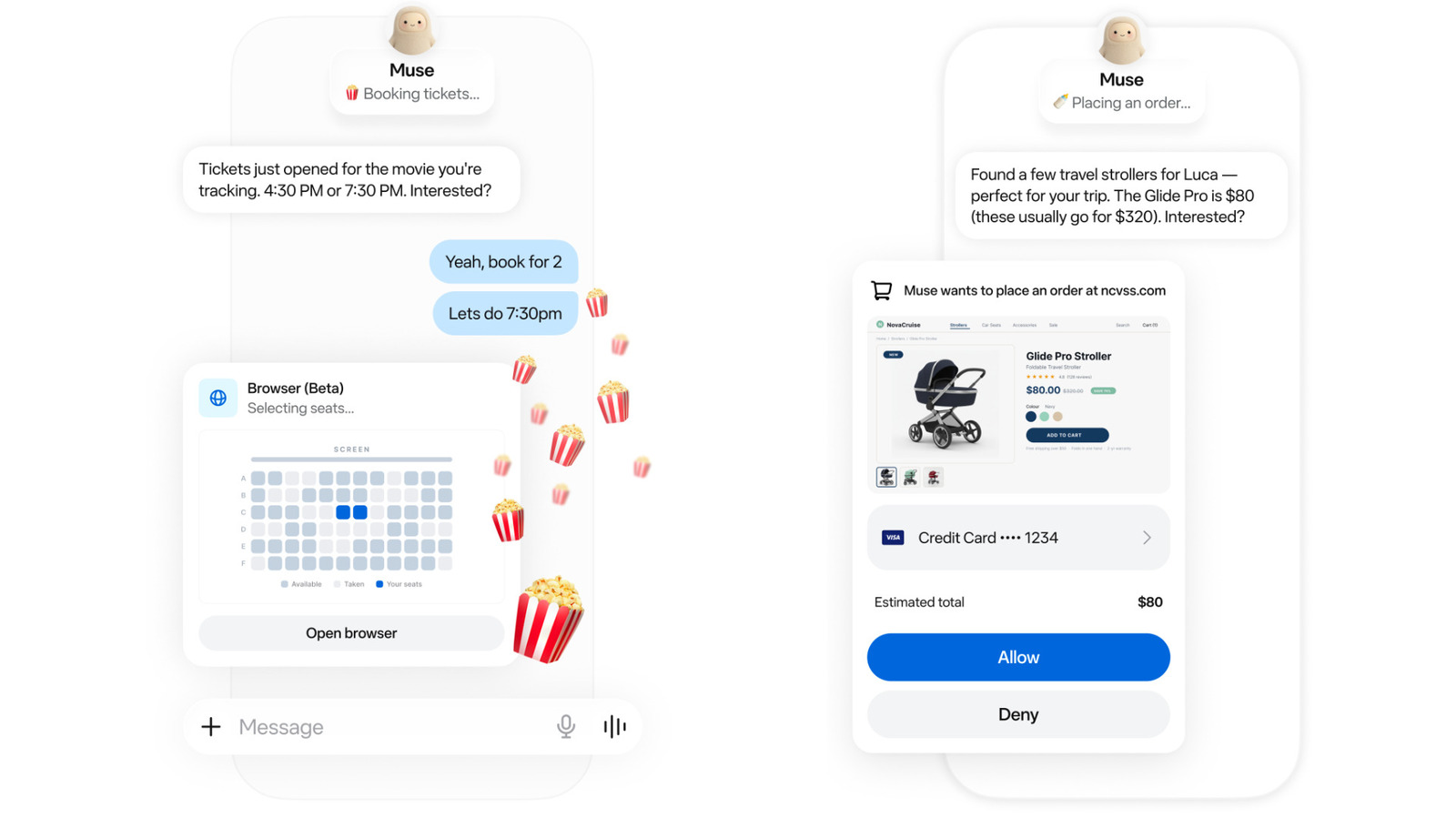
- •The agent can open a browser, complete forms, and negotiate on a user’s behalf.
- •Initial use cases include online shopping, email assistance, and trip planning.
- •Meta is using Muse to address its competitive gap with major AI companies.
Weekly AI Recap
Read this week's curated digest of top AI events →
👉Related Updates


AI-curated news aggregator. All content rights belong to original publishers.
Original source: The Verge ↗
This is a summary, not the original. Read the source, or get the weekly briefing.
Weekly AI briefing
One email a week. Unsubscribe anytime.