Meta Unveils Four Superior Custom AI Chips
💡Meta's custom AI chips beat commercial silicon at gigawatt scale—vital for AI infra builders.
⚡ 30-Second TL;DR
What Changed
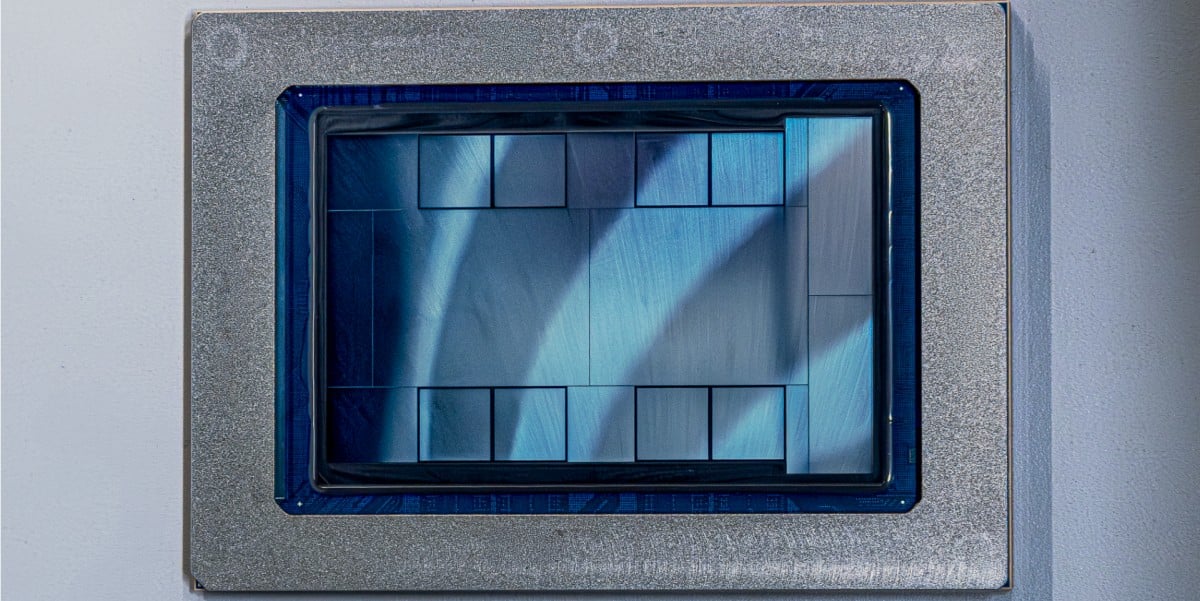
Meta revealed four custom AI chips for its AI services
Why It Matters
Meta's custom chips reduce dependency on third-party hardware, potentially cutting costs for hyperscale AI training. This accelerates in-house optimization for Llama models and services. Signals broader trend of big tech building proprietary AI infra.
What To Do Next
Review Meta's engineering blog for benchmarks comparing these chips to Nvidia GPUs.
Key Points
- •Meta revealed four custom AI chips for its AI services
- •Chips claimed to outperform commercial silicon like Nvidia GPUs
- •Deploying at gigawatt scale for massive AI workloads
- •Still unable to detect obvious AI-generated slop
🧠 Deep Insight
Background and context from public sources — not the original article. 7 sources cited.
🔑 Enhanced Key Takeaways
- •Meta's custom chips are part of the MTIA (Meta Training and Inference Accelerator) family, with the next-generation version featuring 128 MB on-chip memory, 64 GB off-chip LPDDR5, and clock speeds up to 1.35 GHz at 90 watts per chip[2].
- •Meta has a multi-year partnership with AMD to deploy up to 6 gigawatts of custom Instinct MI450 GPUs and 6th Gen EPYC CPUs (Venice/Venano), with first shipments in 2H 2026, complementing its in-house silicon efforts[3][5].
- •The MTIA chips are deployed in a rack-scale system holding up to 72 accelerators across three chassis, designed for co-optimized hardware-software stacks handling low-to-high complexity ranking and recommendation models[2].
- •Meta continues heavy reliance on Nvidia for training with over 1.3 million GPUs planned by end-2025, while shifting some inference workloads to AMD MI300X and future MI455X for cost-efficiency[6].
🛠️ Technical Deep Dive
- •Next-gen MTIA: TSMC 5nm process, clocked at 1.35 GHz (up from 800 MHz), power at 90W (up from 25W), with 128 MB on-chip memory and 64 GB off-chip LPDDR5[2].
- •Memory bandwidth: Local 400 GB/s per PE, on-chip 800 GB/s, off-chip LPDDR5 176 GB/s; compute at 2.76 TFLOPS/s (FP32)[2].
- •Rack system: Up to 72 accelerators (3 chassis x 12 boards x 2 chips), optimized for 10x-100x varying model sizes in ranking/recommendation workloads[2].
- •Earlier MTIA variant: 256 MB on-chip memory, 128 GB off-chip LPDDR5, local memory 384 KB per PE with 1 TB/s bandwidth per PE[2].
🔮 Future ImplicationsAI analysis grounded in cited sources
⏳ Timeline
📎 Sources (7)
Factual claims are grounded in the sources below. Forward-looking analysis is AI-generated interpretation.
- mlq.ai — Meta Reveals Series of Custom AI Processors for Data Center Operations
- Meta AI — Next Generation Meta Training Inference Accelerator AI Mtia
- networkworld.com — Amd Strikes Massive AI Chip Deal with Meta
- datacenterknowledge.com — Meta Plans to Develop Custom Chips to Train Its AI Models
- amd.com — 2026 2 24 Amd and Meta Announce Expanded Strategic Partnersh
- jonpeddie.com — Meta Plays Hybrid AI
- Meta AI — Meta Mtia Scale AI Chips for Billions
Weekly AI Recap
Read this week's curated digest of top AI events →
👉Related Updates


AI-curated news aggregator. All content rights belong to original publishers.
Original source: The Register - AI/ML ↗
This is a summary, not the original. Read the source, or get the weekly briefing.
Weekly AI briefing
One email a week. Unsubscribe anytime.