Meta Tests Muse Superapp and Ava Computer-Use Model
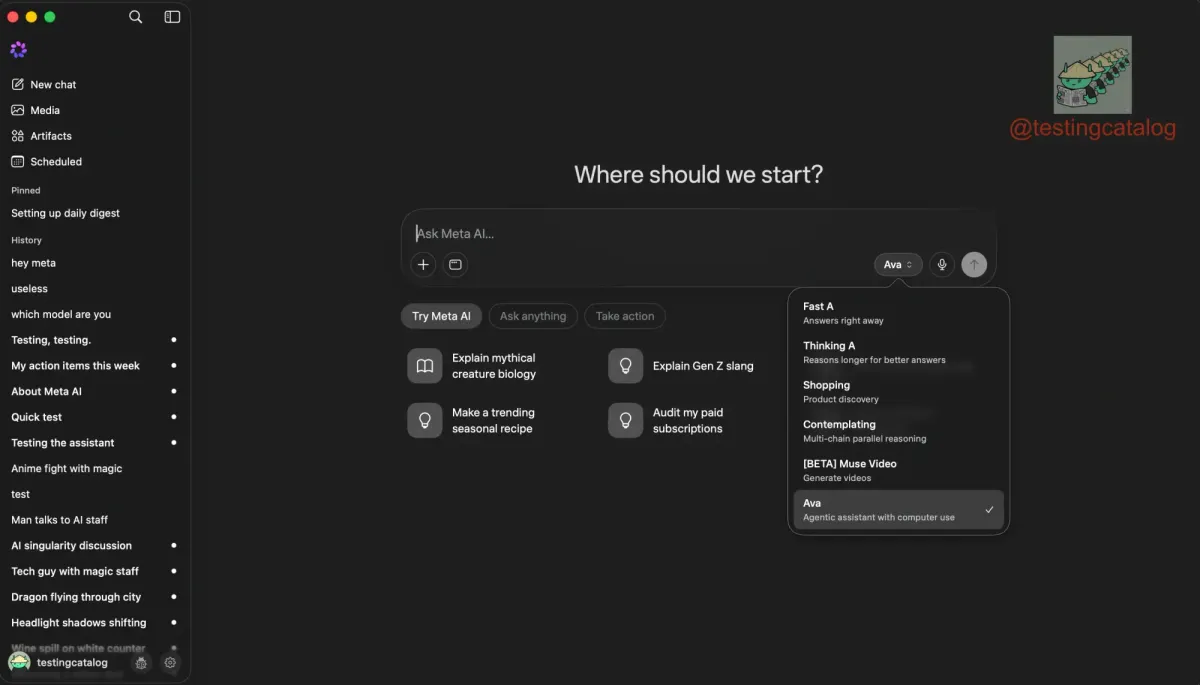
💡Meta may be pairing a new superapp with an internal model that can operate computers.
⚡ 30-Second TL;DR
What Changed
Project Hatch will reportedly launch under the production name Muse.
Why It Matters
If validated, computer-use capabilities could enable Ava to operate software interfaces and support more autonomous workflows. Muse may also signal Meta’s broader effort to consolidate AI-powered services into a superapp, although public availability and capabilities remain unclear.
What To Do Next
Prototype a sandboxed computer-use benchmark with tasks such as form filling and multi-step navigation so you can compare Ava-like agents when Meta releases more details.
Key Points
- •Project Hatch will reportedly launch under the production name Muse.
- •Meta is internally testing the Ava model with computer-use capabilities.
- •The report indicates both efforts remain in internal testing rather than public release.
🧠 Deep Insight
Background and context from public sources — not the original article. 1 sources cited.
🔑 Enhanced Key Takeaways
- •Meta has begun transitioning internal iOS testing applications into a formal Muse waitlist interface, indicating the product is moving toward a public-facing release cycle.
- •The desktop application ecosystem has been updated with new UI customization features, including theme support, secondary color selection, and a monochrome mode to support the Muse environment.
- •Meta’s desktop software now includes dedicated 'computer use' settings menus, confirming that Ava is designed for direct interaction with desktop operating systems and software interfaces.
- •The branding of 'Muse' is strategically aligned with Meta's broader nomenclature for its latest generation of generative AI models.
- •While the waitlist infrastructure is currently visible within the iOS app, Meta has strictly limited access to internal testers and has not yet opened registration to the general public.
📊 Competitor Analysis▸ Show
| Feature | Meta Muse/Ava | Anthropic Claude Computer Use | OpenAI Operator |
|---|---|---|---|
| Primary Interface | Desktop/Mobile Superapp | API/Browser-based | Desktop/Agentic API |
| Focus | Ecosystem/Superapp | Task Automation | Agentic Workflow |
| Status | Internal Testing | Public Beta | Internal Testing |
🛠️ Technical Deep Dive
- Ava model architecture utilizes visual-language processing to interpret desktop UI elements and coordinate mouse/keyboard inputs.
- Integration relies on a persistent desktop client that acts as a bridge between the AI model and OS-level accessibility APIs.
- The system architecture supports cross-platform state synchronization between the iOS mobile app and the desktop client.
- Computer-use settings allow for granular permission management, likely controlling the model's ability to execute clicks, type text, and navigate windows.
🔮 Future ImplicationsAI analysis grounded in cited sources
⏳ Timeline
📎 Sources (1)
Factual claims are grounded in the sources below. Forward-looking analysis is AI-generated interpretation.
Weekly AI Recap
Read this week's curated digest of top AI events →
👉Related Updates


AI-curated news aggregator. All content rights belong to original publishers.
Original source: TestingCatalog ↗
This is a summary, not the original. Read the source, or get the weekly briefing.
Weekly AI briefing
One email a week. Unsubscribe anytime.