Meta Scales FFmpeg for Media Processing
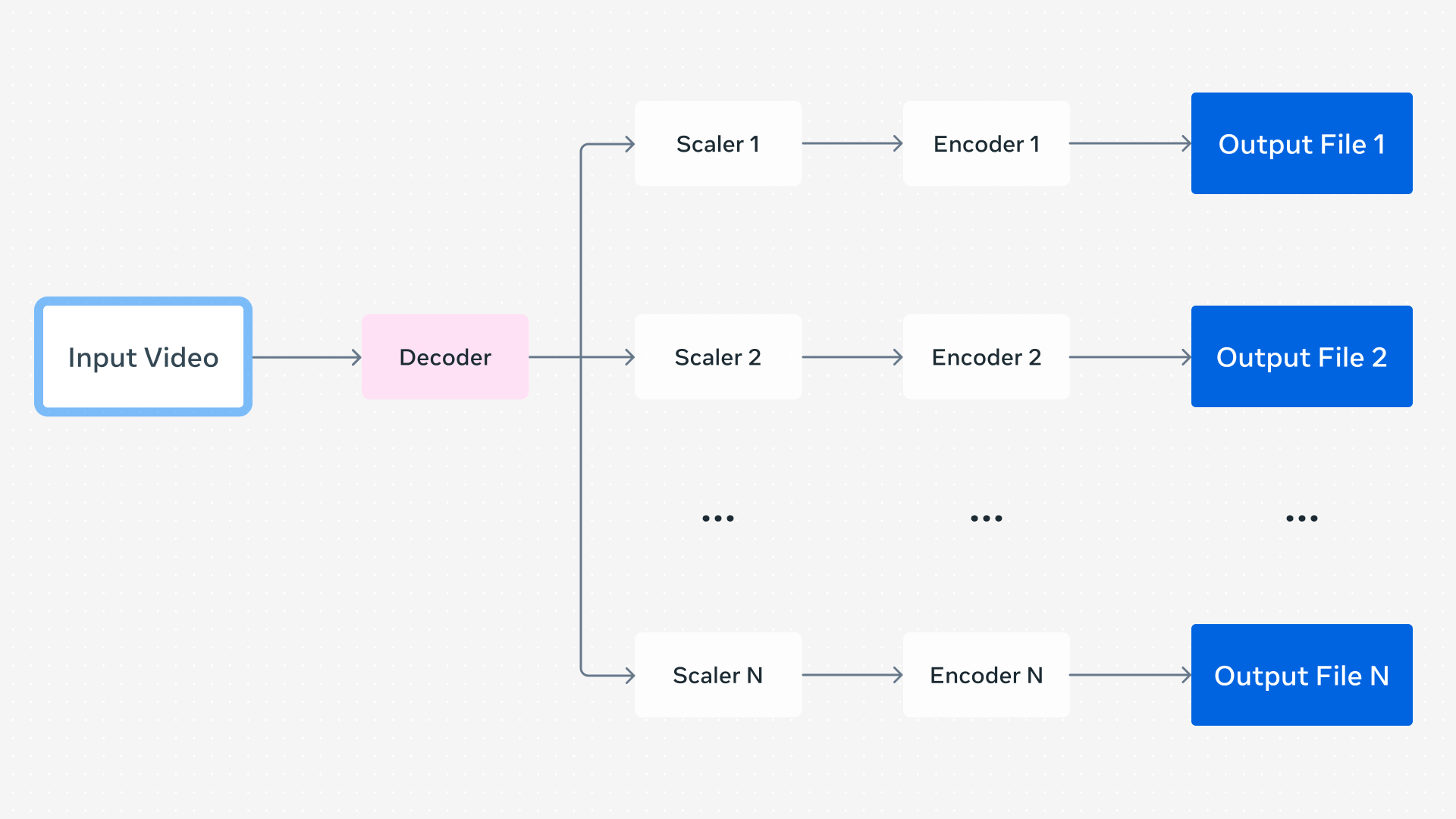
💡Meta's FFmpeg scaling tips boost video pipelines for multimodal AI training.
⚡ 30-Second TL;DR
What Changed
FFmpeg supports wide variety of audio/video codecs and container formats
Why It Matters
Highlights FFmpeg's reliability for production-scale media pipelines, relevant for AI devs building video/audio ML systems. Validates open-source tools for high-throughput processing in big tech.
What To Do Next
Integrate FFmpeg into your video preprocessing pipeline for efficient AI dataset preparation.
Key Points
- •FFmpeg supports wide variety of audio/video codecs and container formats
- •Orchestrates complex filter chains for media editing and manipulation
- •Critical for enabling new video experiences in Meta apps at scale
🧠 Deep Insight
Background and context from public sources — not the original article. 8 sources cited.
🔑 Enhanced Key Takeaways
- •Meta executes FFmpeg and ffprobe binaries tens of billions of times daily, creating unique scaling challenges for media workflows beyond single-file processing[1].
- •Meta previously relied on an internal FFmpeg fork for features like threaded multi-lane encoding and real-time quality metrics, now upstreamed in FFmpeg 7.0 with in-loop decoding[1].
- •Meta integrated support for its custom ASIC, the Meta Scalable Video Processor (MSVP), into FFmpeg via standard hardware acceleration APIs alongside NVIDIA NVDEC/NVENC, AMD UVD, and Intel QSV[1].
🛠️ Technical Deep Dive
- •FFmpeg 7.0 introduces in-loop decoding, enabling real-time quality metric computation (PSNR, SSIM, VMAF) by inserting decoders after encoders in multi-lane workflows for livestreaming[1].
- •Hardware acceleration via standard APIs: NVIDIA NVDEC/NVENC for decoding/encoding/filtering, AMD Unified Video Decoder (UVD), Intel Quick Sync Video (QSV), and Meta's MSVP ASIC[1].
- •Threaded multi-lane encoding allows parallel output lanes with post-compression frame comparison for quality metrics in a single command line[1].
🔮 Future ImplicationsAI analysis grounded in cited sources
⏳ Timeline
📎 Sources (8)
Factual claims are grounded in the sources below. Forward-looking analysis is AI-generated interpretation.
Weekly AI Recap
Read this week's curated digest of top AI events →
👉Related Updates
AI-curated news aggregator. All content rights belong to original publishers.
Original source: Meta Engineering Blog ↗
This is a summary, not the original. Read the source, or get the weekly briefing.
Weekly AI briefing
One email a week. Unsubscribe anytime.