Meta Quietly Becomes a Major Microsoft AI Customer
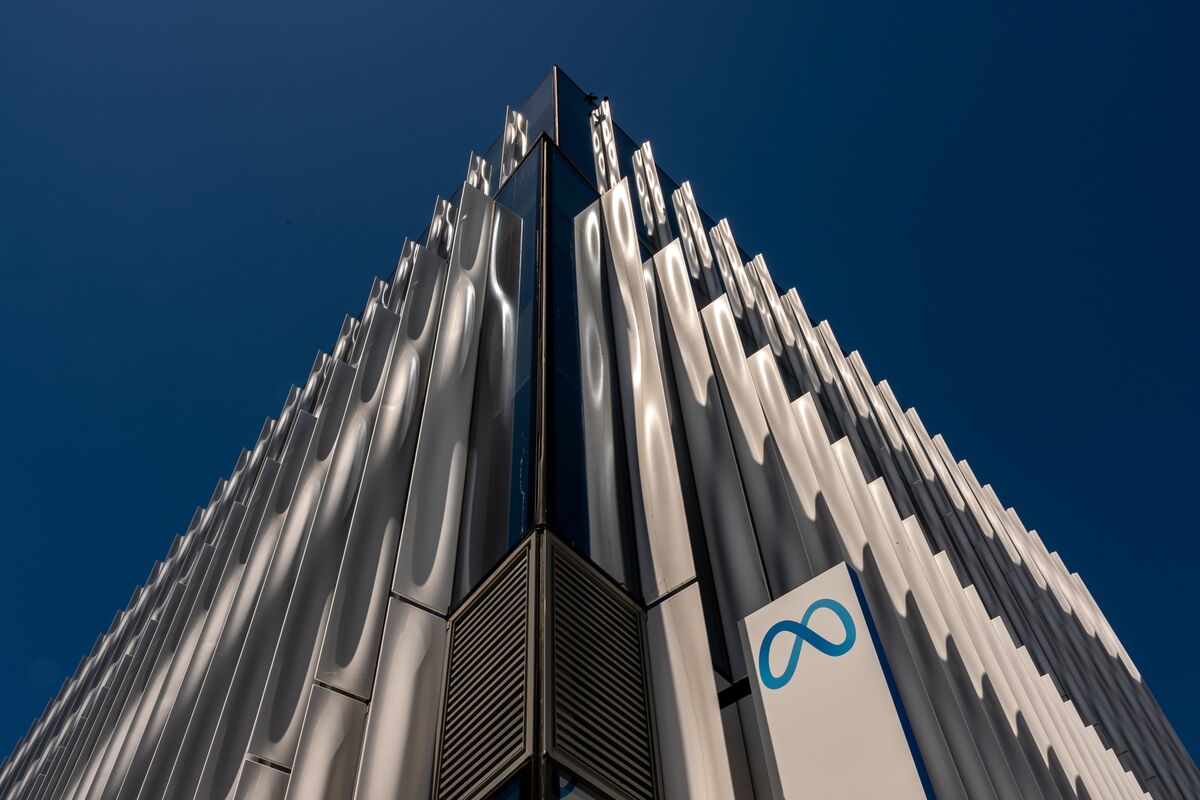
💡Meta’s buying power reveals where enterprise AI demand—and cloud dependency—may be concentrating.
⚡ 30-Second TL;DR
What Changed
Meta Platforms has become one of Microsoft’s biggest AI customers.
Why It Matters
The relationship could reinforce Microsoft’s position as an important AI infrastructure and services provider while showing how concentrated AI spending remains. AI founders and enterprise teams should expect major-cloud capacity, pricing, and vendor dependencies to remain strategically important.
What To Do Next
Review Microsoft Azure AI service pricing, capacity, and data-governance terms before assigning new production workloads to the platform.
Key Points
- •Meta Platforms has become one of Microsoft’s biggest AI customers.
- •The customer relationship underscores strong enterprise-scale AI demand within the technology sector.
- •The development suggests that large technology companies continue to drive much of the market’s AI consumption.
🧠 Deep Insight
Web-grounded analysis with 28 cited sources.
🔑 Enhanced Key Takeaways
- •Meta Platforms is reportedly investing hundreds of millions of dollars annually to access AI models and services through Microsoft's Azure cloud.
- •The collaboration involves Meta utilizing a dedicated Azure cluster of 5400 NVIDIA A100 Tensor Core 80GB GPUs to accelerate its large-scale AI research and development, including the training of models like OPT-175B.
- •Microsoft has been established as Meta's preferred partner for the Llama 2 family of large language models, facilitating their commercial availability on both Azure and Windows platforms.
- •Beyond its role as a customer, Meta is actively considering launching its own AI cloud business to sell excess computing capacity, which could position it as a direct competitor to established cloud providers like Microsoft Azure, Amazon Web Services, and Google Cloud.
- •The partnership also extends to fostering PyTorch adoption on Azure and integrating ONNX Runtime, aiming to create a more streamlined developer experience for PyTorch on the Azure platform.
📊 Competitor Analysis▸ Show
| Feature/Platform | Microsoft Azure (for Llama) | AWS Bedrock (for Llama) | Google Cloud Vertex AI (for Llama) |
|---|---|---|---|
| Llama Models Available | Llama 2 (7B, 13B, 70B parameters) | Llama models (various parameter sizes, including Llama 4) | Meta Llama models (fully managed APIs, fine-tuning, self-deployment) |
| Deployment Options | Azure AI model catalog for training, fine-tuning, inference; optimized for Windows via DirectML | Serverless managed API, no infrastructure management | Fully managed Llama APIs, fine-tune and self-deploy on managed infrastructure |
| Tooling & Integration | Azure AI's powerful tooling for model training, fine-tuning, inference, and AI safety (e.g., Azure AI Content Safety) | Integrates with AWS services; focus on ease of use and scalability | Model Garden on Vertex AI for discovery, customization, deployment; integrates with GCP services |
| Commercial Use | Free for research and commercial use on Azure | Available for commercial use | Available for commercial use |
| Underlying Infrastructure | Dedicated Azure clusters (e.g., NDm A100 v4 series with NVIDIA A100 GPUs) | Serverless, managed by AWS | Google Cloud Platform services |
🛠️ Technical Deep Dive
- Meta utilizes Azure's NDm A100 v4 VM series, which features NVIDIA A100 Tensor Core 80GB GPUs, for its large-scale AI research workloads.
- The Azure platform provides four times the GPU-to-GPU bandwidth between virtual machines compared to other public cloud offerings, enabling faster distributed AI training.
- Meta has employed this Azure infrastructure to train its OPT-175B language model.
- The collaboration includes efforts to scale PyTorch adoption on Azure and integrate ONNX Runtime with PyTorch to enhance the developer experience.
- Llama 2 models (7B, 13B, and 70B parameters) are available on Azure AI, offering tooling for training, fine-tuning, inference, and AI safety.
- Azure AI Content Safety is integrated by default with Llama 2 deployments in Azure AI to provide a layered safety approach.
- Microsoft's enterprise AI offerings include Azure AI Foundry (formerly Azure AI Studio) for building, grounding, and governing AI apps, Azure Machine Learning for MLOps, Azure OpenAI Service for GPT models, and Azure Cognitive Services for prebuilt APIs.
- Meta's Llama models are open-weights, allowing developers to download, modify, and deploy them within their own infrastructure, offering an alternative to proprietary API-only models.
- Llama 3, released in 2024, featured expanded context windows up to 128K tokens, training on over 15 trillion tokens, and introduced vision capabilities in Llama 3.2.
- Llama 4, introduced in April 2025, brought native multimodality, a mixture-of-experts architecture, and significantly expanded context windows, with Llama 4 Scout 17B supporting up to 10 million tokens.
🔮 Future ImplicationsAI analysis grounded in cited sources
⏳ Timeline
📎 Sources (28)
Factual claims are grounded in the sources below. Forward-looking analysis is AI-generated interpretation.
- investing.com
- binance.com
- investing.com
- microsoft.com
- pureai.com
- reddit.com
- microsoft.com
- mediapost.com
- youtube.com
- meta.com
- uctoday.com
- decrypt.co
- fool.com
- marketwise.com
- businesschief.com
- youtube.com
- chosun.com
- infoworld.com
- amazon.com
- meta.com
- microsoft.com
- alphabold.com
- damcogroup.com
- pump.co
- mindstudio.ai
- aitoolland.com
- meta.com
- wikipedia.org
Weekly AI Recap
Read this week's curated digest of top AI events →
👉Related Updates

AI-curated news aggregator. All content rights belong to original publishers.
Original source: Bloomberg Technology ↗
Weekly AI briefing
One email a week. Unsubscribe anytime.