Meta Migrates Data Ingestion at Scale
💡Meta's playbook for EB-scale data migration – essential tactics for ML infra at scale.
⚡ 30-Second TL;DR
What Changed
Revamped system for reliable social graph snapshots
Why It Matters
Boosts Meta's data pipeline reliability, vital for AI-driven features like recommendations. Offers blueprints for practitioners scaling ML data ops. Demonstrates handling petabyte-scale migrations without disruption.
What To Do Next
Read Meta Engineering Blog for migration playbook to scale your data pipelines.
Key Points
- •Revamped system for reliable social graph snapshots
- •Full migration from legacy to new architecture
- •Strategies shared for scale and reliability
- •Applied across Meta's engineering teams
🧠 Deep Insight
AI-generated analysis for this event — not the original article.
🔑 Enhanced Key Takeaways
- •The migration utilized a new unified ingestion framework designed to handle exabyte-scale data throughput while reducing end-to-end latency for social graph updates.
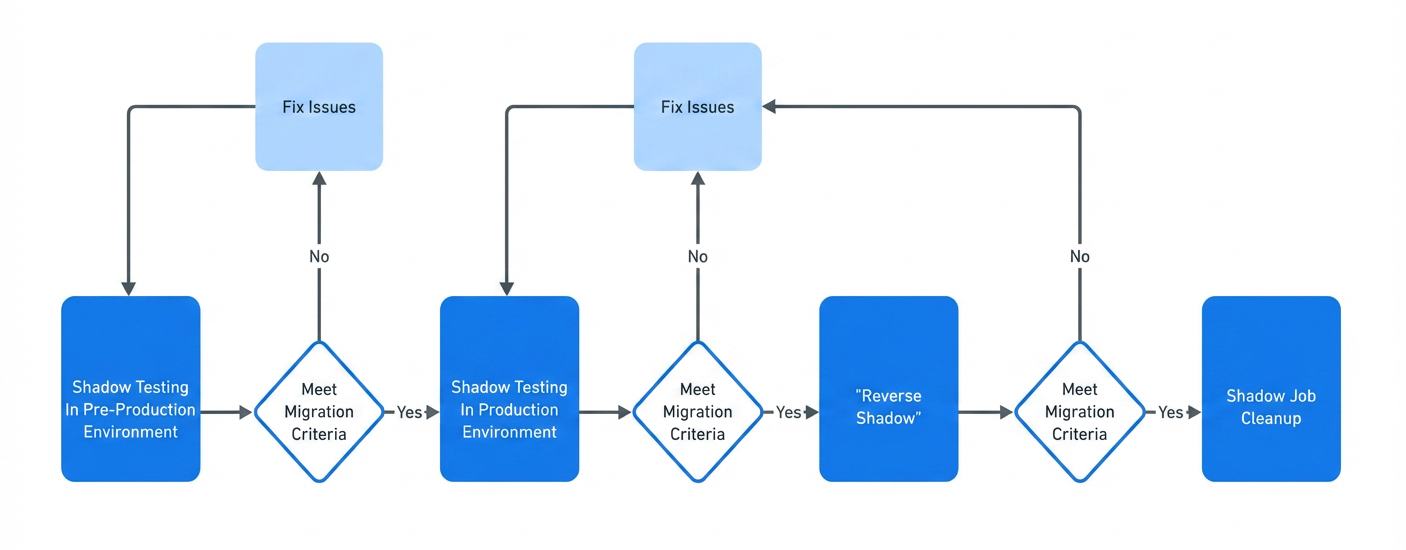
- •Engineers implemented a 'shadow mode' deployment strategy, running the new architecture in parallel with the legacy system to validate data consistency and performance metrics before final cutover.
- •The new architecture leverages advanced stream processing techniques to decouple data ingestion from downstream storage, significantly improving fault tolerance during peak traffic spikes.
🛠️ Technical Deep Dive
- •Architecture shift from batch-oriented processing to a unified streaming ingestion pipeline.
- •Implementation of a distributed backpressure mechanism to prevent system overload during ingestion bursts.
- •Utilization of a custom schema registry to ensure data integrity across heterogeneous data sources during the migration process.
- •Integration of automated reconciliation loops to detect and repair data discrepancies between the legacy and new systems in real-time.
🔮 Future ImplicationsAI analysis grounded in cited sources
⏳ Timeline
Weekly AI Recap
Read this week's curated digest of top AI events →
👉Related Updates
AI-curated news aggregator. All content rights belong to original publishers.
Original source: Meta Engineering Blog ↗
This is a summary, not the original. Read the source, or get the weekly briefing.
Weekly AI briefing
One email a week. Unsubscribe anytime.