Meta Launches Multilingual Real-Time Transcription Model
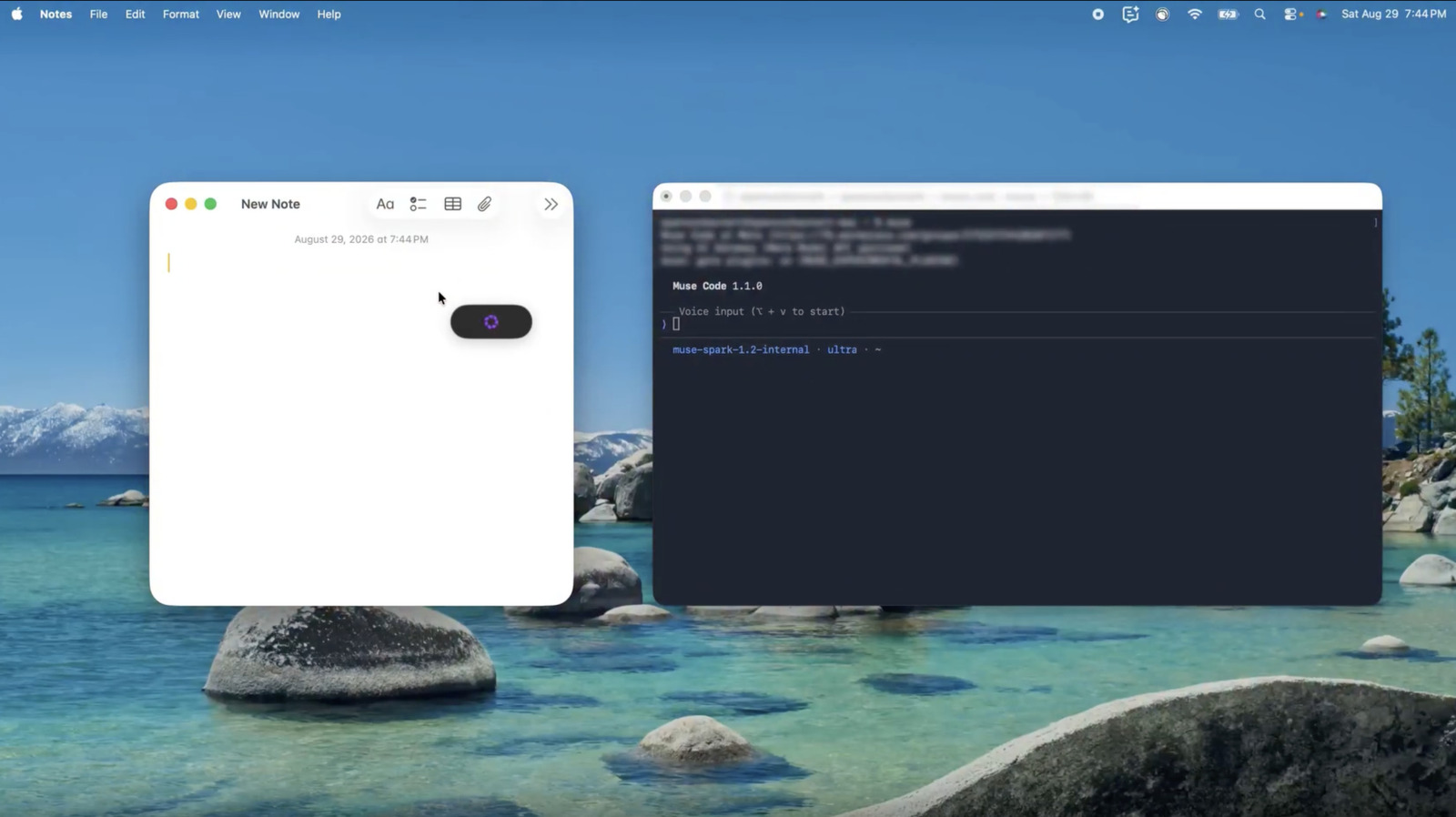
💡Meta's new model targets real-time transcription across multiple speakers and languages.
⚡ 30-Second TL;DR
What Changed
The model supports real-time transcription.
Why It Matters
Real-time speaker and language separation could improve meeting assistants, live captioning, interviews, and multilingual customer-support tools. Developers may be able to reduce the need for separate transcription pipelines for different speakers or languages.
What To Do Next
Prototype a multilingual meeting-transcription workflow and verify whether Meta's released model provides an accessible API with speaker and language identification.
Key Points
- •The model supports real-time transcription.
- •It can distinguish between multiple speakers.
- •It can handle multiple languages in the same transcription workflow.
- •The release comes from Meta Superintelligence Lab.
🧠 Deep Insight
Background and context from public sources — not the original article. 6 sources cited.
🔑 Enhanced Key Takeaways
- •The model is officially branded as 'Muse Voice Transcribe' and was developed by Meta Superintelligence Labs.
- •It utilizes 'adaptive delay' technology to dynamically adjust processing time based on speech complexity rather than relying on a fixed latency setting.
- •The system supports native code-switching, allowing it to process sentences containing multiple languages without requiring language-switching triggers.
- •It is capable of performing speaker diarization for up to 20+ distinct speakers simultaneously within a single inference pass.
- •The model is currently integrated into the Meta AI for Mac application to provide system-wide dictation services.
📊 Competitor Analysis▸ Show
| Feature | Muse Voice Transcribe | Google Gemini 3.5 Transcribe |
|---|---|---|
| Pricing | $0.18 per hour | N/A |
| Streaming Latency | 0.16 seconds | N/A |
| Word Error Rate | 3.1% | N/A |
| Speaker Diarization | 20+ speakers | N/A |
🛠️ Technical Deep Dive
- Architecture: Single-model design that integrates streaming ASR, speaker diarization, and endpointing natively.
- Latency: 0.16 seconds from end-of-speech to final output.
- Accuracy: 3.1% streaming word error rate.
- Language Support: Trained on 70+ languages with 25 validated for launch.
- Processing: Uses adaptive delay to balance context-gathering against real-time speed requirements.
🔮 Future ImplicationsAI analysis grounded in cited sources
⏳ Timeline
📎 Sources (6)
Factual claims are grounded in the sources below. Forward-looking analysis is AI-generated interpretation.
Weekly AI Recap
Read this week's curated digest of top AI events →
👉Related Updates
AI-curated news aggregator. All content rights belong to original publishers.
Original source: Engadget ↗
This is a summary, not the original. Read the source, or get the weekly briefing.
Weekly AI briefing
One email a week. Unsubscribe anytime.