Meta Enters Cloud Market, Triggering AI Hardware Sell-off
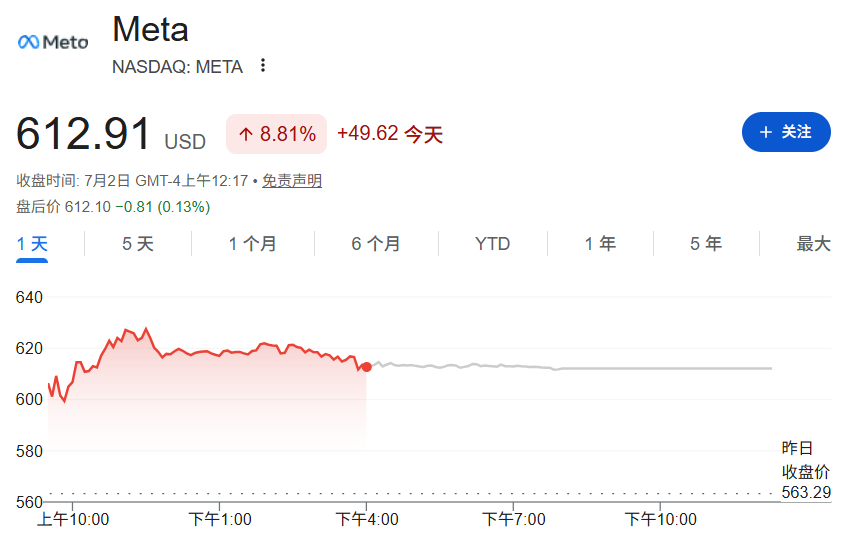
Meta selling excess compute: Market correction or the first sign of an AI infrastructure bubble?
30-Second TL;DR
What Changed
Meta is establishing 'Meta Compute' to rent out GPU capacity and host AI models via API.
Why It Matters
Meta's entry into the cloud market could disrupt the business models of specialized GPU cloud providers and force a re-evaluation of AI infrastructure investment cycles.
What To Do Next
Monitor GPU rental price indices on platforms like SemiAnalysis to distinguish between market-wide supply trends and company-specific capacity shifts.
Key Points
- •Meta is establishing 'Meta Compute' to rent out GPU capacity and host AI models via API.
- •The announcement caused a sharp decline in AI hardware stocks like CoreWeave, Nebius, and memory manufacturers.
- •GPU rental prices are actually rising, suggesting that demand for high-end compute remains strong.
- •Analysts view the move as a sign of Meta's internal model development challenges rather than a market-wide compute glut.
Deep Insight
AI-generated analysis for this event — not the original article.
Enhanced Key Takeaways
- •Meta's infrastructure shift is reportedly driven by the integration of 'Llama-4' training clusters which achieved higher-than-expected utilization efficiency, leaving surplus capacity in older H100-based clusters.
- •The 'Meta Compute' initiative leverages the company's proprietary 'Disaggregated Rack' architecture, allowing for more granular resource allocation than traditional cloud providers.
- •Regulatory filings indicate Meta is positioning this service as a 'sovereign AI' solution for enterprise clients concerned about data residency, utilizing Meta's existing global data center footprint.
- •The sell-off in hardware stocks was exacerbated by algorithmic trading bots reacting to headlines, as institutional investors misinterpreted the capacity rental as a sign of Meta scaling back its own capital expenditure.
- •Meta has partnered with several specialized data center operators to handle the physical colocation and cooling requirements for external tenants, reducing the operational burden on Meta's internal engineering teams.
Competitor Analysis
- Meta Compute
- Llama-native hosting
- AWS (Bedrock/EC2)
- General purpose cloud
- CoreWeave
- GPU-as-a-Service
- Meta Compute
- Usage-based (API)
- AWS (Bedrock/EC2)
- Tiered/Reserved
- CoreWeave
- Spot/On-demand
- Meta Compute
- H100/B200 clusters
- AWS (Bedrock/EC2)
- Diverse (Trainium/H100)
- CoreWeave
- H100/B200/MI300
- Meta Compute
- Optimized Llama latency
- AWS (Bedrock/EC2)
- Ecosystem integration
- CoreWeave
- High-performance scaling
| Feature | Meta Compute | AWS (Bedrock/EC2) | CoreWeave |
|---|---|---|---|
| Primary Focus | Llama-native hosting | General purpose cloud | GPU-as-a-Service |
| Pricing Model | Usage-based (API) | Tiered/Reserved | Spot/On-demand |
| Hardware | H100/B200 clusters | Diverse (Trainium/H100) | H100/B200/MI300 |
| Key Advantage | Optimized Llama latency | Ecosystem integration | High-performance scaling |
Technical Deep Dive
- Meta Compute utilizes a custom software-defined networking (SDN) layer built on top of their existing 'Grand Teton' open-compute hardware platform.
- The service implements a multi-tenant isolation layer using hardware-level virtualization, ensuring that external model training does not interfere with Meta's internal production workloads.
- API access is integrated directly into the PyTorch ecosystem, allowing developers to switch between local training and Meta Compute cloud resources with minimal code changes.
- The infrastructure supports high-bandwidth interconnects (NVLink/NVSwitch) for external users, a feature often restricted or throttled by traditional public cloud providers.
Future ImplicationsAI analysis grounded in cited sources
Timeline
- 2022-05Meta announces the 'Grand Teton' open-source AI server platform.
- 2023-07Meta releases Llama 2, marking the start of its aggressive open-weights strategy.
- 2024-04Meta unveils the Llama 3 model family and associated training infrastructure scale.
- 2025-09Meta completes the deployment of its massive H100 cluster, exceeding internal compute requirements.
- 2026-06Meta announces the 'Meta Compute' initiative to monetize excess GPU capacity.
Event Coverage
Weekly AI Recap
Read this week's curated digest of top AI events →
AI-curated news aggregator. All content rights belong to original publishers.
Original source: 虎嗅 ↗
This is a summary, not the original. Read the source, or get the weekly briefing.
The weekly digest
One email a week. Unsubscribe anytime.