Meta AI Heads to the Mac
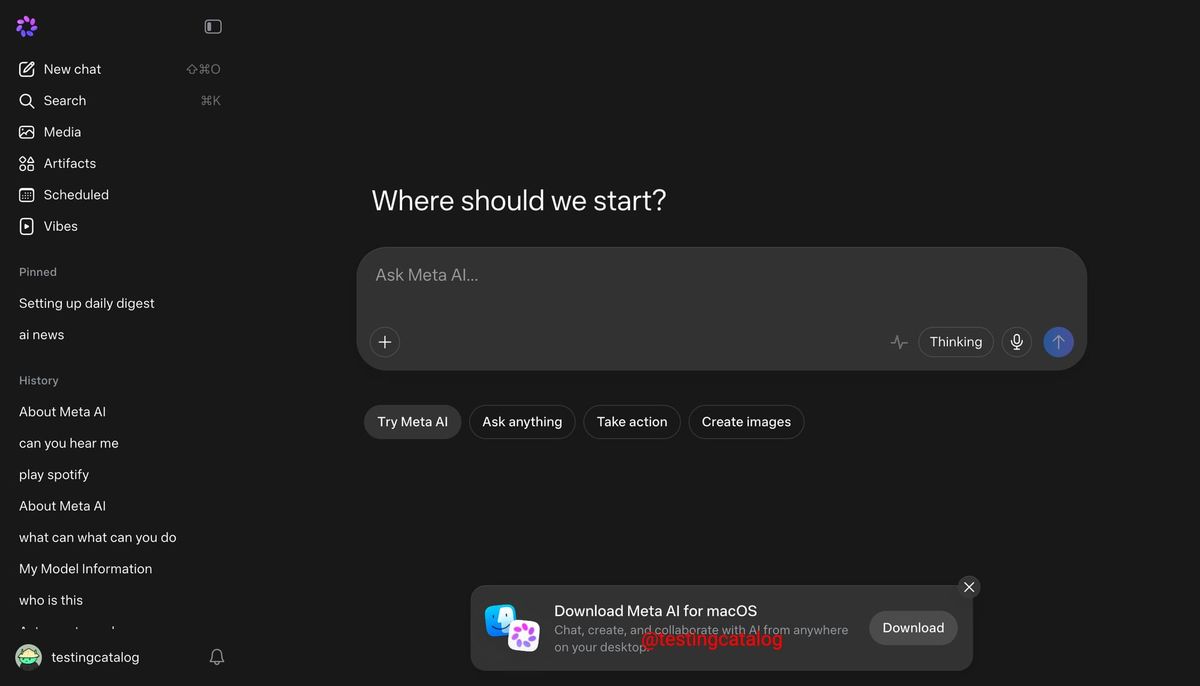
Meta may be moving its AI assistant from the browser to the macOS desktop.
30-Second TL;DR
What Changed
Meta is developing a desktop application for macOS.
Why It Matters
A native macOS app could make Meta AI more accessible in desktop workflows and increase competition among AI assistants. For developers, it may signal growing demand for persistent, cross-platform AI interfaces rather than browser-only experiences.
What To Do Next
Monitor Meta AI web build changes and evaluate how a desktop client could fit into your macOS-based AI workflow or distribution strategy.
Key Points
- •Meta is developing a desktop application for macOS.
- •Evidence comes from new Meta AI web builds.
- •Meta has not confirmed the app’s features or release timing.
- •The move comes as competing AI assistants expand their desktop presence.
Deep Insight
AI-generated analysis for this event — not the original article.
Enhanced Key Takeaways
- •Meta's desktop strategy leverages Electron or similar cross-platform frameworks to maintain parity between web-based Meta AI features and native OS integration.
- •The macOS application is expected to integrate with Meta's Llama 3.x model family, potentially allowing for local inference capabilities on Apple Silicon chips.
- •Internal code references suggest the app will support 'Always-on' accessibility features, allowing users to invoke Meta AI via global hotkeys similar to macOS Spotlight or ChatGPT's desktop client.
- •Meta is prioritizing macOS to capture the creative and developer demographic that heavily utilizes Apple hardware, aiming to reduce friction for users who currently rely on browser-based access.
- •The development aligns with Meta's broader 'AI-first' hardware-software ecosystem, which includes Ray-Ban Meta glasses and future AR/VR integration points.
Competitor Analysis
- Meta AI (macOS)
- Llama 3.x
- ChatGPT (macOS)
- GPT-4o
- Claude (macOS)
- Claude 3.5 Sonnet
- Perplexity (macOS)
- Multiple (Pro)
- Meta AI (macOS)
- Free (likely)
- ChatGPT (macOS)
- Free / $20/mo
- Claude (macOS)
- Free / $20/mo
- Perplexity (macOS)
- Free / $20/mo
- Meta AI (macOS)
- Expected (System-wide)
- ChatGPT (macOS)
- High (Spotlight/Screenshot)
- Claude (macOS)
- Moderate
- Perplexity (macOS)
- Low (Web-wrapper)
| Feature | Meta AI (macOS) | ChatGPT (macOS) | Claude (macOS) | Perplexity (macOS) |
|---|---|---|---|---|
| Model | Llama 3.x | GPT-4o | Claude 3.5 Sonnet | Multiple (Pro) |
| Pricing | Free (likely) | Free / $20/mo | Free / $20/mo | Free / $20/mo |
| Native Integration | Expected (System-wide) | High (Spotlight/Screenshot) | Moderate | Low (Web-wrapper) |
Technical Deep Dive
- Architecture: Likely a wrapper around the Meta AI web interface utilizing Electron or React Native for Desktop to ensure cross-platform consistency.
- Model Access: Integration with Meta's cloud-based Llama 3.x API endpoints, with potential for local model caching to reduce latency.
- OS Hooks: Utilization of macOS Accessibility APIs to allow the AI to read screen context or interact with other applications.
- Authentication: Integration with Meta Account Center for unified cross-device history and personalization.
Future ImplicationsAI analysis grounded in cited sources
Timeline
- 2023-07Meta releases Llama 2, marking the beginning of its open-weights AI strategy.
- 2024-04Meta AI is integrated into Facebook, Instagram, and WhatsApp using Llama 3.
- 2024-07Meta releases Llama 3.1, introducing larger context windows and improved reasoning.
- 2026-05Meta expands Meta AI capabilities to include more advanced agentic workflows.
Weekly AI Recap
Read this week's curated digest of top AI events →
AI-curated news aggregator. All content rights belong to original publishers.
Original source: TestingCatalog ↗
This is a summary, not the original. Read the source, or get the weekly briefing.
The weekly digest
One email a week. Unsubscribe anytime.